German-Indian partnership for a more sustainable approach to geo-resources and land transformation: The Research Center of Post-Mining and the Centre of Excellence for Sustainable Land Management (COE-SLM) at the Indian Council of Forestry Research and Education (ICFRE), which operates under the umbrella of India’s Ministry of Environment, Forest and Climate Change (MoEFCC), have formalised their strategic cooperation. By signing a Memorandum of Understanding (MoU), the partners aim to strengthen bilateral cooperation in the fields of sustainable exploration and use of geo-resources, post-mining transformation and land-use governance.
The MoU is embedded within the strategic partnership between Germany, the European Union, and India, and directly supports the recently reinforced Germany - India Raw Materials Partnership, highlighted at the highest political level, including the visit of the German Federal Chancellor to India.
Integrating Resource Security, Water Management, and Nature Protection
India has diverse georesources and technology materials, essential for its energy transition and industrial transformation. Their responsible development, however, requires integrated approaches that combine extraction with water management, environmental protection, and long-term post-mining planning.
Within this cooperation, the Research Center of Post-Mining (Forschungszentrum Nachbergbau, FZN) contributes internationally recognized expertise in:
- Mine water management, including pit lake and polder systems and long-term pumping and controlled flooding concepts
- Acid mine drainage (AMD) prevention and treatment, including hydrogeochemical monitoring and risk mitigation
- Mine closure, rehabilitation, and long-term environmental monitoring
- Post-mining land use, industrial heritage protection, and adaptive reuse, linking safety, ecology, and regional development
- Industrial culture and heritage-based regeneration, transforming former mining sites into assets for education, innovation, and local economies
These competencies are grounded in the long mining and post-mining experience of the Ruhr region, one of the world’s most intensively transformed industrial landscapes.
“Sustainable resource security can only be achieved when land use, water management, and nature protection are planned together from the very beginning. In the Land Use and Transition division at FZN, we focus on integrating post-mining strategies into extraction and development pathways, ensuring that landscapes remain functional, resilient, and socially accepted long after mining activities end.”
Dr. Julia Haske
Head of Land Use & Transition

Centre of Excellence for Sustainable Land Management: A Strategic Anchor within the Ministry of Environment, Forest and Climate Change
The Centre of Excellence for Sustainable Land Management (COE-SLM.), as part of the Indian Council of Forestry Research and Education (ICFRE) and directly embedded within the ecosystem of the Ministry of Environment, Forest and Climate Change (MoEFCC), brings strong institutional, scientific, and policy-facing capabilities to the partnership. Its core strengths include:
- Sustainable land management and restoration
- Forest–land–resource interfaces
- Biodiversity conservation and ecosystem-based approaches
- Policy advisory functions aligned with national environmental priorities
- Capacity building for public institutions and implementing agencies
COE-SLM further advances science–policy interface initiatives, knowledge platforms, and capacity development programmes aligned with India’s commitments towards Land Degradation Neutrality, ecosystem restoration, and climate resilience. As a Centre of Excellence under ICFRE, it serves as a strategic platform for fostering South–South cooperation, facilitating exchange of knowledge, best practices, and policy-relevant solutions among countries of the Global South to promote sustainable land management and restoration-led development pathways.
As a MoEFCC-linked Centre of Excellence, COE-SLM. plays a key role in translating research into actionable frameworks for ministries, regulators, and state-level authorities making it a natural partner for integrating post-mining and geo-resource governance into broader environmental and climate strategies.
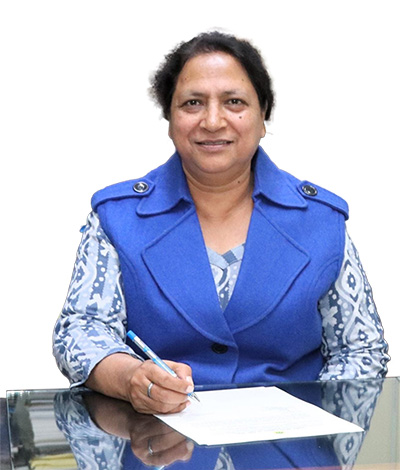
Kanchan Devi - IFS (Director General of ICFRE): “This collaboration reflects our shared commitment to integrating sustainable land management, ecological restoration, and responsible resource governance. Through this partnership, COE-SLM and ICFRE aim to combine scientific excellence with practical solutions that support long-term environmental resilience and sustainable development.”
European Experience – context-Sensitive for India
 The FZN has deep experience in European Union research and innovation projects, operating across diverse partnership models with governments, academia, and industry. Its researchers are inter-regionally and internationally experienced, enabling them to adapt European regulatory, technical, and governance approaches to India’s federal structures, ecological diversity, and development priorities.
In addition, the FZN maintains an active and growing network in India, allowing joint activities to be anchored locally and expanded through further institutional and regional partnerships.
Support of the German-Indian raw materials partnership
The MoU contributes substantively to the Germany–India Raw Materials Partnership, addressing not only resource security but also:
- Governance structures for sustainable extraction
- Water and land-use conflict management
- Long-term environmental and socio-economic resilience
- Responsible closure and post-mining transformation
By combining German know-how in mine water management, post-mining, and industrial heritage transformation with Indian excellence in land management, forestry, and environmental governance, the partnership establishes a holistic platform for sustainable georesource development.
A Framework for Long-Term Cooperation
Beyond joint research, the agreement provides a framework for capacity building, applied training, and strategic dialogue for policymakers, regulators, practitioners, and researchers in both countries. Further collaborative projects are expected to emerge, reinforcing Germany–India cooperation at the intersection of raw materials, environment, and sustainable development.
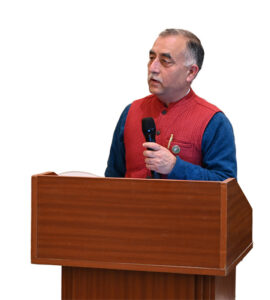 "The MOU marks a beginning of formal collaboration with the primary objective of leveraging the complementary competences and capacities to enhance the contribution of forests and forestry to sustainable development, combating climate change and land degradation, mine water management and post mining restoration. ICFRE and FZN are in a position to jointly make significant contributions to these agendas by connecting forest-related science with policies and practices on the ground", underlines Dr. Rajesh Sharma - IFS (Director of International Cooperation at ICFRE).
“The future of georesource development will be decided not only by what we extract, but by how we manage water, land, and landscapes long after extraction ends. Through this partnership with COE-SLM. at ICFRE and MoEFCC, we are linking German post-mining and mine water expertise with India’s leadership in sustainable land management to support a truly integrated raw materials strategy.”
Dennis Pulimittathu
Chief Strategy Officer for Internationalization & Global Support Center of the Research Center for Post-Mining (FZN)
Photos on this website: FZN & ICFRE