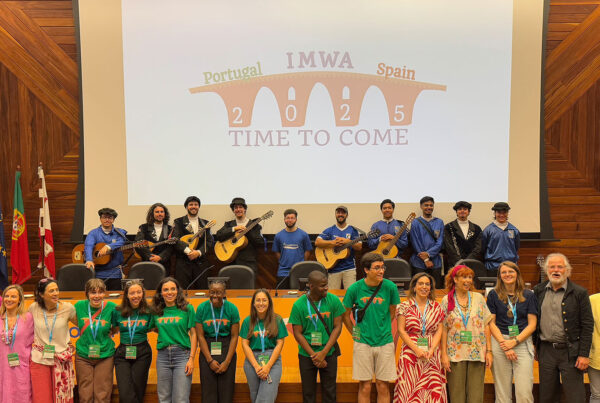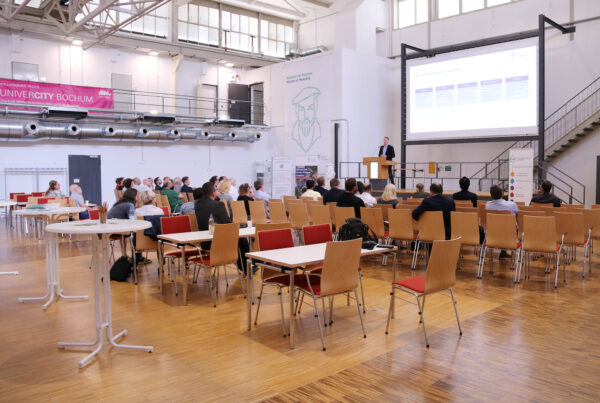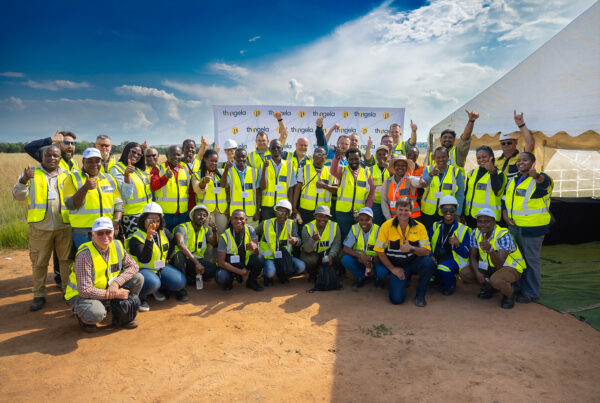
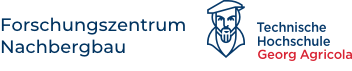
In line with the summery temperatures, the Research Center of Post-Mining hosted a special summer school: From 11 to 18 June, participants from Kosovo, North Macedonia and Albania were guests at THGA. There, they engaged in intensive discussions about the challenges mining leaves behind in their home countries – ranging from environmental issues to social aspects. Under the title “Post-mining Challenges on Former Mining Areas”, researchers from the Research Center of Post-Mining provided an overview of the methods used in Germany to investigate and monitor the legacy of mining. The summer school was funded by the DAAD as part of the funding programme “University Dialogue with the Countries of the Western Balkans 2023”.
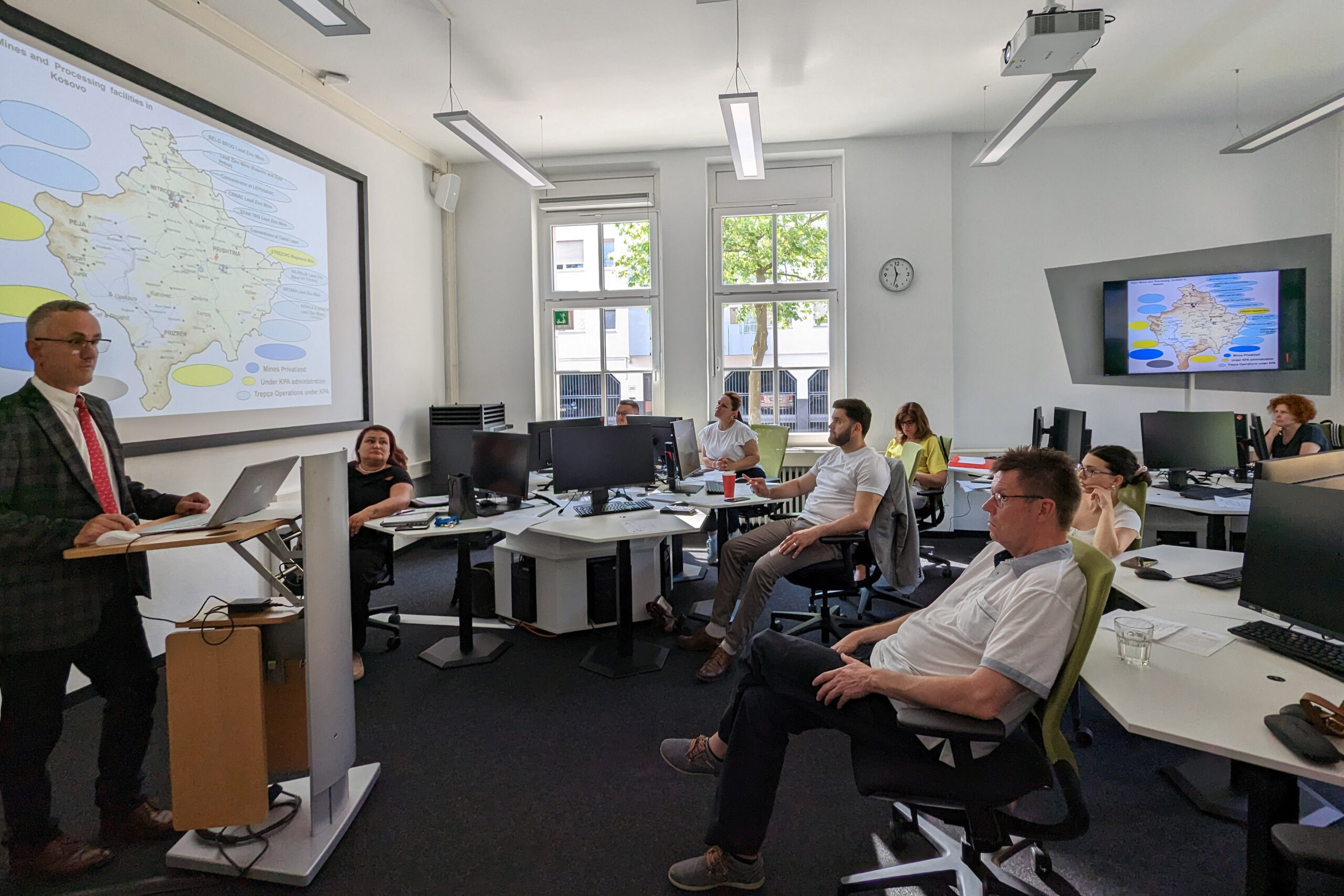
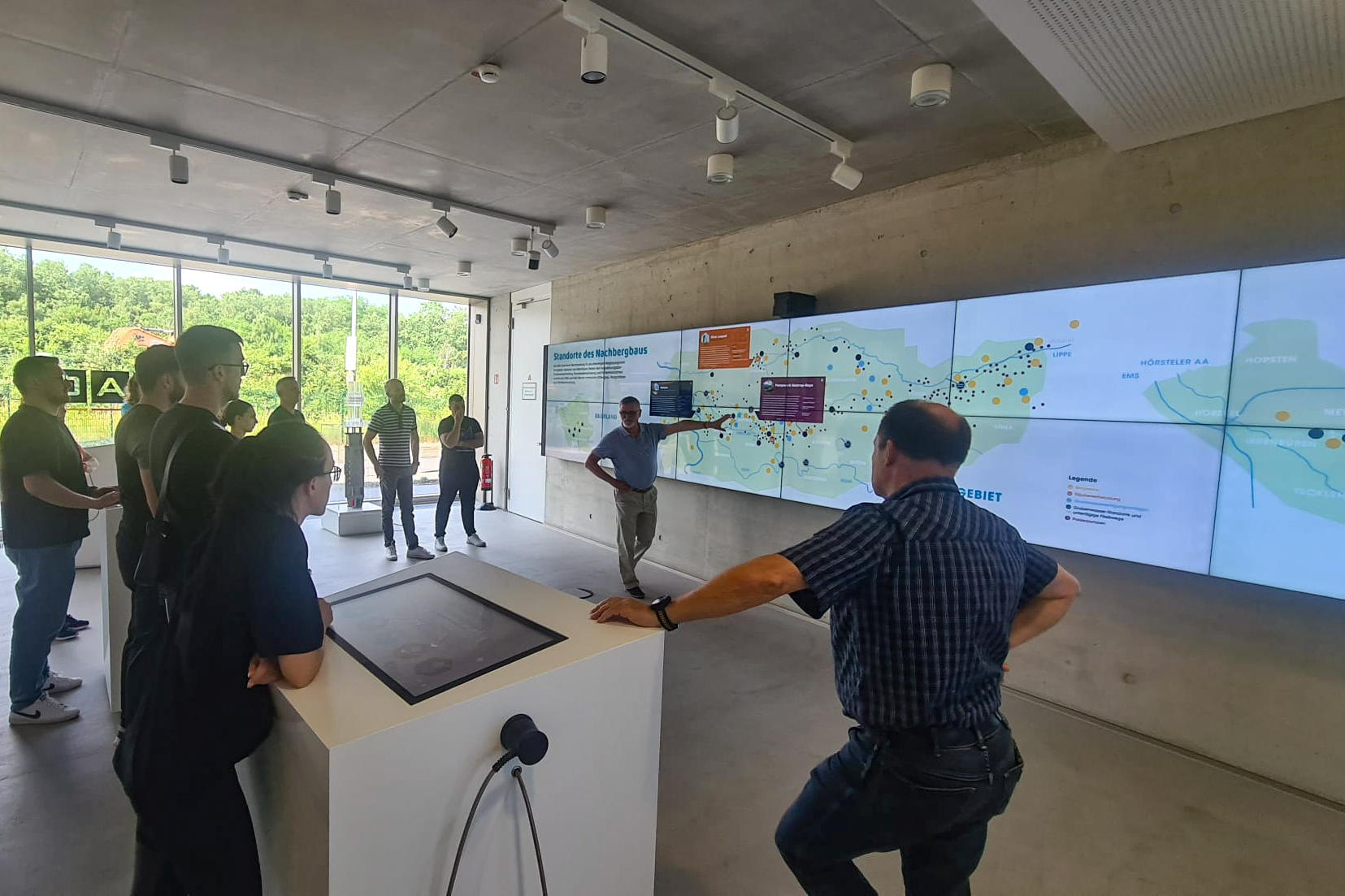
In addition to workshops on post-mining and mine closure, the group also visited numerous sites in the Ruhr region that illustrated structural change and the technical challenges following the coal phase-out – above ground and even underground. The German Mining Museum in Bochum, Nordsternpark in Gelsenkirchen and the Ewald Colliery in Herten provided strong examples of mining culture and structural transformation. During a visit to the mine water control center in Herne, participants were briefed on RAG AG’s post-mining activities under the expert guidance of Andreas Koschare (K‑SG‑NM) and Dr. Katharina Telenga (V‑WH‑SK). The focus was on planned measures and concepts for the conversion of mine water management as well as risk management in legacy and post-mining contexts. Sustainability aspects and pathways toward successful remediation and renaturation of former mining regions were also discussed.
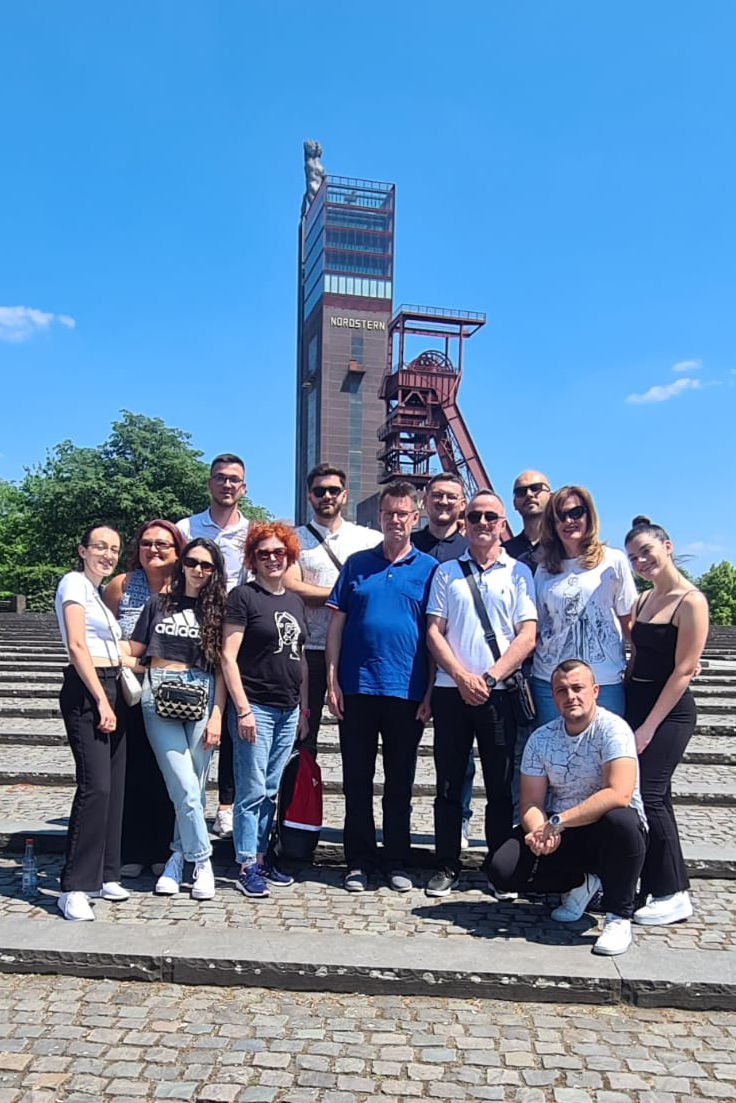
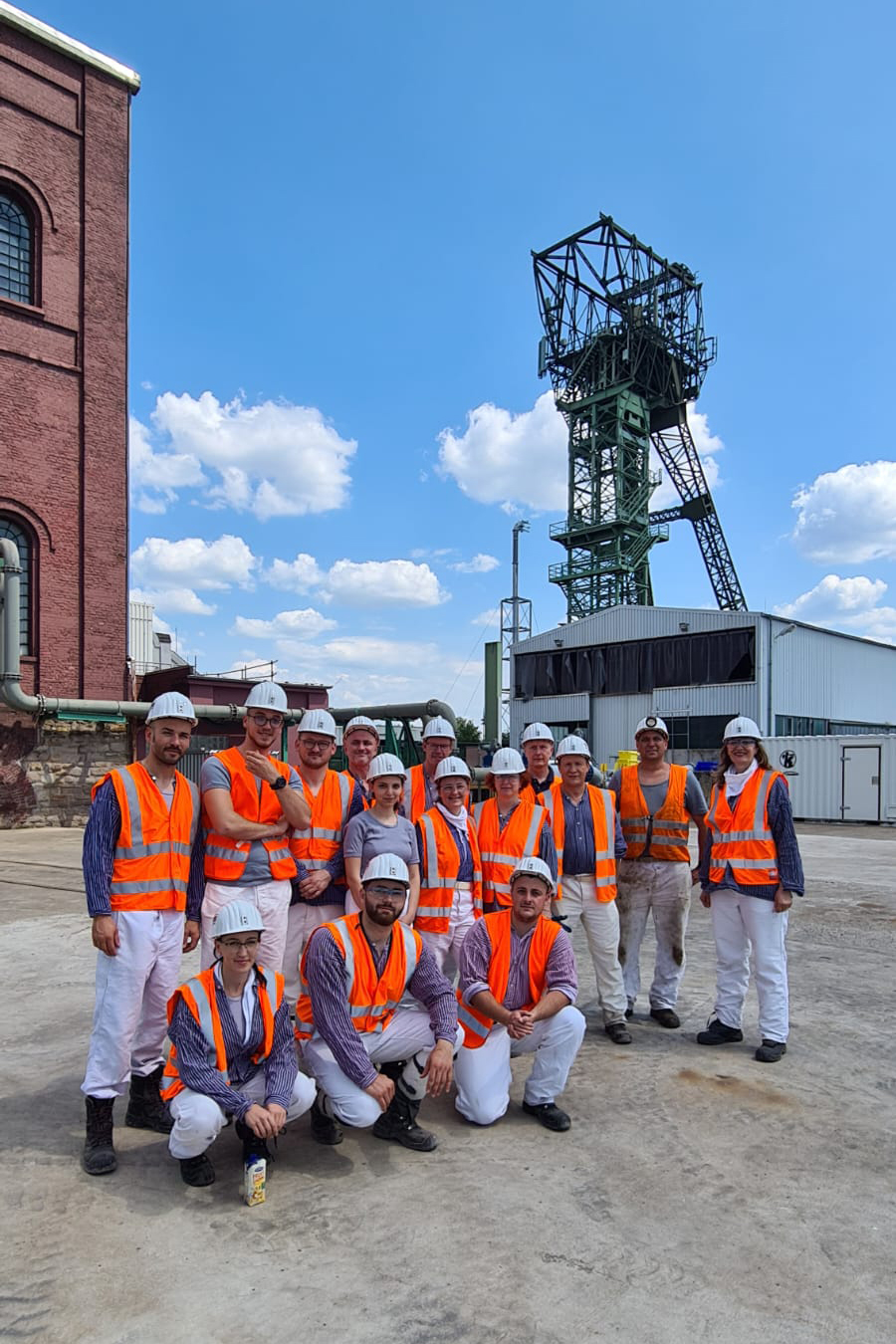
Students and lecturers from Isa Boletini University (Kosovo), Goce Delcev University (North Macedonia), and the Polytechnic University of Tirana (Albania) took part in the FZN summer school.
“Since our goal in post-mining is also ‘Vision Zero’ – meaning completely accident- and hazard-free work – the day began with the topic of occupational safety,” says Andreas Koschare of RAG, who studied post-mining at THGA himself. “In the mine rescue service training room, we provided detailed safety and oxygen self-rescuer instruction, as well as information about our rescue facilities.”
At Zeche Heinrich in Essen-Überruhr, the excursion group then had the exclusive opportunity to take part in an underground tour. The site is one of six remaining central locations for mine water management – and it will continue to pump the accumulating mine water up from depth with large pumps and discharge it into the Ruhr. During the underground tour, participants learned about all aspects of conventional mine water management through to later monitoring. “But the physical strain of working underground also became clear to them,” says the experienced miner Koschare. In addition, the group gained interesting insights into the geology of the Ruhr Valley, historic adit mining, and the drainage of these areas that is still functioning today via drainage adits (Erbstollen).
At the Carolinenglück site, the final focus was on future mine water technology using well and submersible pumps. Summer School participants gained an insight into how the conversion of shafts into well and safety/backup sites is planned and implemented.
Funding
Funded by the German Academic Exchange Service (DAAD) with funds from the German Federal Foreign Office (AA).