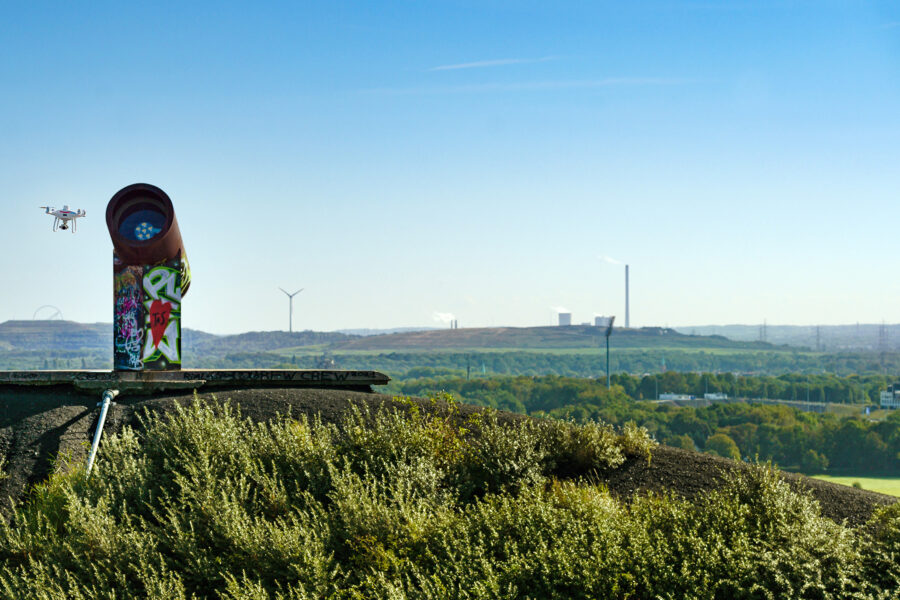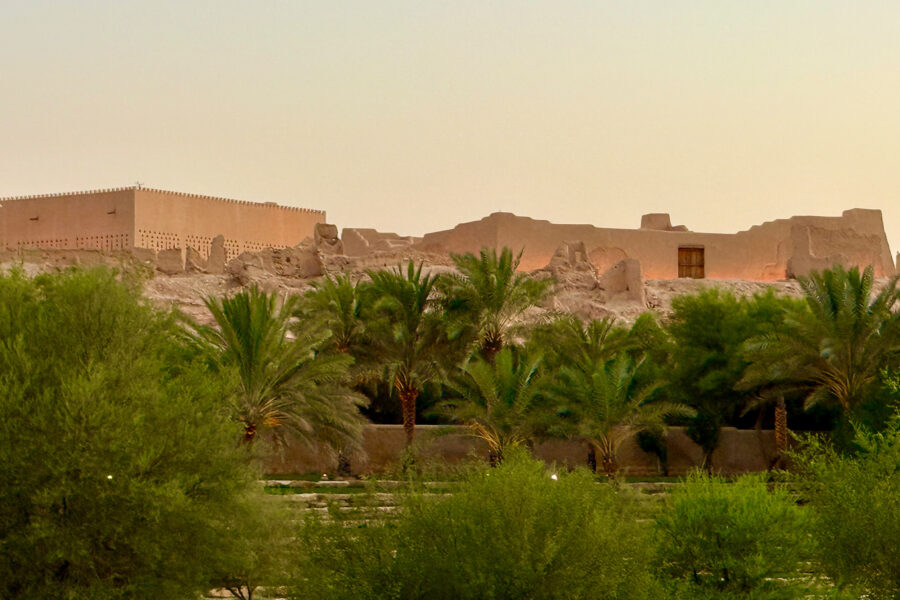
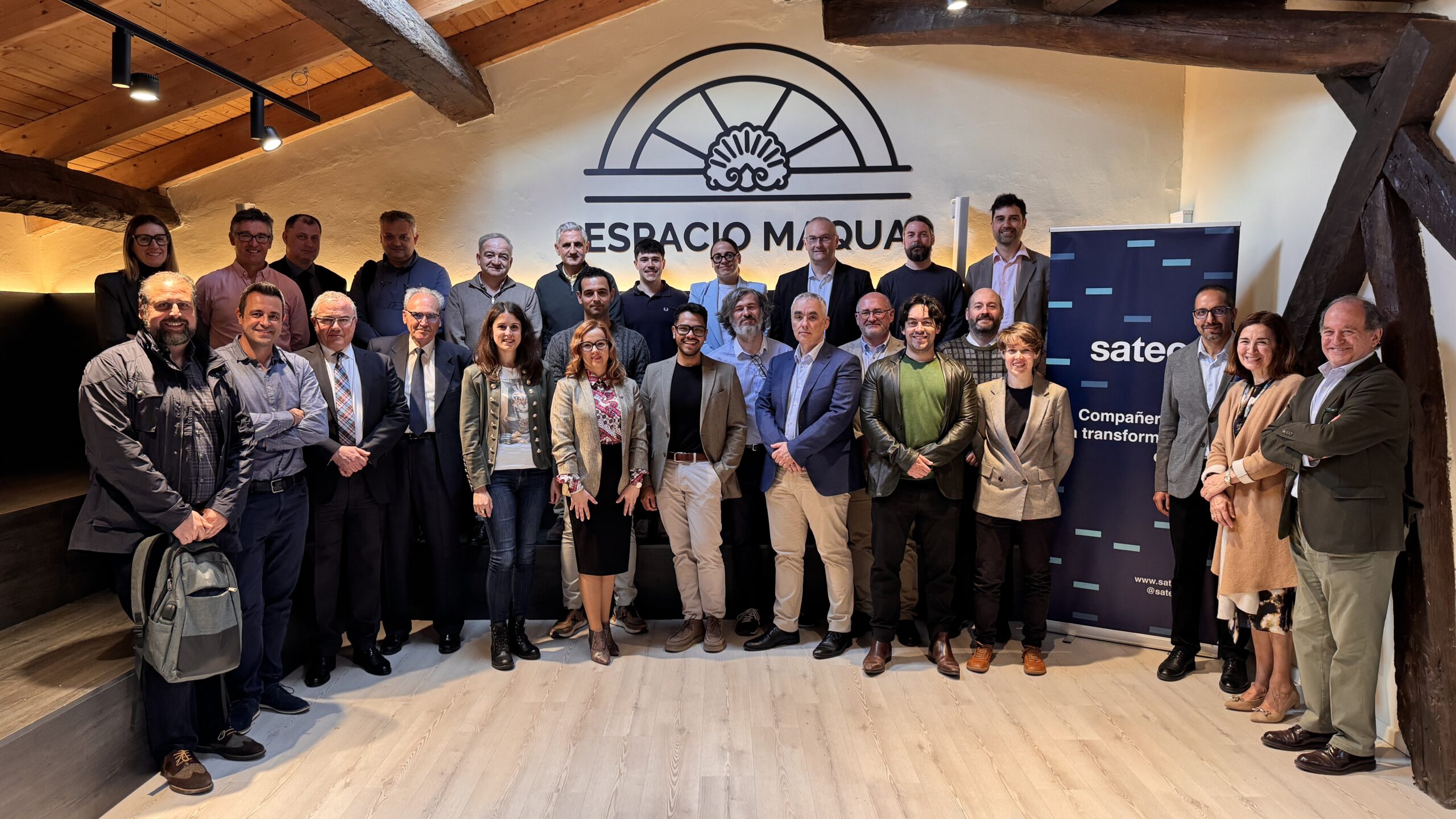
An important step in the development of a common European data space for critical raw materials: The partners of the CRMsDataSpace project met in Avilés, Spain, for their second project meeting. Photo: CRMsDataSpace
The European debate on critical raw materials (CRMs) continues to gain importance. In this context, mining waste is increasingly coming into focus – not only as an environmental responsibility, but also as a potential secondary source of raw materials. However, realistically assessing this potential requires more than technological solutions alone: reliable data, interoperable information structures, and a long-term perspective on post-mining landscapes are crucial. In this context, the European project CRMsDataSpace and the EGU session “From Risk to Resource: EO for Mine Waste” demonstrate why the management of mining waste must be considered early on, strategically, and on a data-driven basis.
 This is precisely where the European project CRMsDataSpace comes in. The aim of the initiative is to help shape a common European data space for critical raw materials and to make information on mining residues more accessible, comparable, and usable. In doing so, the project creates an important foundation for enabling more well-informed assessments of risks, material potential, and future reuse options.
At the second CRMsDataSpace project meeting on 16 April 2026 in Avilés, Spain, the focus was on the project’s next development steps. Among the topics discussed were progress on the data catalogue, the further development of the data space, platform and tool solutions, as well as questions of governance, data harmonisation, and data collection. At the same time, the discussions made clear that the challenge in the field of mining waste is not solely of a technical nature.
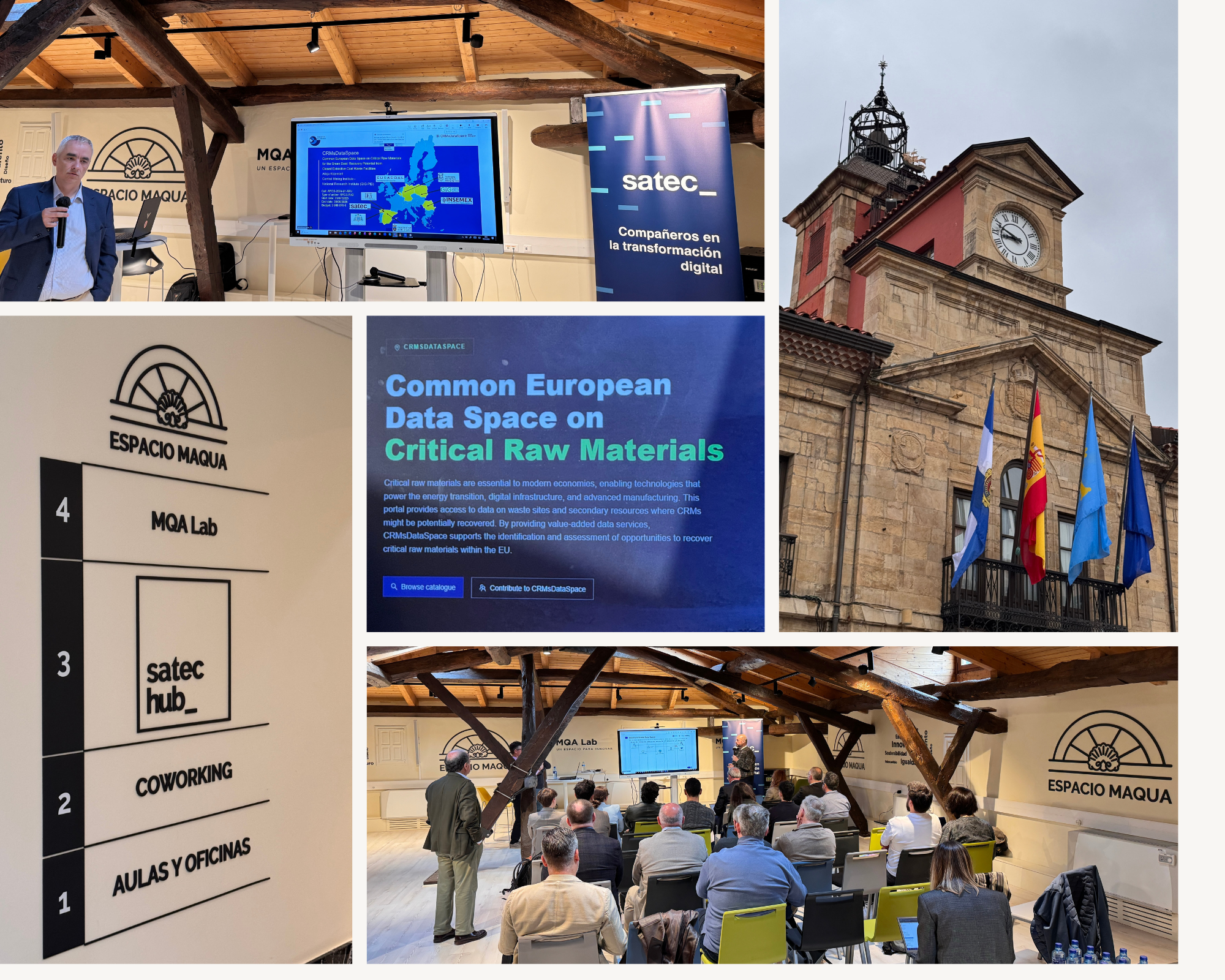
Photos: Hernan Flores / FZN
In many cases, information on mining waste remains fragmented, difficult to compare, or only partially accessible. In addition, differing institutional frameworks, technical standards, and national contexts further complicate the situation. This not only makes it more difficult to assess environmental impacts, but also to determine whether – and under which conditions – mining residues can be regarded as a resource in the future.
For the Research Center of Post-Mining (FZN) at the Technische Hochschule Georg Agricola, this perspective is of particular strategic relevance. In this context, post-mining must not be understood solely as the phase following mine closure. Rather, it involves a holistic view of the entire life cycle of mining activities – from early decisions in exploration, extraction, and processing to questions concerning the long-term management of water, residues, land use, and potential raw material recovery.

“Post-mining does not begin at the end, but with the very first decisions made in the life cycle of a mine.”
Hernan Flores (FZN)
FZN Participation at the EGU General Assembly 2026
This perspective is also gaining importance in international scientific discourse. As part of the EGU General Assembly 2026 in Vienna, Hernan Flores Rojas is organising the session „From Risk to Resource: EO for Mine Waste“ (ERE 4.2). together with international partners. The focus is on the question of how Earth observation, data integration, and multi-scale monitoring approaches can contribute both to a better understanding of mining waste as an environmental risk and to a systematic assessment of its potential as a secondary source of raw materials.
This is linked to a key concern that is also highly relevant for CRMsDataSpace: the future management of mining waste in Europe requires not only technological innovation, but also progress in data availability, standardisation, interoperability, and governance. Only when these dimensions are considered together can viable strategies for risk management, resource efficiency, and sustainable reuse be developed.
Through its participation in the project CRMsDataSpace and its active contribution to international expert debates, the Research Center of Post-Mining (FZN) is strengthening its role at the interface of post-mining, digitalization, and sustainable resource management in Europe.
Contact

Hernan Flores, M.Sc.
Technische Hochschule Georg Agricola University
Herner Street 45
44787 Bochum
Building 2, room 210
Phone 0234 968 3807
Mail hernan.flores@thga.de