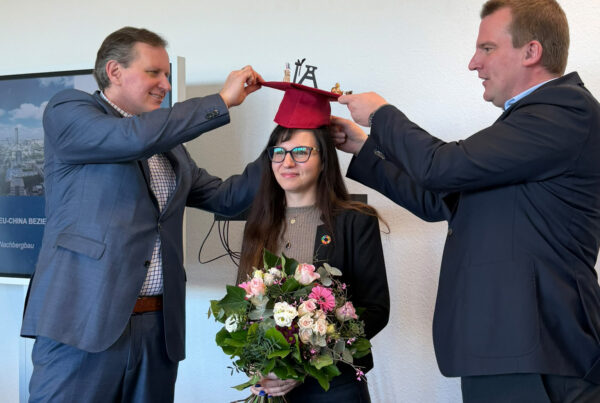
The Research Center of Post-Mining and the Research Institute for Post-Mining Landscapes (FIB), a registered association, have signed a Memorandum of Understanding (MoU) for academic cooperation. The agreement aims to strengthen scientific collaboration on key issues in post-mining and the sustainable development of mining-impacted regions, better mobilize resources for joint activities, and enhance knowledge transfer between research and practice. Ahead of the digital signing, the Research Center of Post-Mining hosted representatives of the Research Institute for Post-Mining Landscapes (FIB) in Bochum, where both sides presented their relevant research areas and aligned the content of the MoU.
The agreement now provides a framework for long-term collaboration in areas where both institutions pursue shared interests in policy- and practice-relevant research. The focus is particularly on interdisciplinary approaches that connect ecological, socioeconomic, and technological perspectives. This is intended to increase the effectiveness of existing programs and accelerate the achievement of shared goals.
Two institutions with complementary strengths
The Research Center of Post-Mining was founded in 2015 and operates as a private, independent, nonprofit research center with an inter- and transdisciplinary focus. As an internationally connected research center, it addresses global and regional challenges – including successful and safe post-mining, structural change, resource security, environmental issues, and the current and future challenges posed by climate change. Its thematic priorities include sustainable water management, the so-called perpetual obligations of hard-coal mining, geo- and environmental monitoring, materials science, land use, and transformation processes in post-industrial regions.
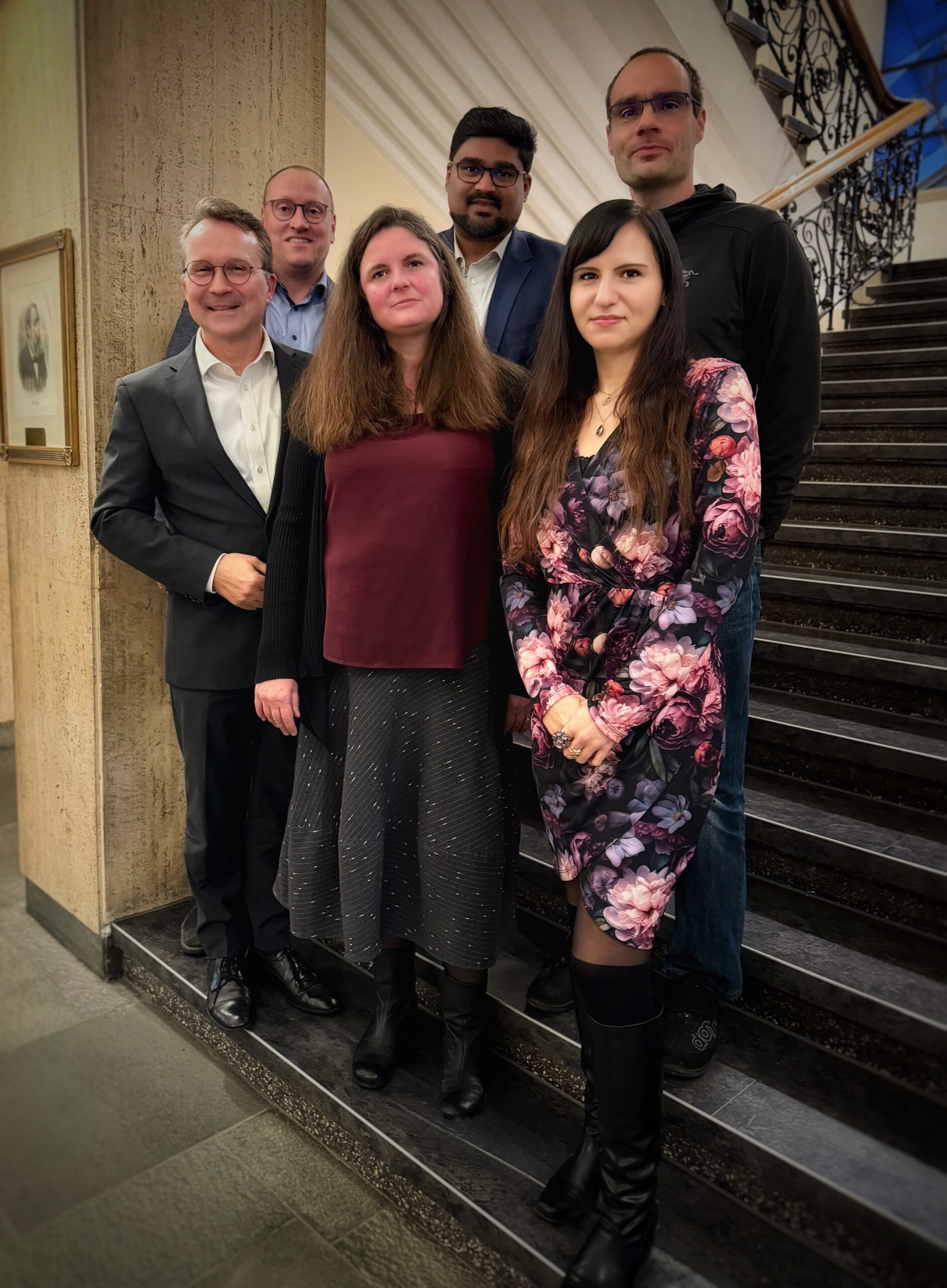
Foto:FZN
The FIB in Finsterwalde was founded in 1992 and pursues an applied research approach in landscapes whose performance and functionality are impaired by human impacts – particularly mining and climate change. Its aim is to design and sustainably develop ecologically stable landscapes that can be used in a variety of ways. The institute develops practical guidelines and concepts and creates decision-support systems, often in cooperation with partners from agricultural and forestry practice, industry, public administration, and other research institutions. Its thematic priorities include agricultural and forestry recultivation, aquatic ecology, and landscape development and nature conservation.
These distinct yet complementary profiles form a partnership that places both scientific excellence and practical relevance at its core.
Focus: Sustainable management of georesources and post-mining transitions
A central aim of the collaboration is to promote interdisciplinary cooperation and knowledge exchange on the sustainable management of georesources and post-mining transitions. In doing so, ecological, socioeconomic, and technological aspects will be considered jointly.
Possible areas of cooperation include research projects at both the national and international levels. These include questions of land use in post-mining regions as well as recultivation, remediation, and restoration after mining. Another focus is on monitoring and the long-term management of former mining sites. In addition, the MoU identifies circular economy approaches in post-extractive regions, the climate-resilient transformation of mining-impacted landscapes, and the restoration of a near-natural water balance as fields of work. Ecological development in post-mining landscapes, citizen science and participation, awareness-building and stakeholder mapping, as well as knowledge transfer and science communication are also part of the cooperation framework.
In this way, the agreement addresses key challenges faced by many regions that must reposition themselves after active mining ends: stabilizing and developing landscapes and water bodies, safeguarding land functions over the long term, and shaping structural transformation under changing climatic conditions.
Planned formats: research, exchange, and dialogue
The cooperation is not intended to be limited to individual projects but implemented through a range of formats. Plans include, among other things, the joint organization of scientific seminars, workshops, and capacity-building activities with a resource-focused and evidence-based emphasis. In addition, public events, policy dialogues, and multilateral engagement are planned to support sustainable development goals.
Another component involves exchange programs for researchers, technical staff, and scholarship holders. These include short-term visits, joint supervision of theses, and internships.
The Memorandum of Understanding establishes a structured basis for further consolidating research and knowledge transfer in the fields of post-mining and post-mining landscapes. The topics outlined in the memorandum – ranging from recultivation and water balance to climate resilience and the circular economy, as well as participation and science communication – underscore the ambition to consider technical solutions, ecological stabilization, and societal perspectives together.