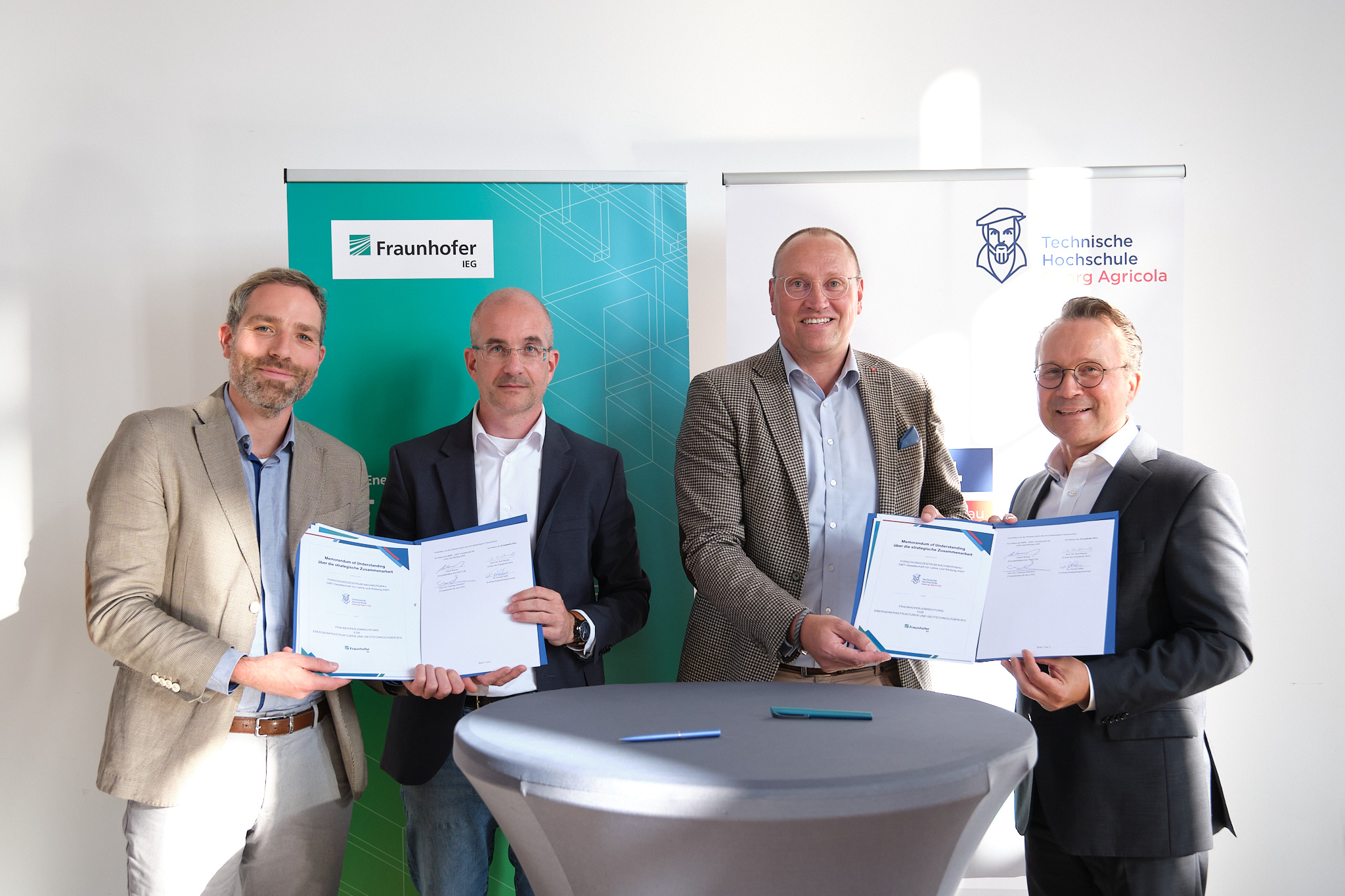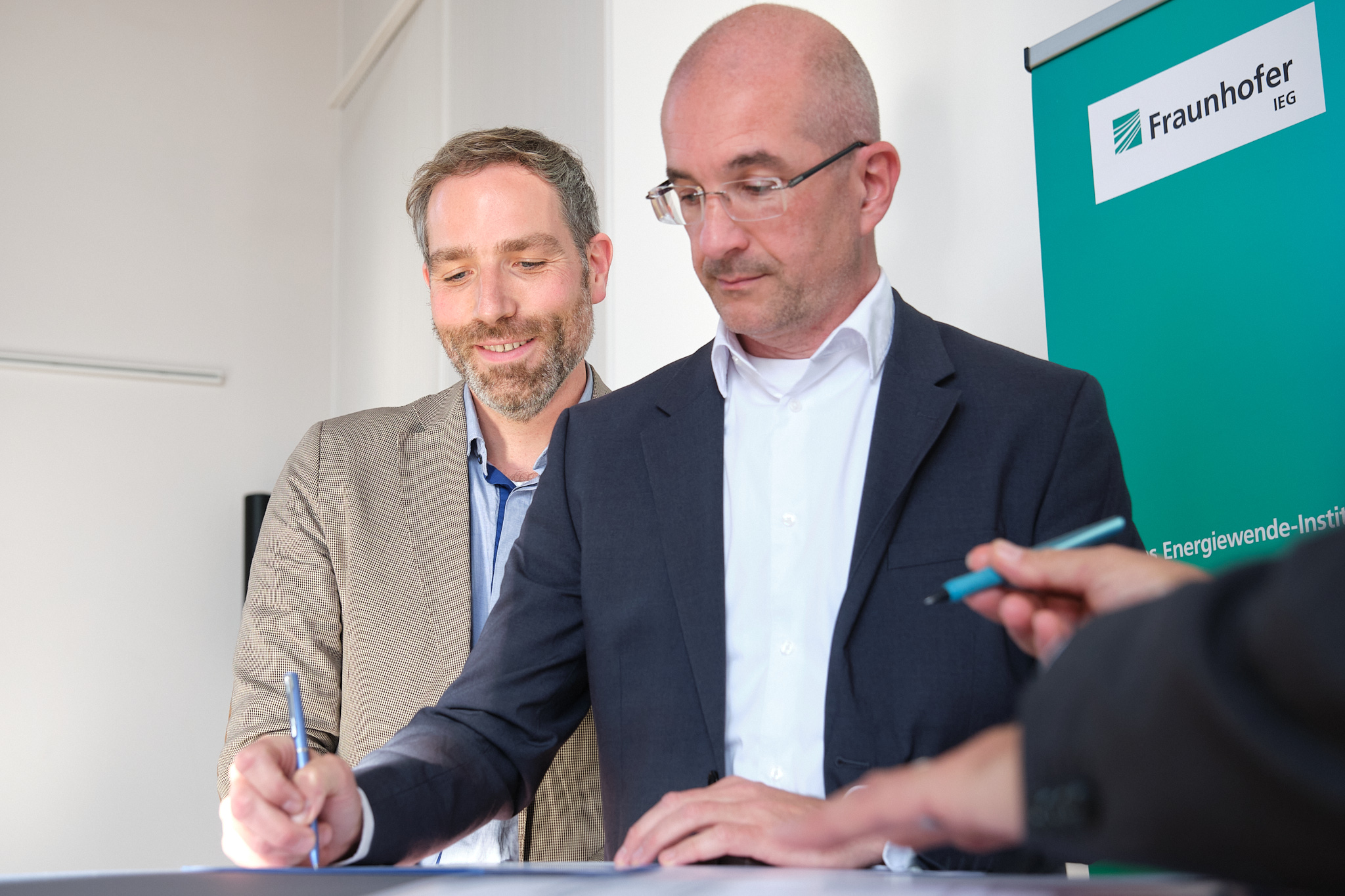
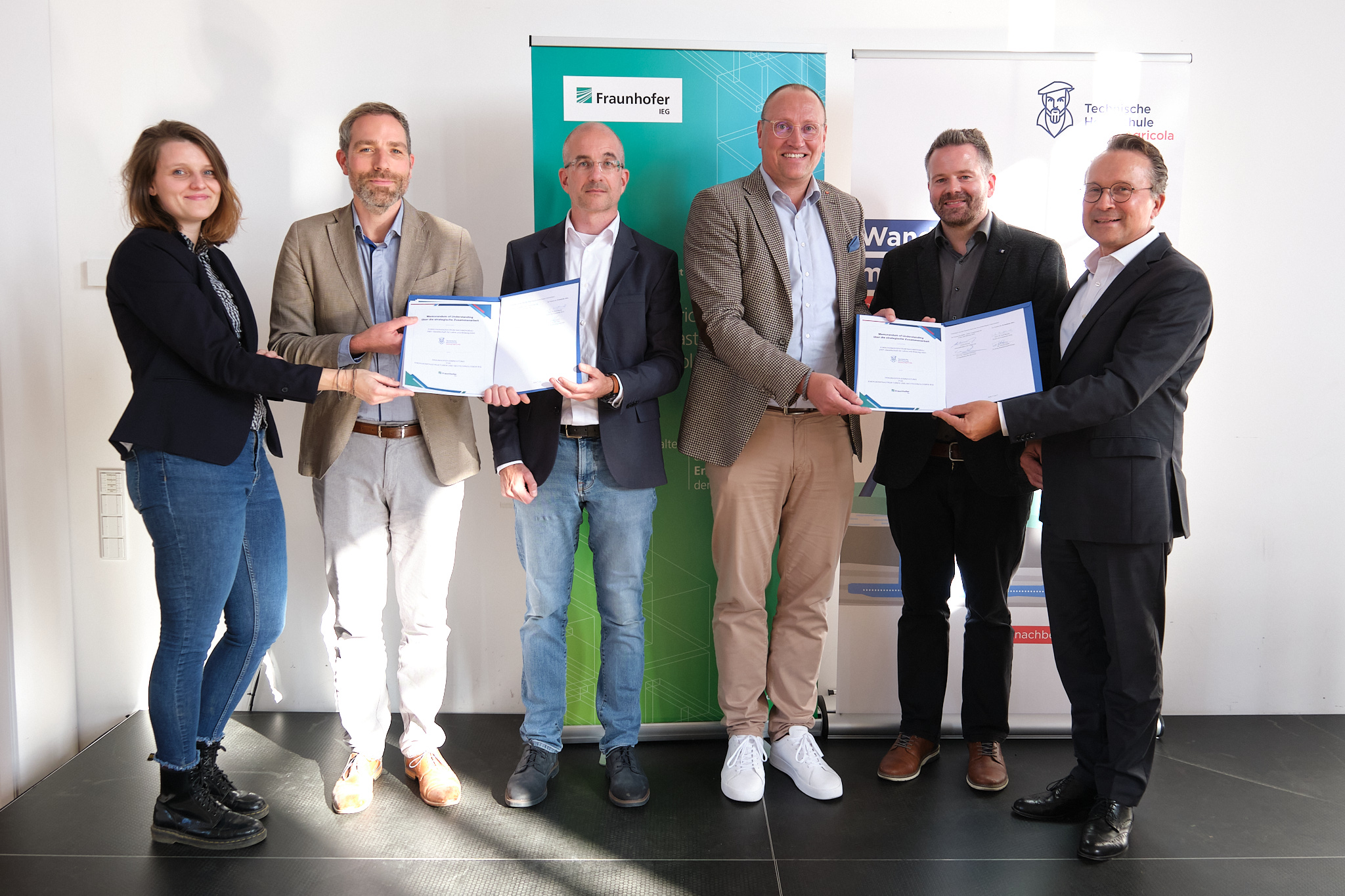
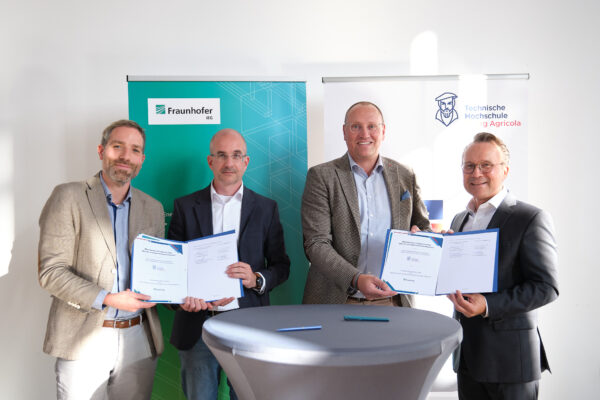
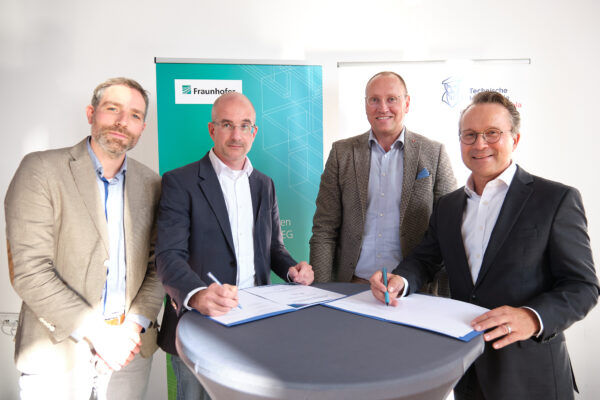
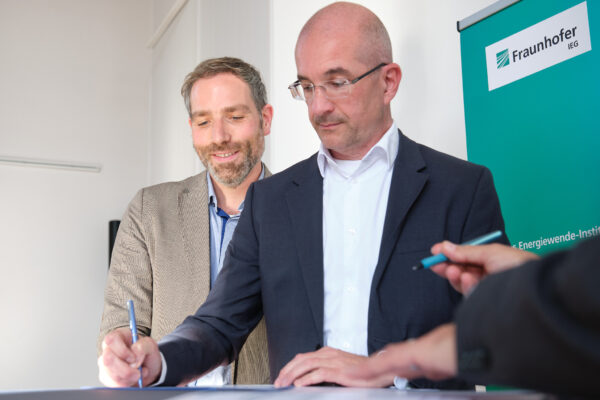
The partnership between FZN and Fraunhofer IEG was formalized with the signing of a Memorandum of Understanding (MoU) at the German Mining Museum Bochum. From left to right: Elke Mugova (Fraunhofer IEG), Dr. Florian Hahn (Fraunhofer IEG), Dr. Frank Sachse (Fraunhofer IEG), Prof. Christian Melchers (Head of FZN), Dr. Sebastian Westerman (FZN), Ulrich Wessel (member of the DMT-LB management team).
© Philip Lehmann, NRW.Energy4Climate
Mine water, underground cavities and mining infrastructure are more than just a legacy of mining: they offer valuable potential for heating, cooling and energy storage. With a Memorandum of Understanding (MoU), the Research Center of Post-Mining (FZN) and the Fraunhofer Research Institution for Energy Infrastructures and Geotechnologies IEG are now laying the foundation for a strategic collaboration.
The transformation of former mining regions requires new ideas, viable technologies and strong partnerships. This is precisely where the MoU between the Research Center of Post-Mining (FZN) and Fraunhofer IEG comes in. Having already been in close dialogue for some time, the two research institutions based in Bochum aim to further integrate their expertise, advance the sustainable reuse of post-mining structures, and jointly develop solutions for the energy and heating transition.
The focus is on how existing mining infrastructure can be intelligently used for the future. This includes, in particular, harnessing the value of mine water and underground cavities for heating, cooling, and energy storage – for example, through mine-water geothermal energy. The joint use of measurement infrastructure, collaborative research projects, and the transfer of scientific findings into practical application are also key elements of the agreement.
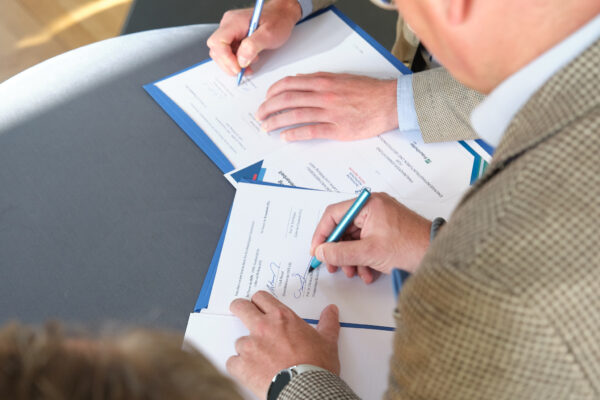
© Philip Lehmann, NRW.Energy4Climate
For Prof. Christian Melchers, Head of the Research Center of Post-Mining, the particular strength of the new partnership lies precisely in bringing together different perspectives and areas of expertise:
“The challenges of the future cannot be solved within individual disciplines. We need to bring together existing knowledge, new technologies, and different perspectives. This is precisely where we see the particular value of working with Fraunhofer IEG. Together, we aim to develop new ideas and demonstrate how post-mining structures can give rise to solutions for the future.”
The MoU provides a framework for interdisciplinary exchange and the development of joint research initiatives – from joint applications for national and international funding programmes to specialist publications and events, as well as support for early-career researchers. Ecological, technological, legal, and socioeconomic aspects of the energy transition will be considered equally.
Dr. Florian Hahn, Head of the Competence Center for the Utilization of Mining Legacies at Fraunhofer IEG, highlights the opportunities this creates for the region:
“The collaboration between the Georg Agricola University of Technology and Fraunhofer IEG brings together complementary strengths: the university has outstanding expertise in education and research related to mining, post-mining and geo-resources, while Fraunhofer IEG specializes in transferring new technologies into practical application in cooperation with industry and public-sector partners. This enables research findings to be translated into practice much more quickly.
For the Ruhr region, this represents a major opportunity. The region has unique experience and infrastructure from its mining past that can now be used for the energy transition. Together, we can develop innovative solutions that actively shape structural change, create new value, and strengthen the Ruhr region as a leading location for energy infrastructure and geotechnologies.”
Thus, the cooperation agreement between the Research Center of Post-Mining (FZN) and Fraunhofer IEG, signed at the German Mining Museum, sends a strong signal for transformation, future viability, openness to technology, and sustainable energy supply in the region.