
© Judith Büthe / Business Metropole Ruhr
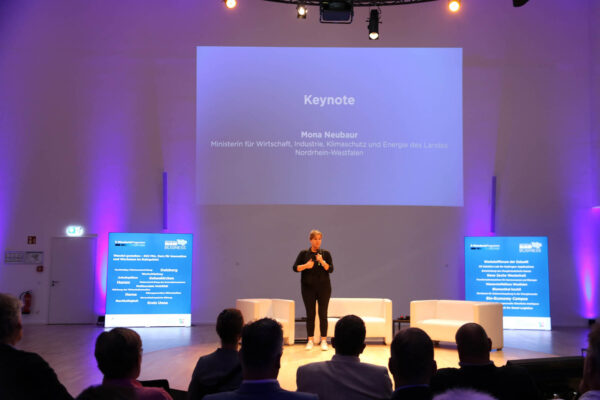
Under the title “Staying Competitive Through Transformation,” the projects of the 5-location program came together at ZESS on MARK 51°7 in Bochum, showcasing how innovatively and forward-looking they are addressing major societal challenges. Also in attendance was Mona Neubaur, Minister for Economic Affairs, Industry, Climate Action, and Energy of the State of North Rhine-Westphalia, who discussed the interplay between ecological and economic transformation as well as the outlook for the Ruhr region as a business hub.
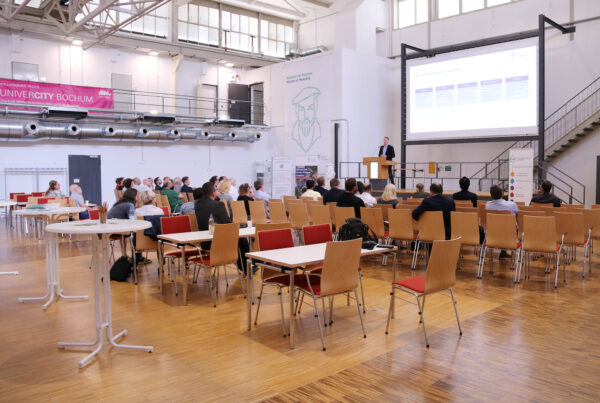
From mining to the automotive industry to high-tech, digitalization, IT companies, start-ups, and research: that is one way to describe the transformation of the former Opel site MARK 51°7 which is also home to the Research Centre for the Engineering of Smart Product Service Systems (ZESS). Fittingly, and in line with the guiding theme and event title “Staying Competitive Through Transformation”the projects of the 5-location program gathered at ZESS on July 8, 2026 – at a place that itself exemplifies successful transformation – to showcase their innovative ideas and the region’s willingness to embrace change.
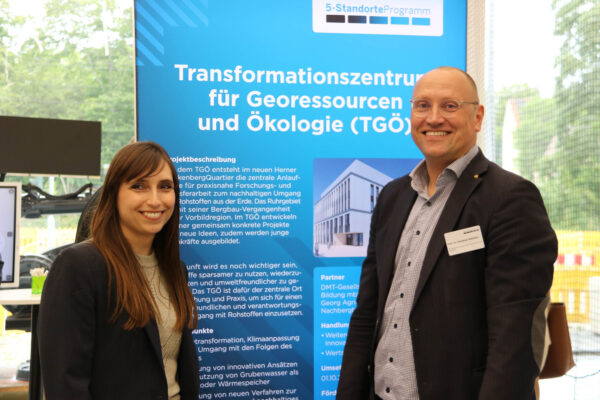
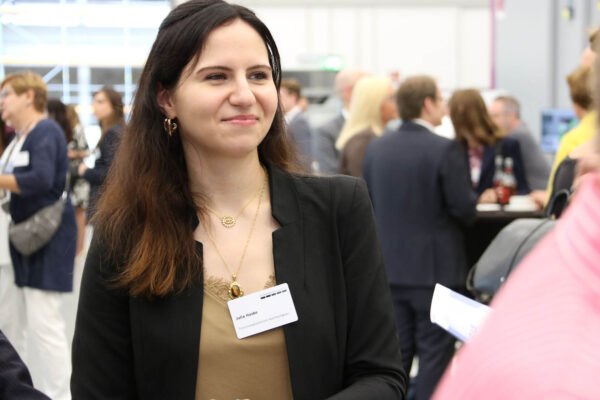
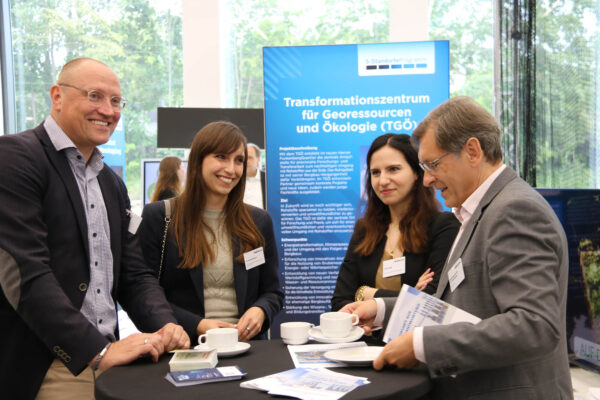
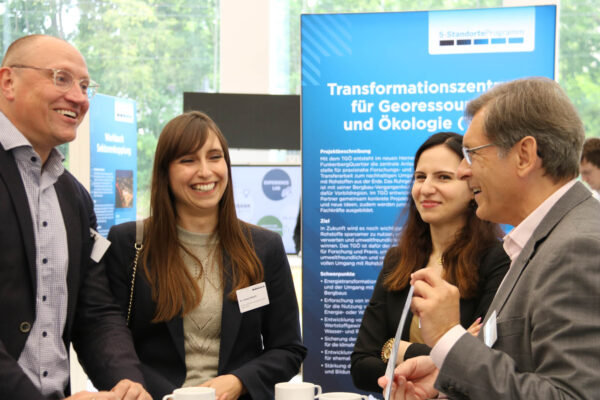
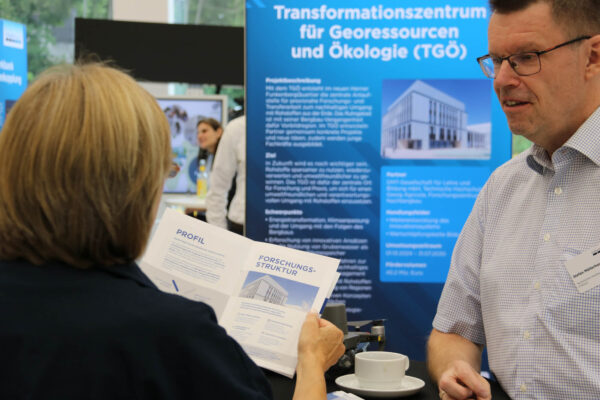
Organized by Business Metropole Ruhr and opened by Bochum Mayor Jörg Lukat and Jörg Kemna (Chairman of the Management Board of Business Metropole Ruhr GmbH), the event was shaped by panel discussions covering a wide range of topics. In addition to lively discussions and introductory presentations, participants took the opportunity to explore the projects of the 5-location program at exhibition booths. At the same time, bringing all of the projects together in one venue also gave individual project teams and project leaders the chance to meet one another and exchange ideas.
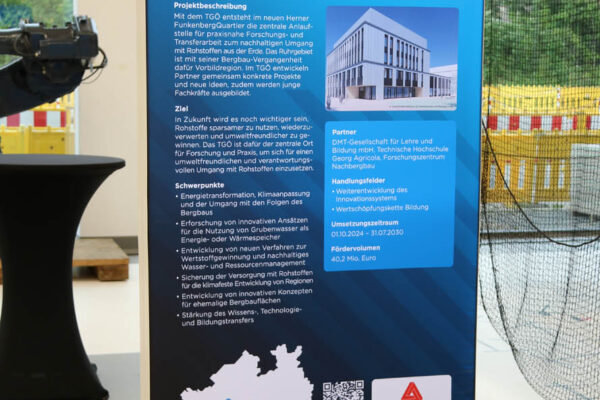
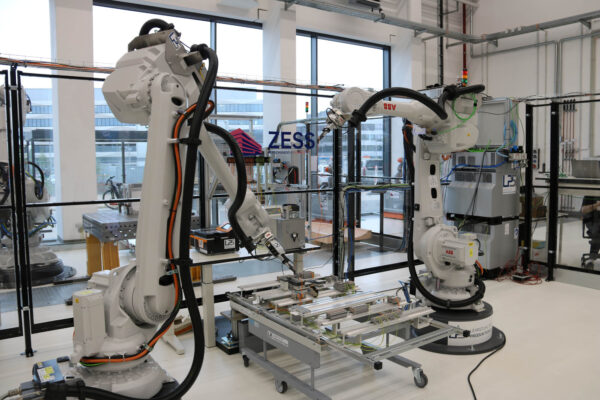
Photos: Christian Teichmann
“Green Industrial Region”: TGÖ featured in discussion with NRW Economic Affairs Minister Mona Neubaur
A particular highlight was the closing panel discussion, “The Green Industrial Region: New Ideas for Greater Sustainability and Resilience in the Economy,” in which Prof. Dr. Christian Melchers (Head of the Research Center of Post-Mining) joined Mona Neubaur (Minister for Economic Affairs, Industry, Climate Action, and Energy of the State of North Rhine-Westphalia), Dr. Frank Dudda (Mayor of the City of Herne), and Prof. Michael Brodmann (Vice President for Research and Transfer at Westphalian University of Applied Sciences and Director of the Westphalian Energy Institute) to discuss steps toward the region’s sustainable transformation. The new building, thematic focus, and future responsibilities of the Transformation Center for Georesources and Ecology (TGÖ) in Herne were presented to an interested audience from politics, public administration, regional associations, and academia.


© Judith Büthe / Business Metropole Ruhr
Major challenges of our time were also addressed, including climate change, achieving climate targets, and the factors needed to ensure that the Ruhr region remains an attractive place to live and do business. During the panel discussion, North Rhine-Westphalia’s Minister for Economic Affairs, Mona Neubaur, spoke not only about the need to think ecology and economy together, but also about geopolitical challenges such as the current trend away from a rules-based international order.
Prof. Christian Melchers emphasized how, with its focus on issues such as the responsible use of georesources, resource sovereignty, climate resilience, and ecology, TGÖ is well positioned to provide solution-oriented responses to precisely these challenges. The head of the Post-Mining Research Center also underscored how heavily we depend on georesources for a successful transition in energy, heating, and mobility—and accordingly, how TGÖ’s holistic approach to raw material cycles and resource extraction can provide important momentum for the region and far beyond.
The 5-location program
With the 5-location program, the state of North Rhine-Westphalia is actively advancing structural change in the Ruhr region. Through 2038, innovative projects will receive up to €662 million in funding under the Coal Regions Investment Act.
The goal is to promote forward-looking investments and create new jobs on the path toward becoming the greenest industrial region in the world. The program covers the locations of Duisburg, Gelsenkirchen, Herne, Hamm, and the district of Unna.
About the TGÖ
With the Transformation Center for Georesources and Ecology (TGÖ) a new hub for research, knowledge transfer, and networking centered on georesources, sustainability, and transformation processes is being created as part of the 5-location program in Herne’s FunkenbergQuartier. TGÖ is a key building block in the development of the district on a former industrial site and will strengthen Herne as a center for science and education – while also pursuing an international mission that extends far beyond the borders of North Rhine-Westphalia.
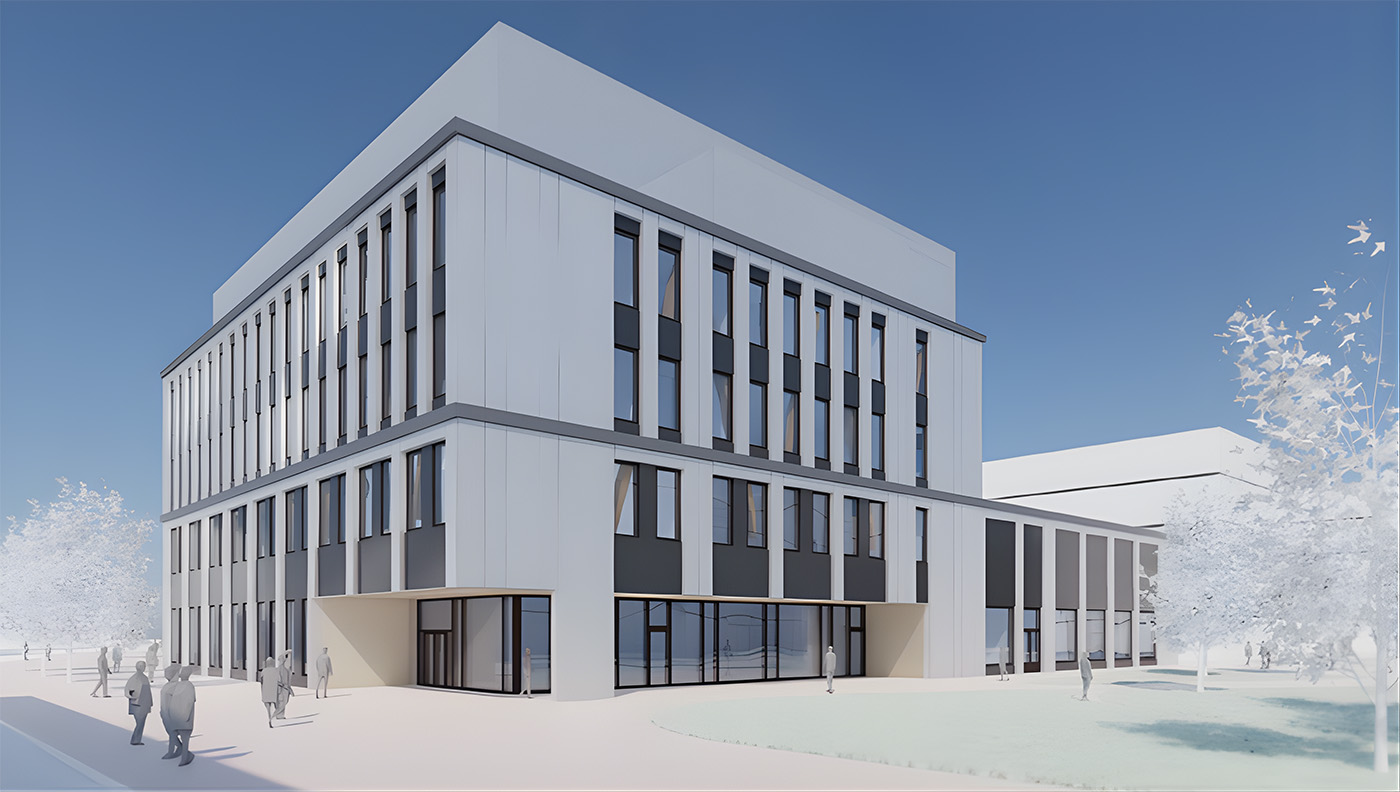
Architectural rendering of the Transformation Center for Georesources and Ecology (TGÖ) © a|sh
As a scientific anchor, TGÖ is intended to provide momentum for additional settlements from research and the knowledge-based economy. A five-story new building is planned, using a resource-efficient timber-frame construction method and featuring modern laboratories, flexible workspaces, and open communication areas. The buildings and laboratories are scheduled to become operational in the first quarter of 2030.
TGÖ’s Four Areas of Expertise
- Geo & Water Systems
Analysis of Geoecological and Hydrogeological Systems in the Context of Georesources - Geospatial Monitoring
Development of Innovative Monitoring Methods for Observing Environmental and Landscape Changes - Georobotics & Geoanalytics
Use of Digital Technologies, Data Analysis, and Automated Systems to Study Complex Georesource Processes - Land Use & Transition
Research on Sustainable Land Use and Regional Transformation Processes in Resource Regions
The Focus
A particular focus is placed on the future-oriented topics of energy transformation, climate adaptation, and dealing with the consequences of mining.
We have many research areas. These include, among others:
- the use of mine water as an energy and heat storage medium
- new methods for the recovery of valuable materials
- sustainable water and resource management
- innovative concepts for the reuse of former mining sites
In doing so, TGÖ addresses key questions of resource sovereignty, climate resilience, and sustainable regional development—with a strong practical focus and the goal of developing viable solutions for people, nature, and the environment.