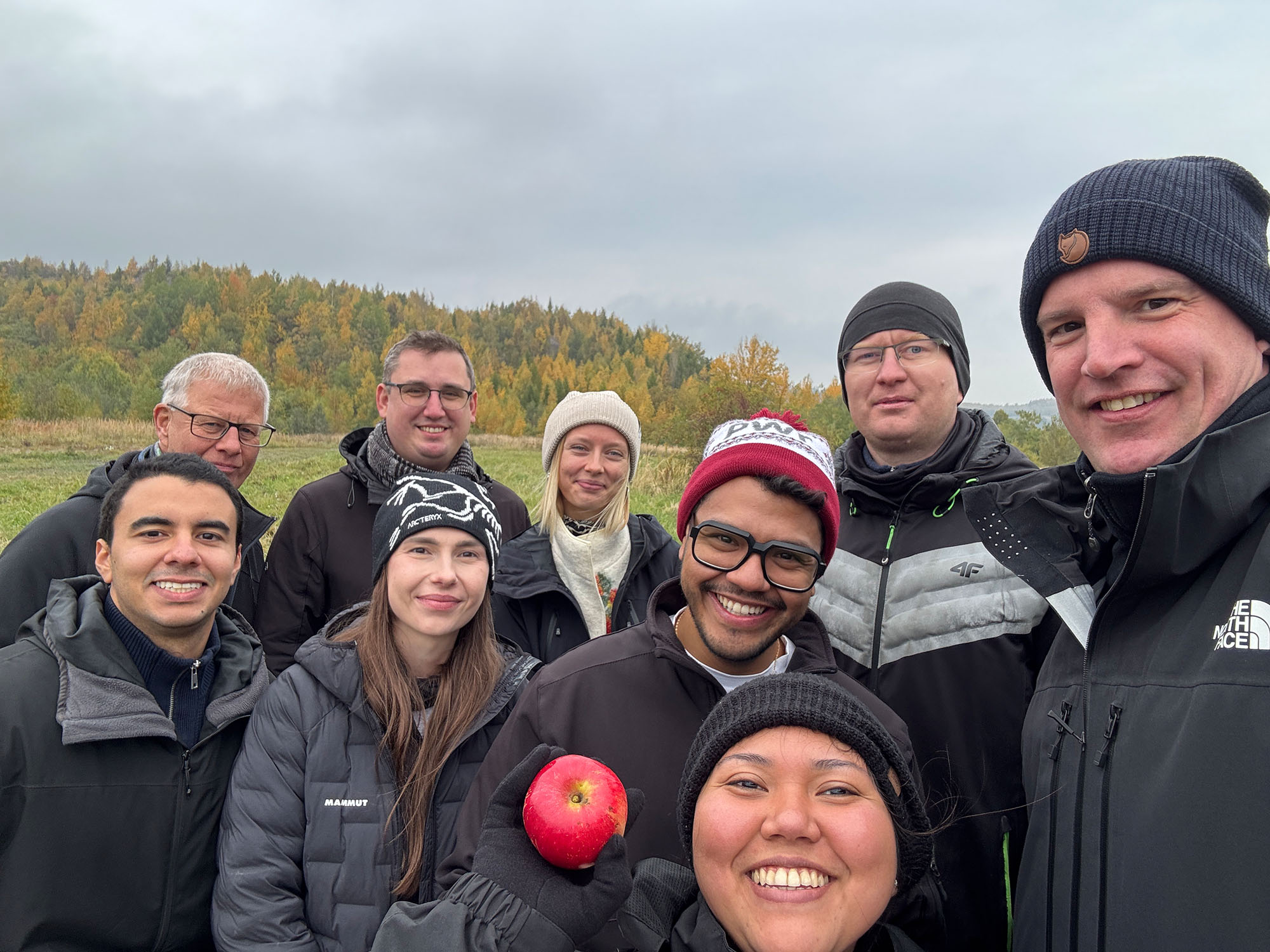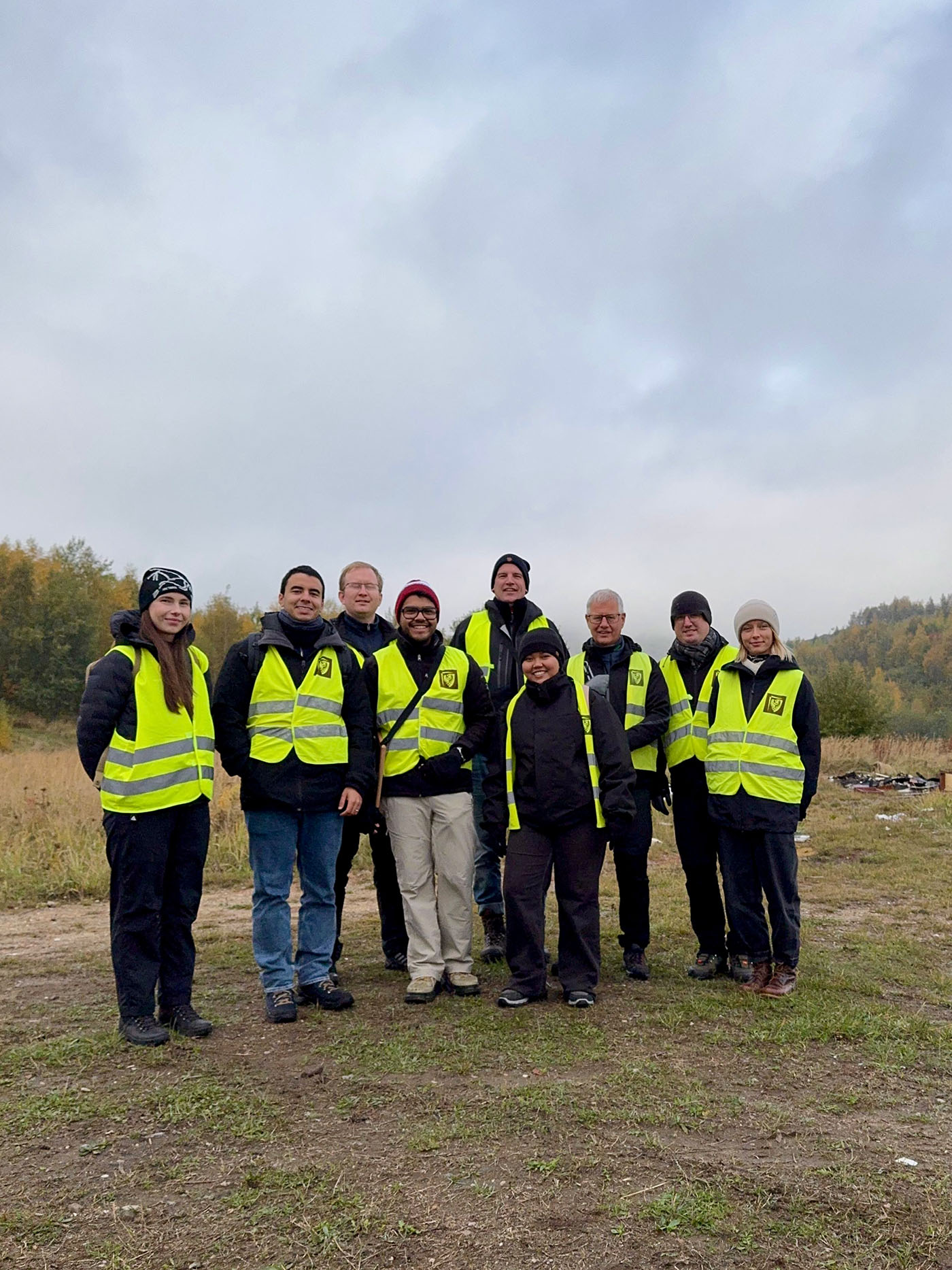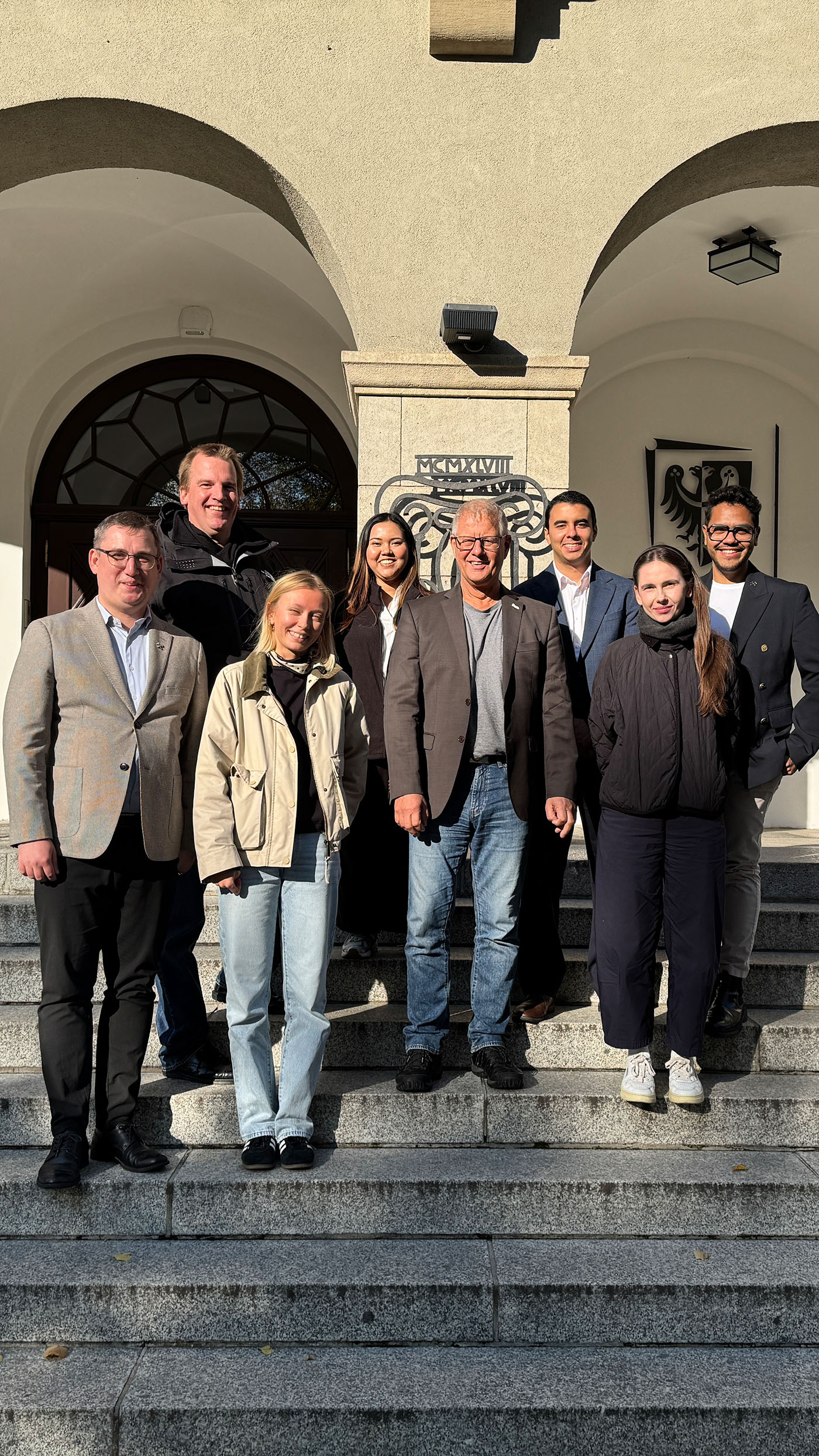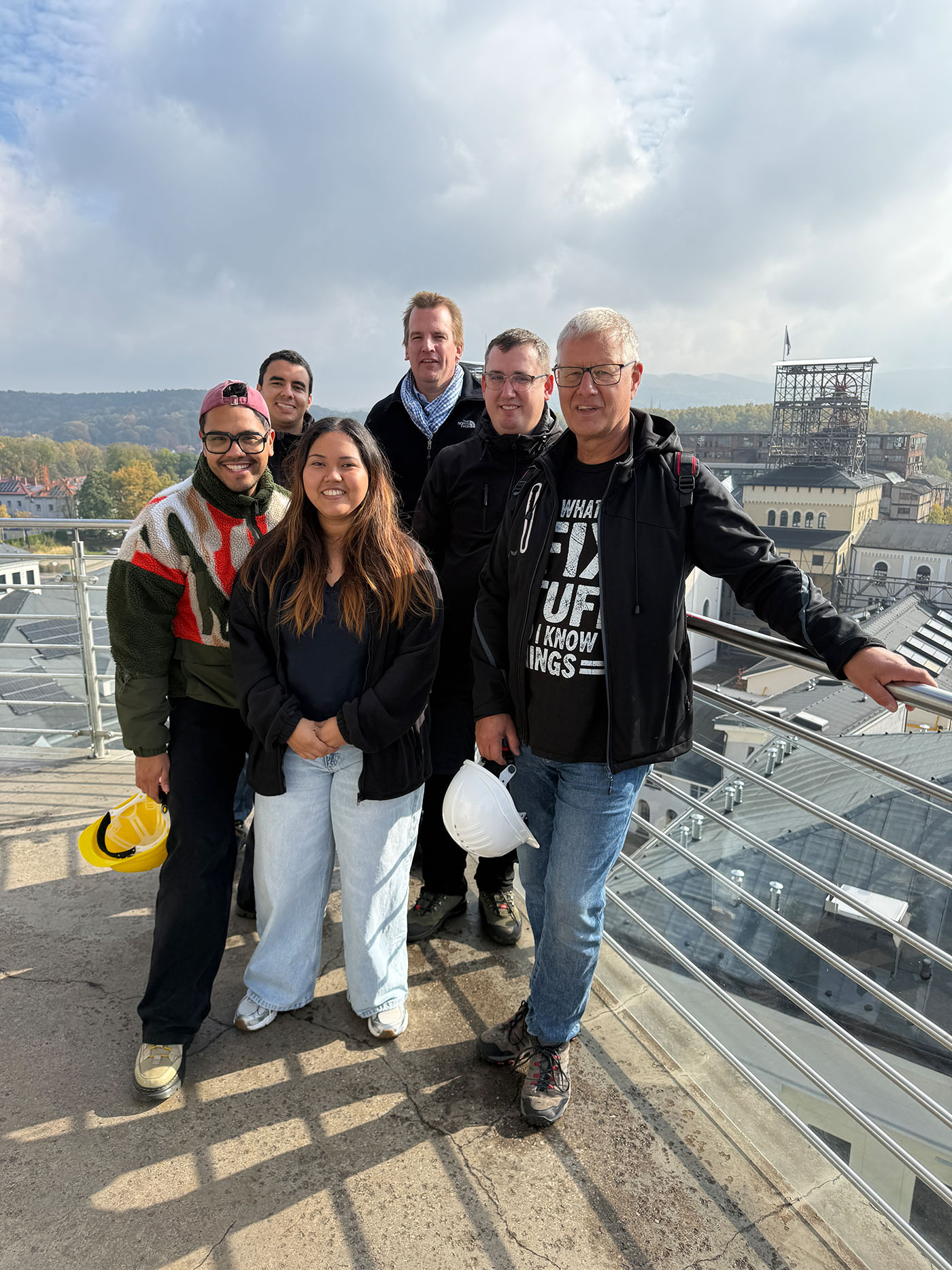
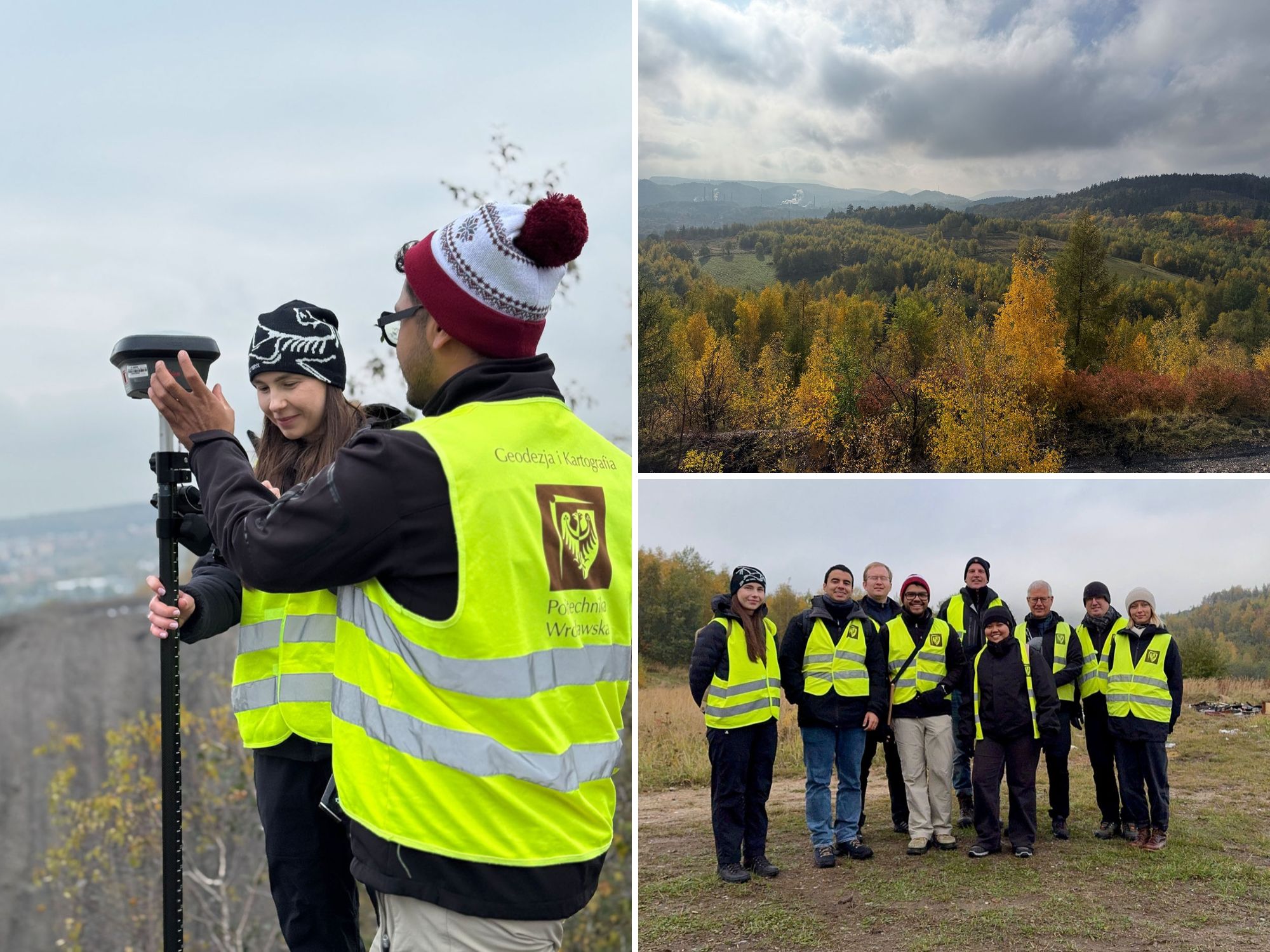
From 17 to 25 October 2026, a team from FZN visited Wrocław University of Science and Technology (WUST). The programme included joint fieldwork at the Wiesław spoil heap, geospatial data analysis and scientific contributions to the “XXVI Conference of PhD Students and Young Scientists.” The visit highlighted FZN’s close and longstanding collaboration with Polish partner institutions, reflected in intensive scientific exchange, joint research projects and practical cooperation in geomonitoring.
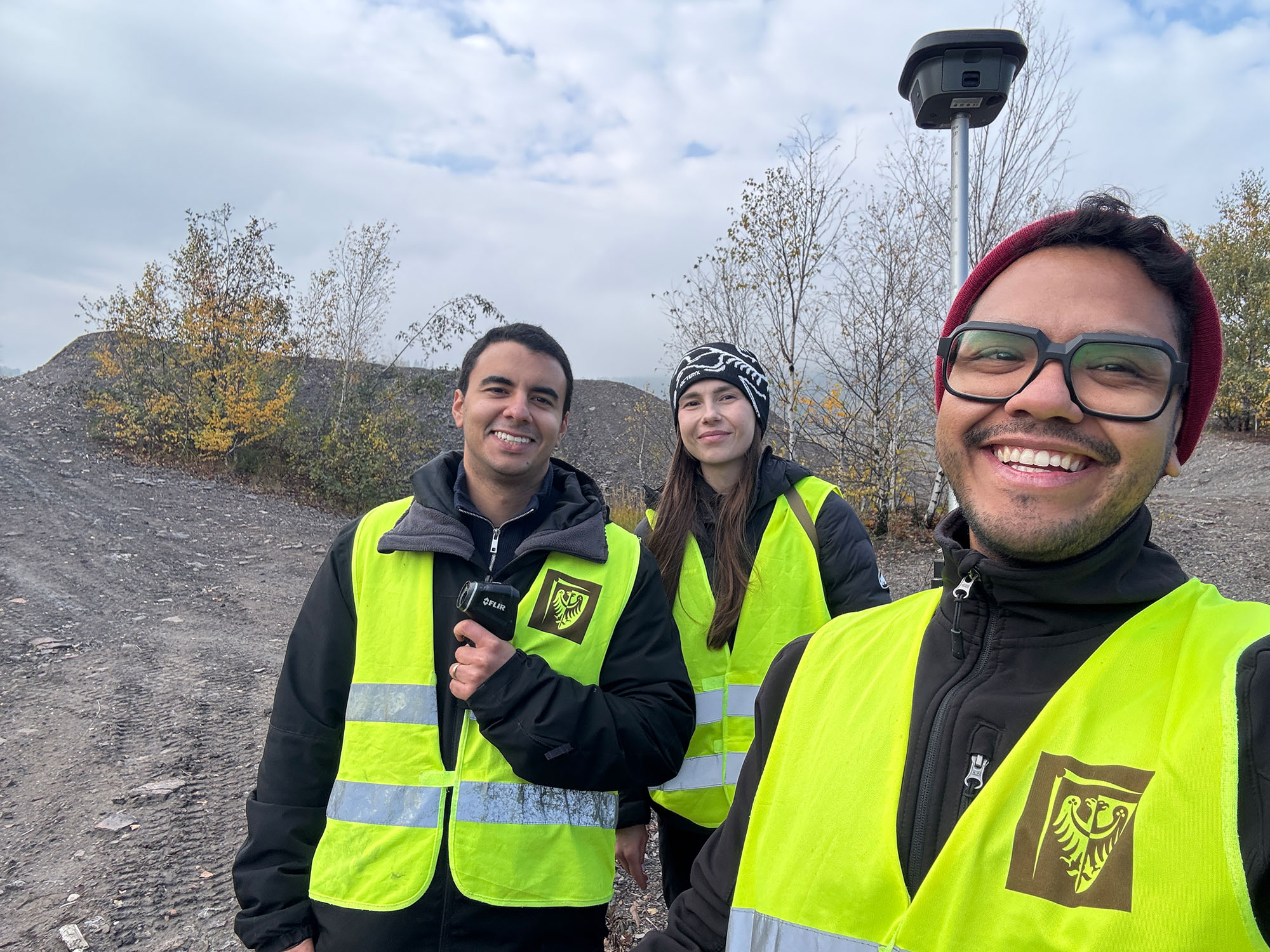
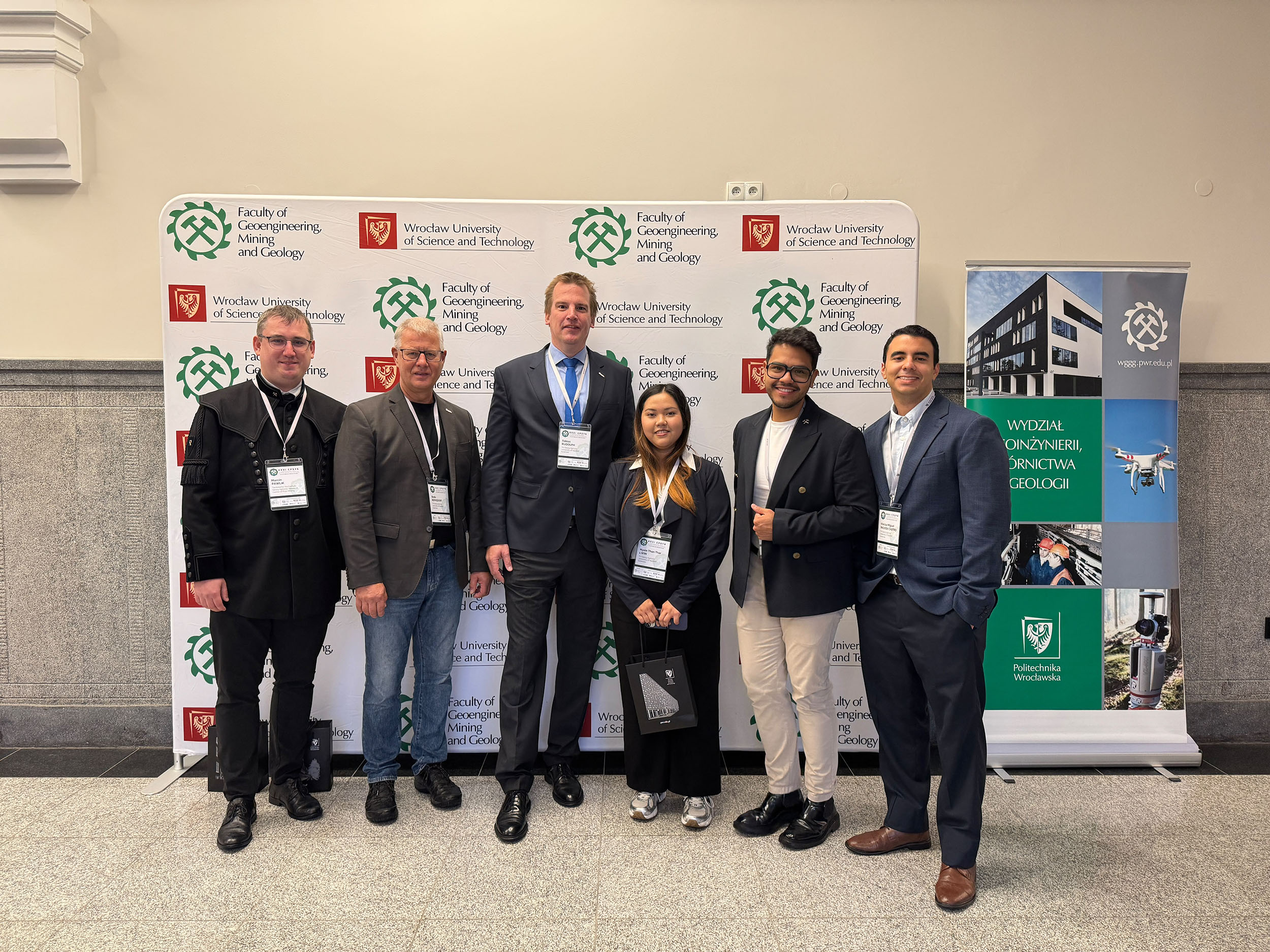
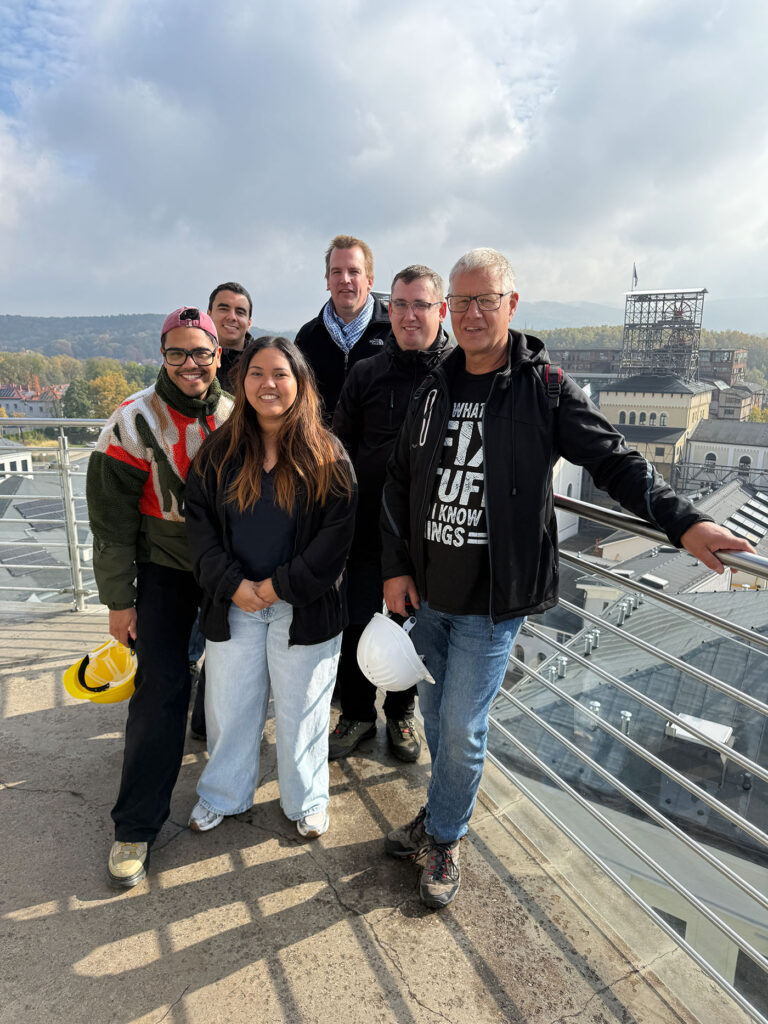
As part of the project MITIGATE (Monitoring of Geoenvironmental Hazards in the Post-Mining Areas) an FZN team visited Wrocław University of Science and Technology (WUST) in Lower Silesia. The FZN MITIGATE team consisted of Prof. Tobias Rudolph, Dr. Bodo Bernsdorf, Dr.-Ing. Marcin Pawlik, Hernan Flores, Vinicius Inojosa and Nyein Than Thar Lwin. Saidjamol Akbarov, a research associate at FZN, also travelled to Poland to take part in the „XXVI Conference of PhD Students and Young Scientists“ – which marked the conclusion of the visit.
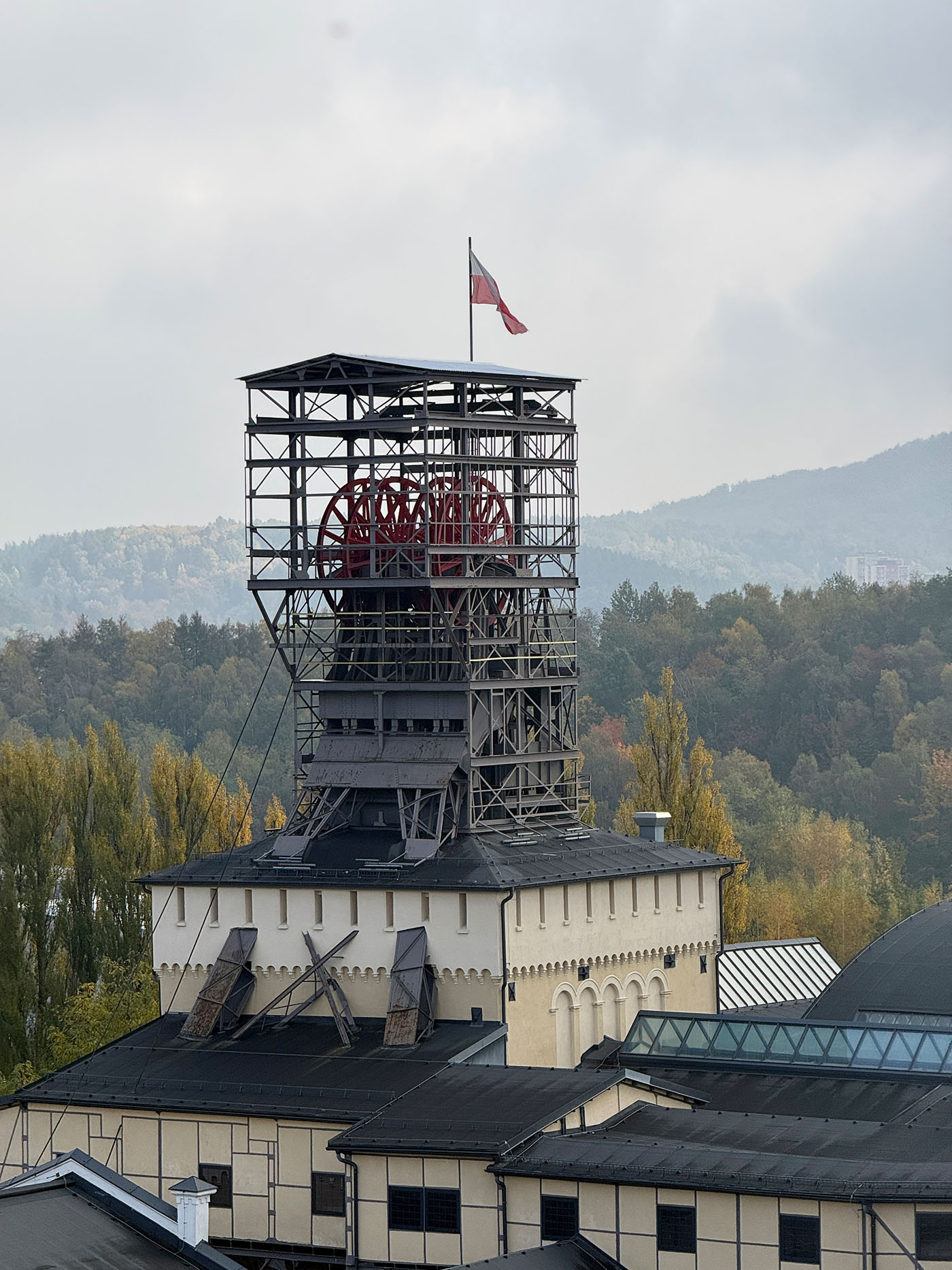
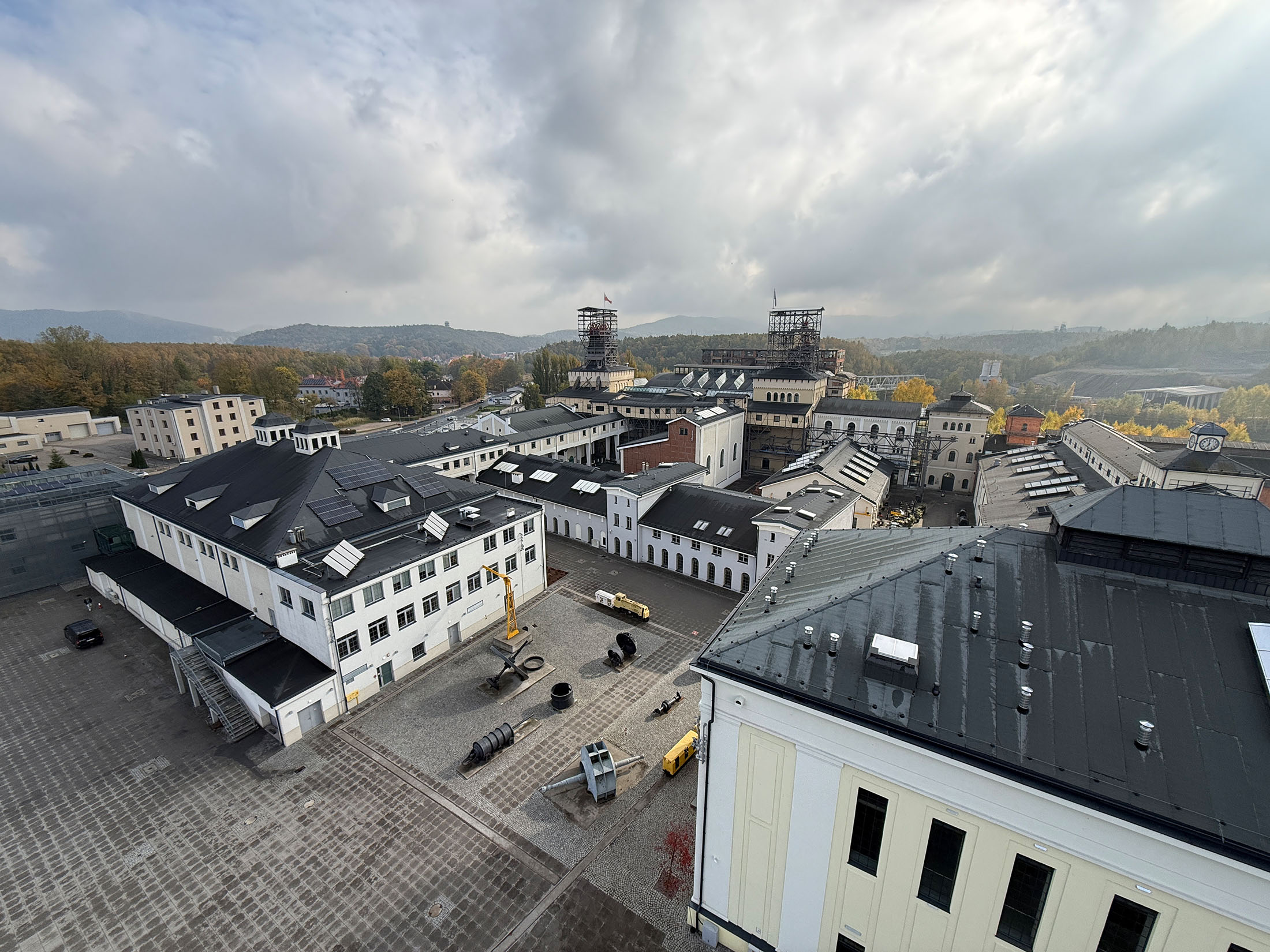
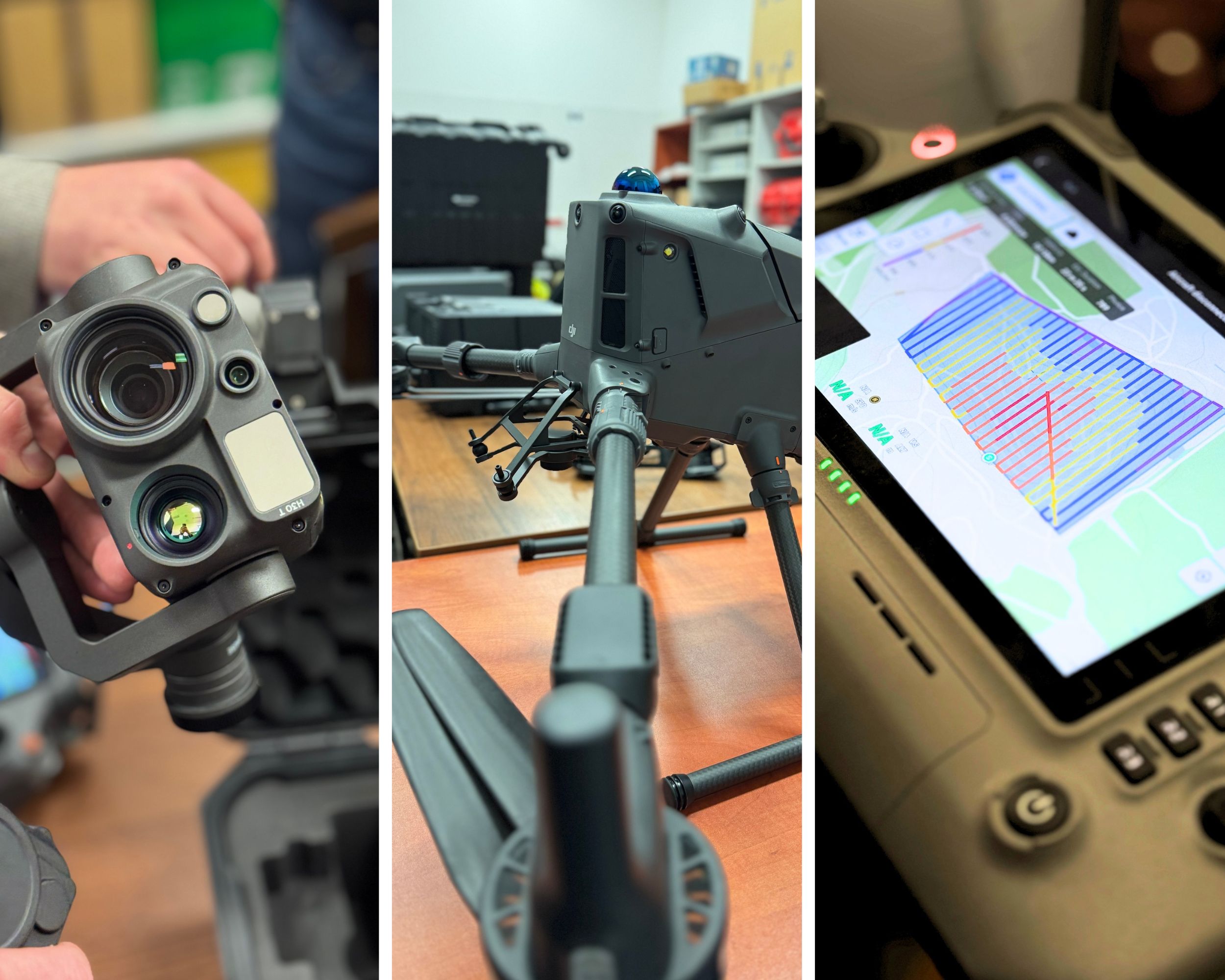
The visit combined professional exchange with joint fieldwork in post-mining landscapes, geospatial data analysis and scientific presentations. Following a welcome at the Geocentrum of Wrocław University of Science and Technology and an introduction to the university and the Faculty of Geoengineering, Mining and Geology –particularly its Department of Geodesy and Geoinformatics – by Prof. Jan Blachowski, the programme began with an introduction to the surveying equipment and planning for the photogrammetric survey. This was followed by joint fieldwork involving drone operations.
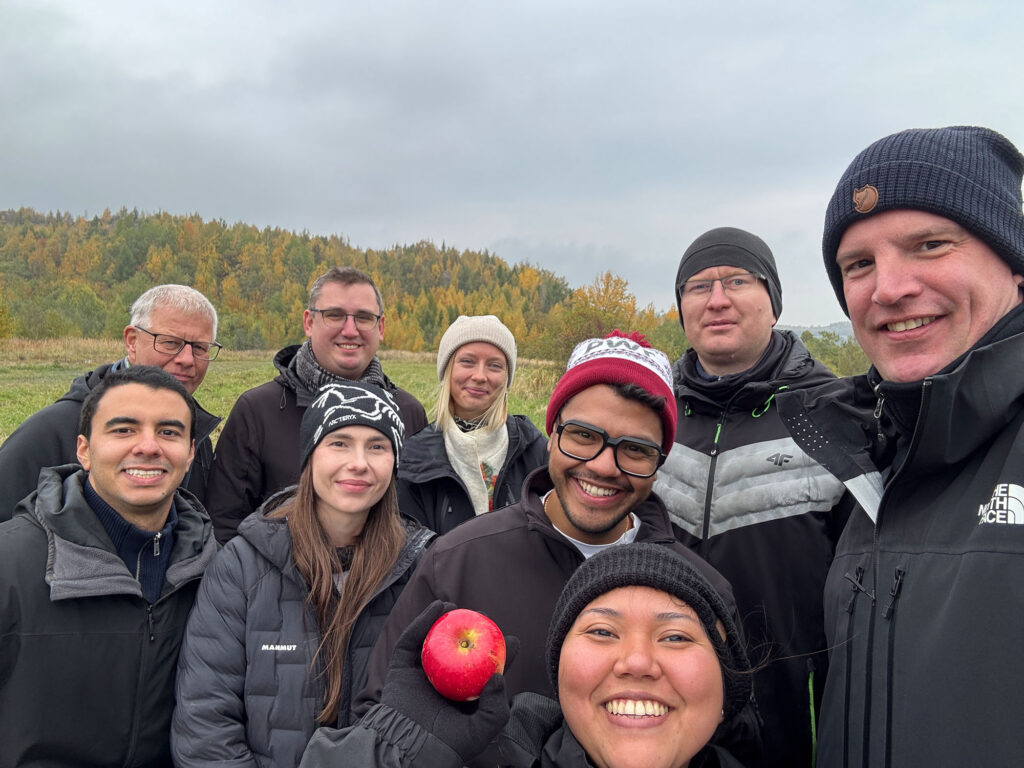
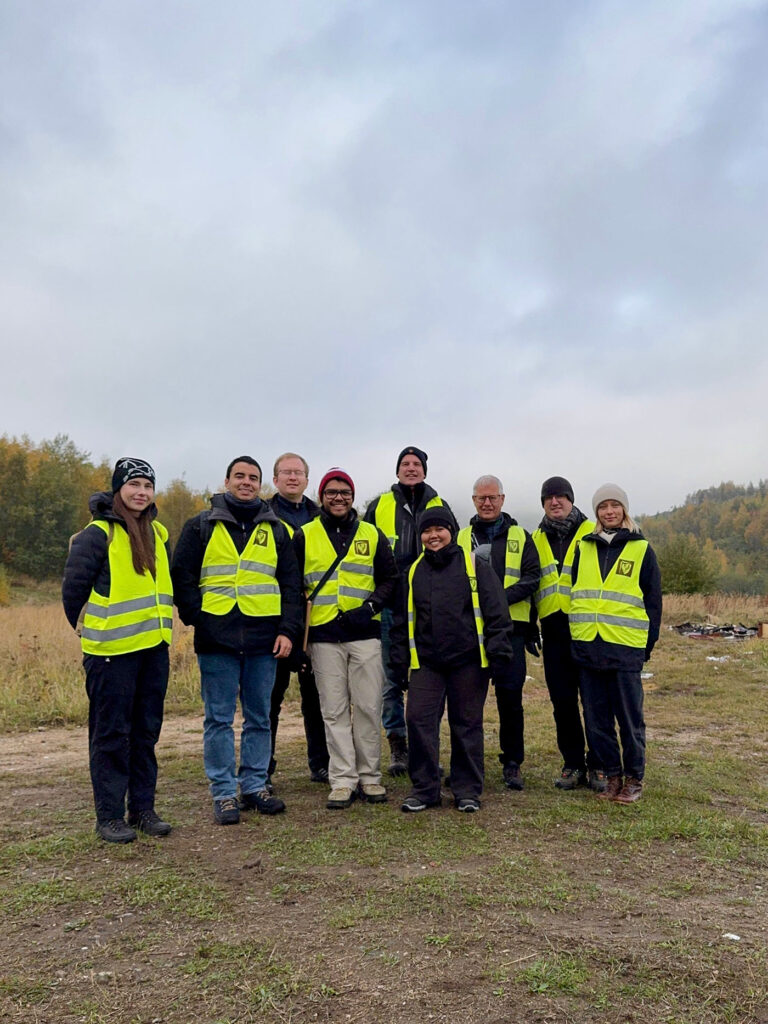
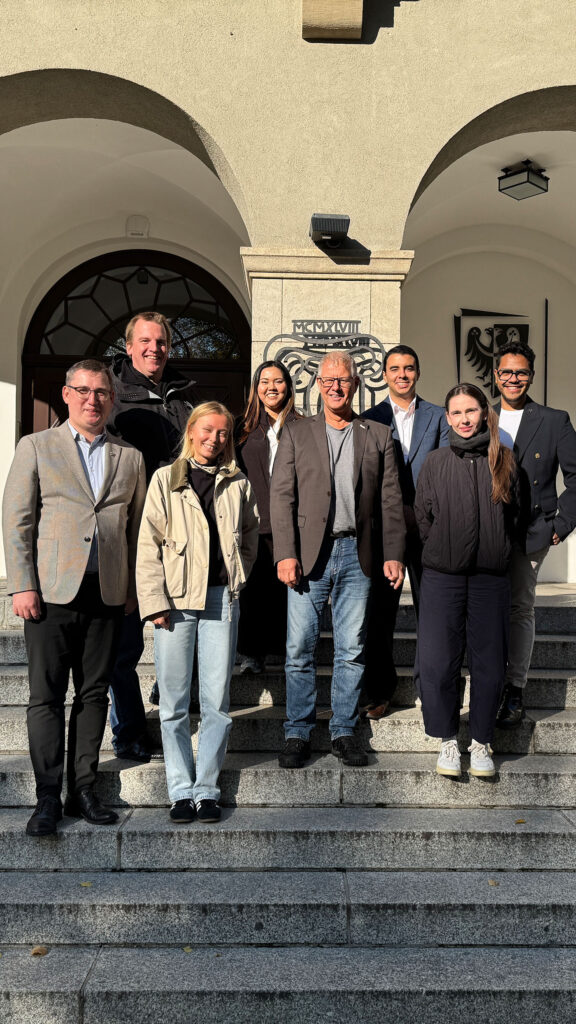
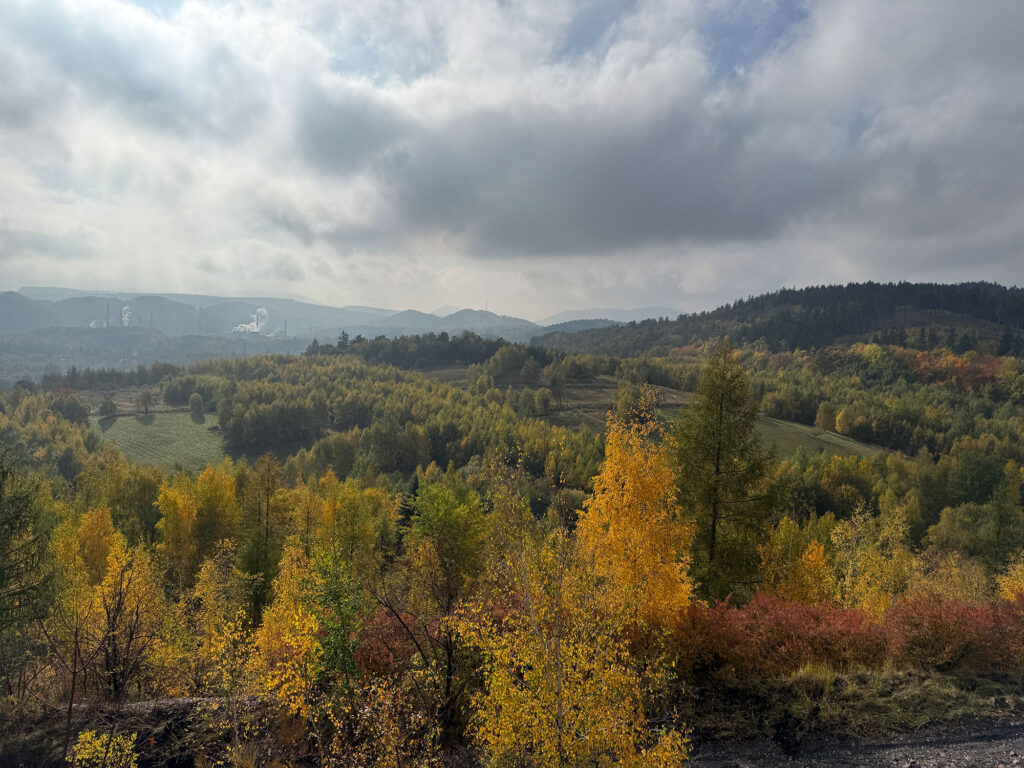
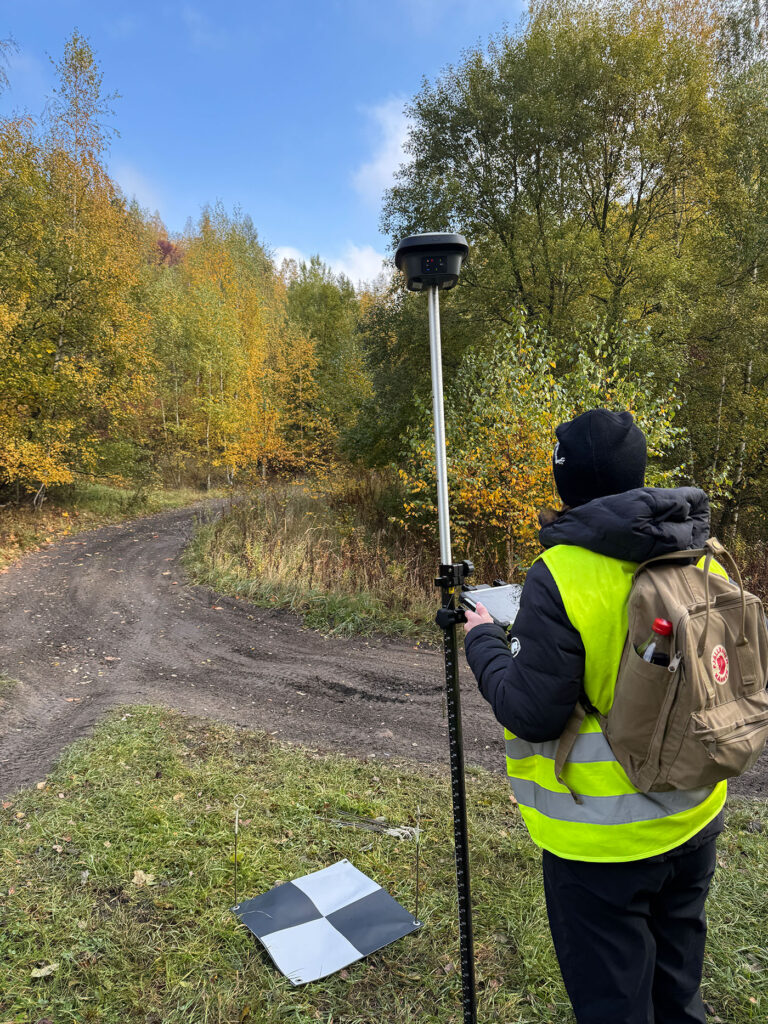
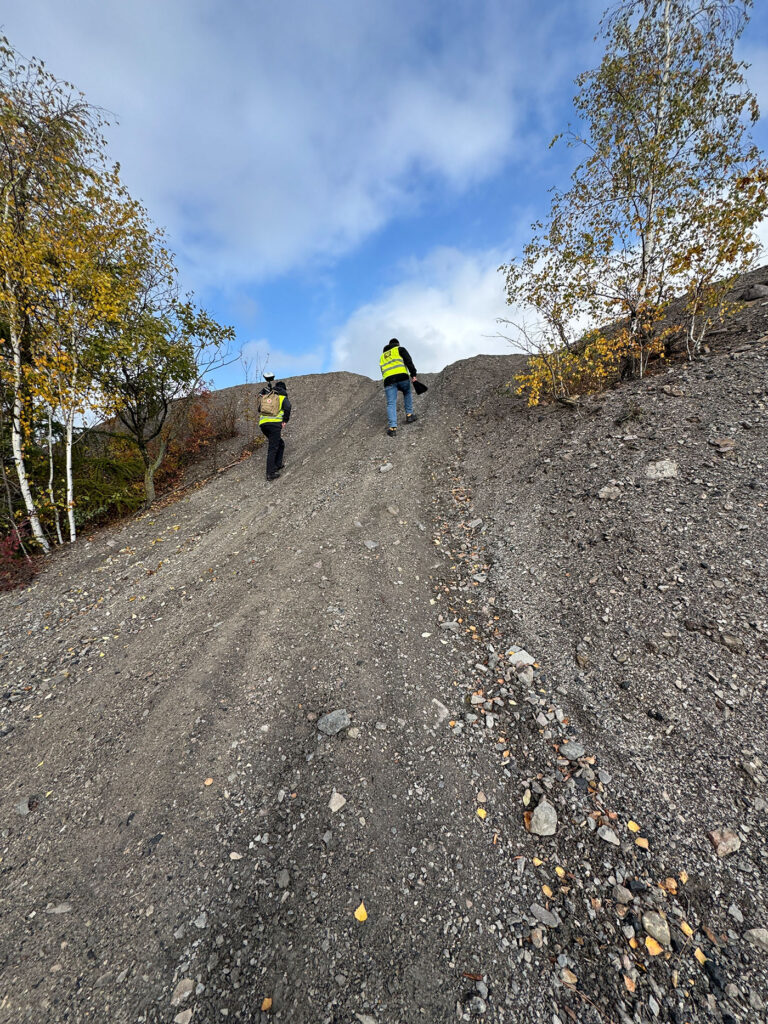
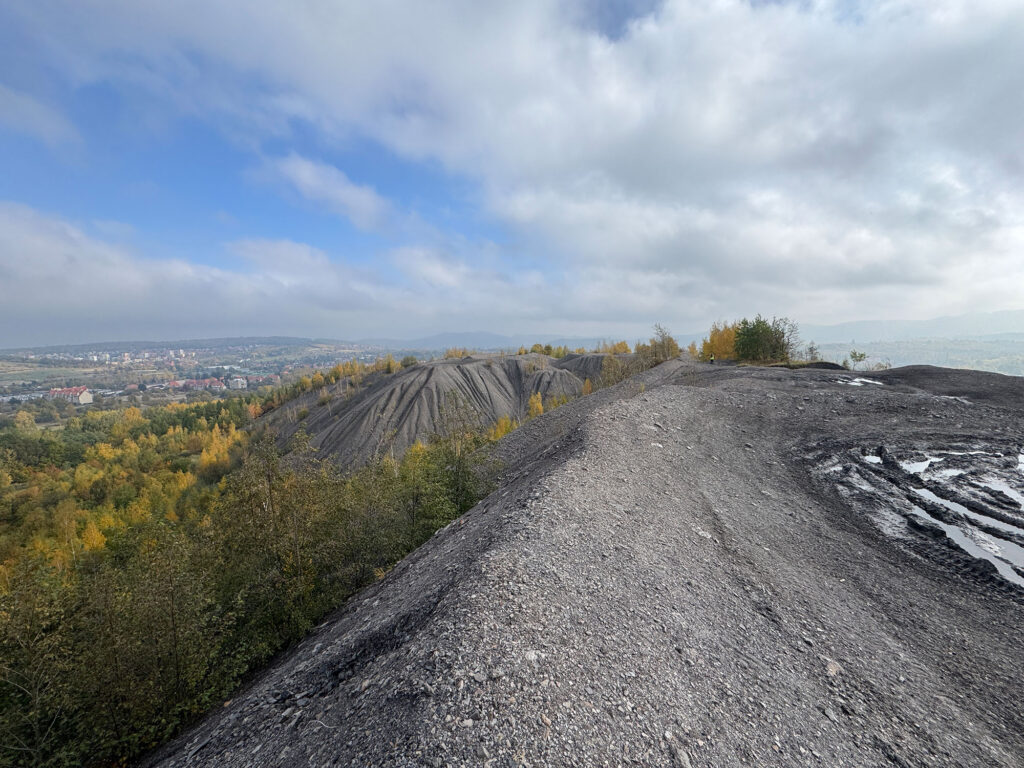
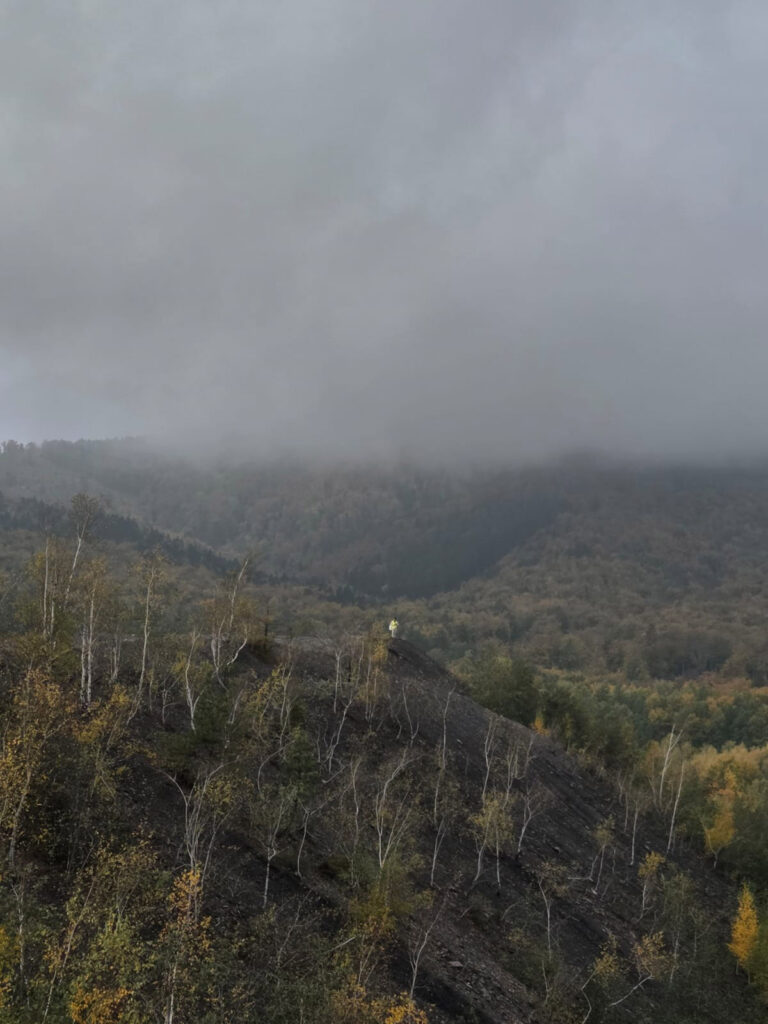
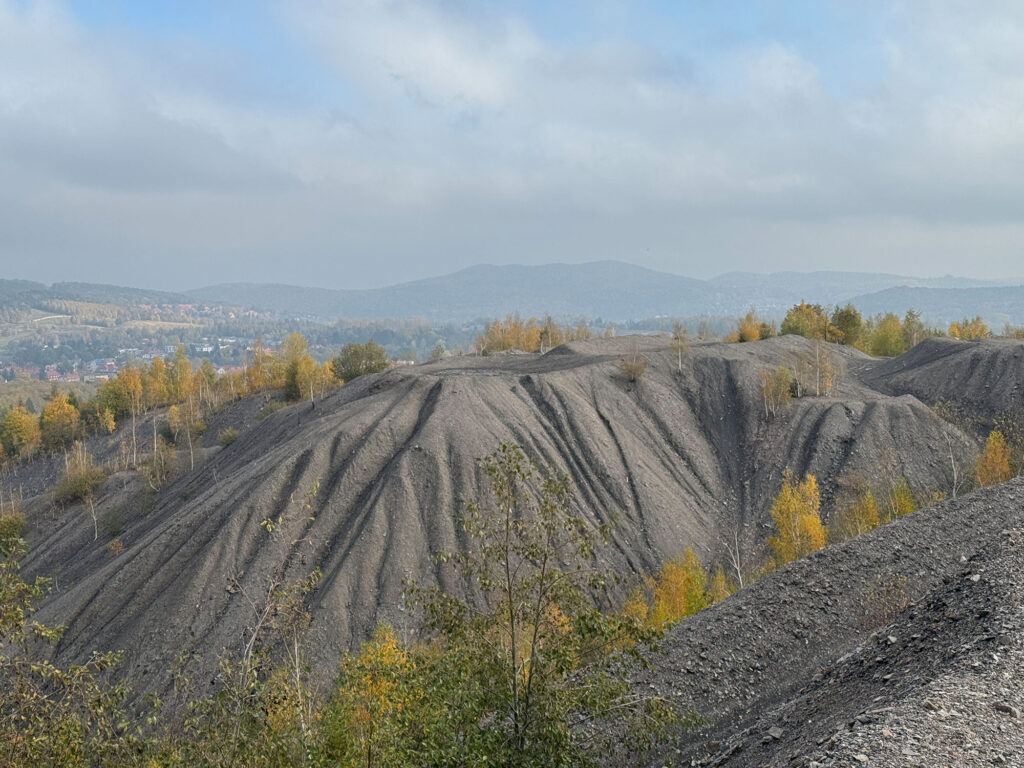
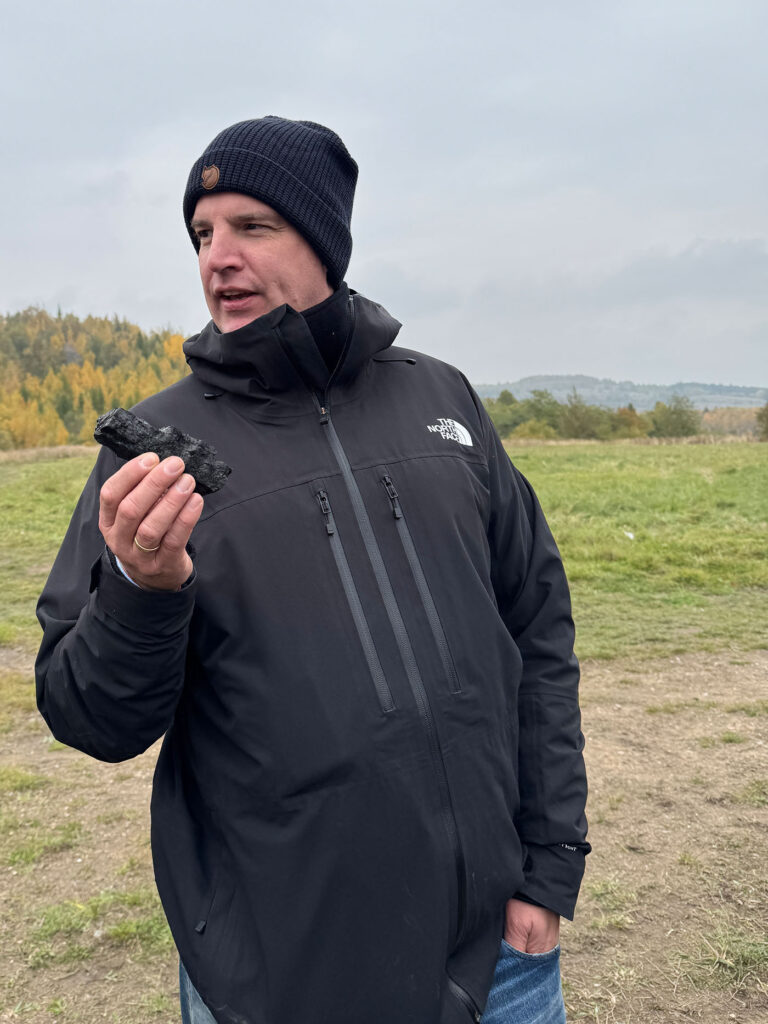
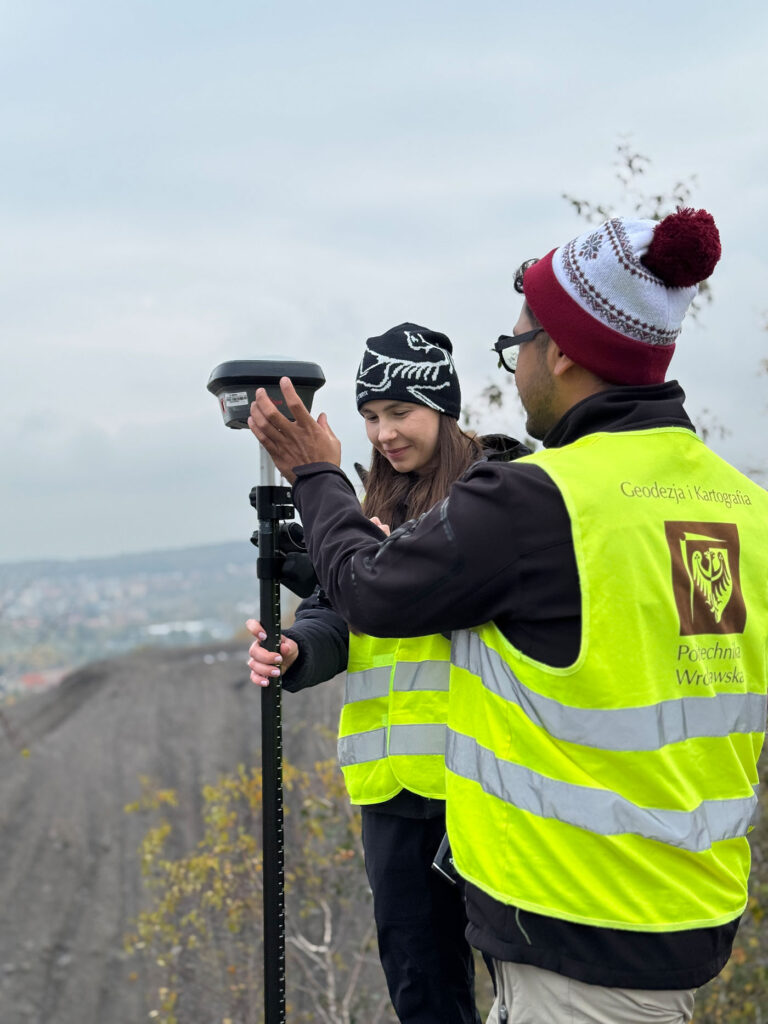
Photos: FZN
Geomonitoring at the Wiesław spoil heap in Lower Silesia
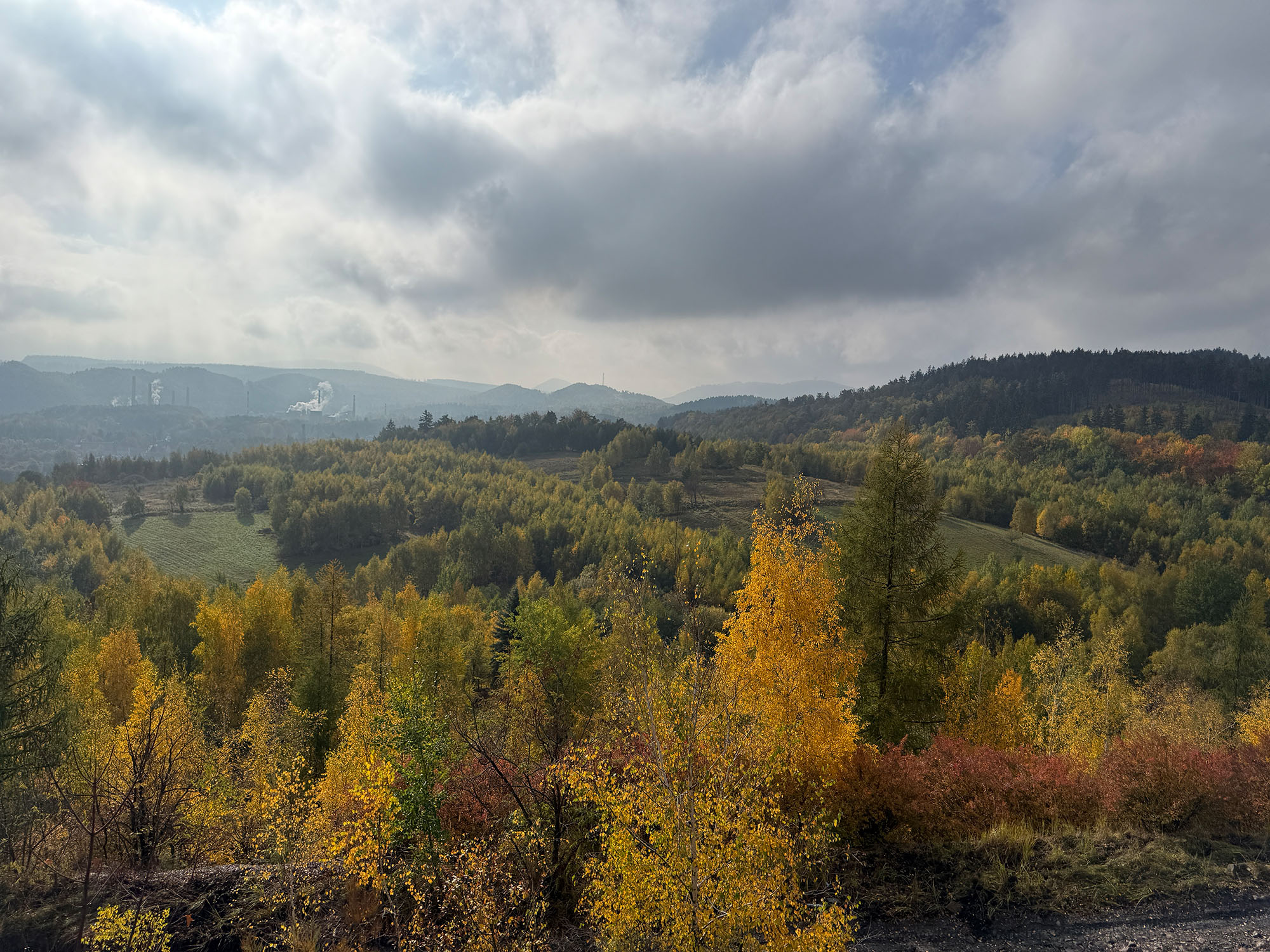
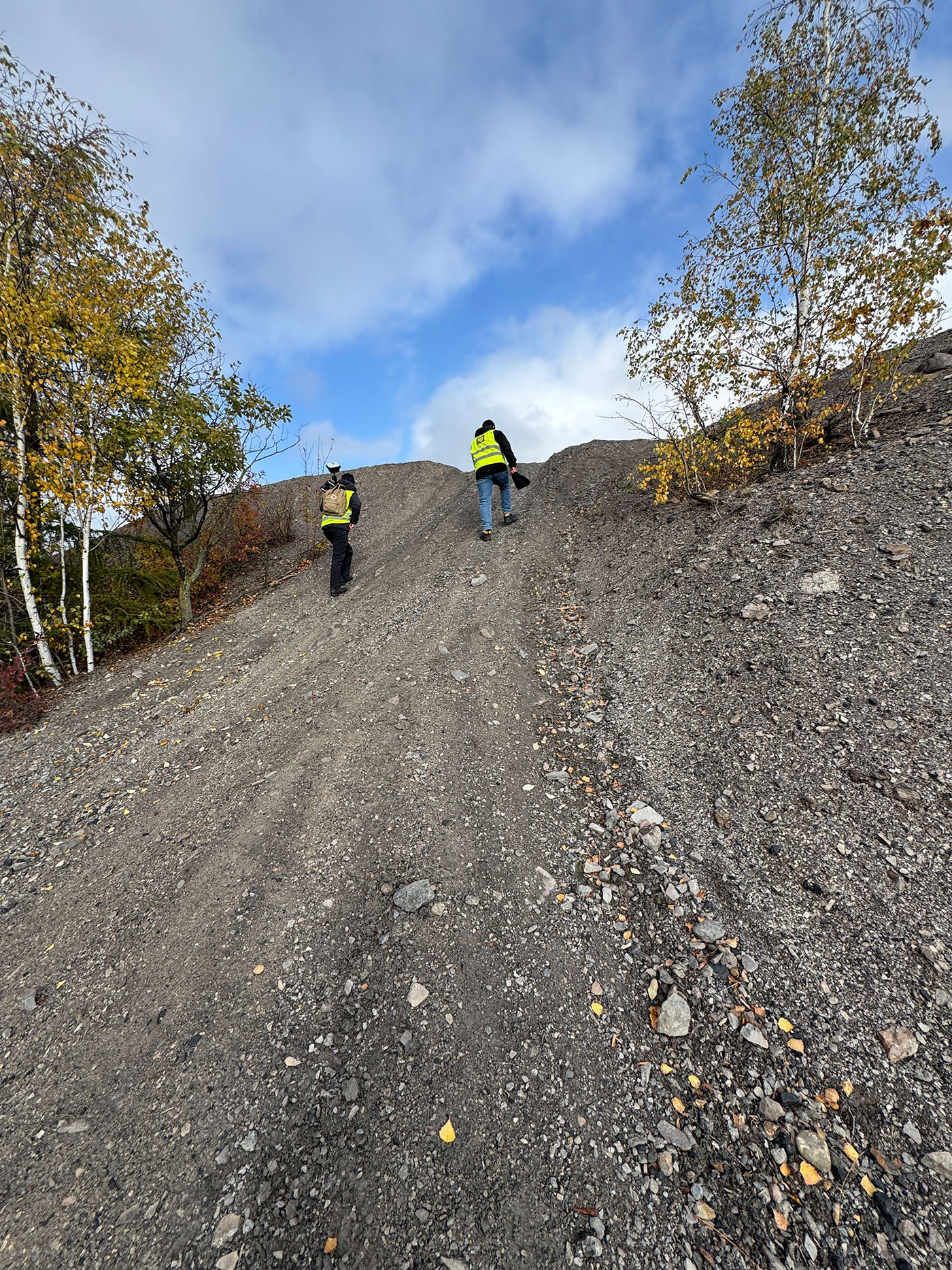
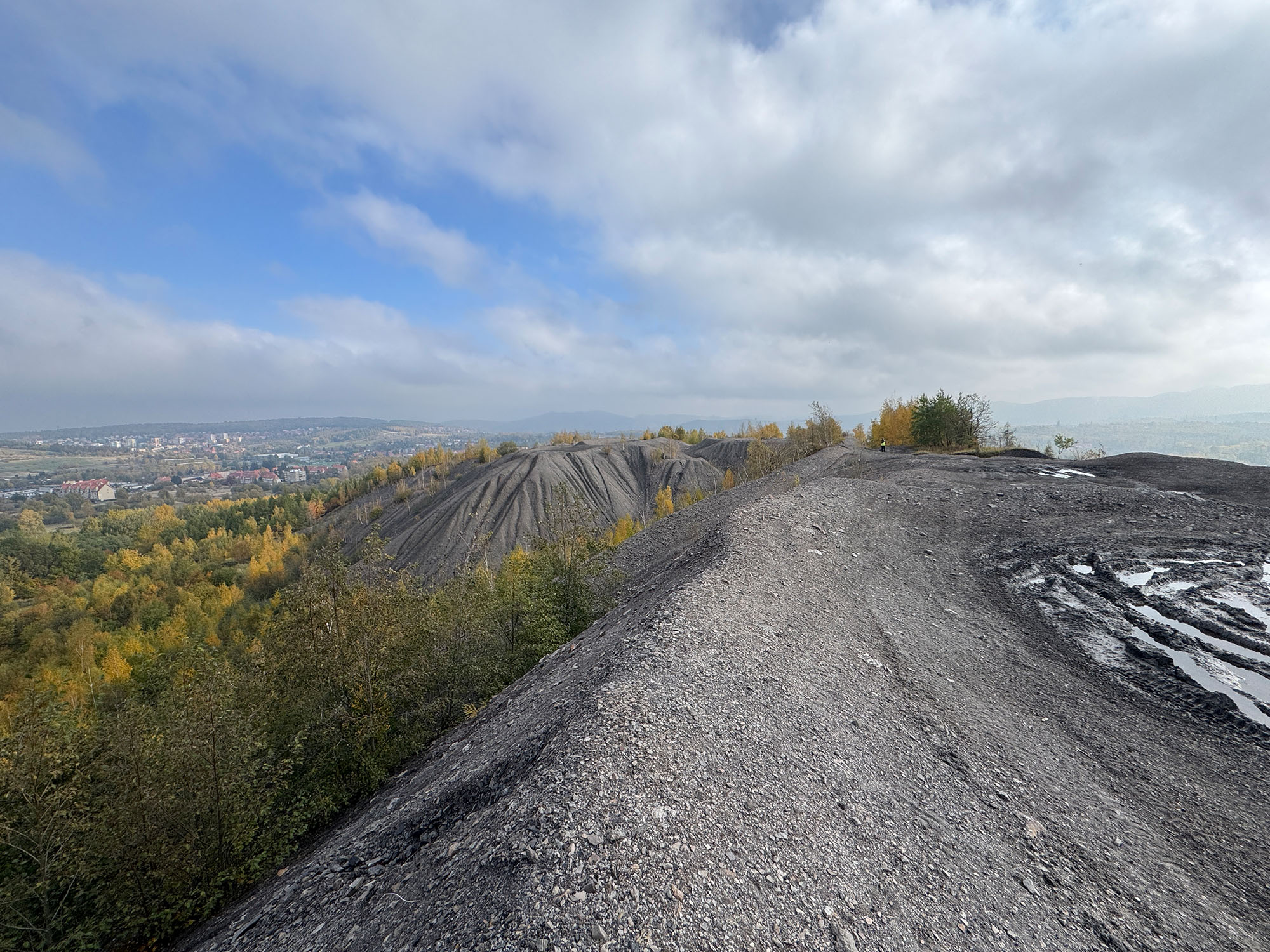
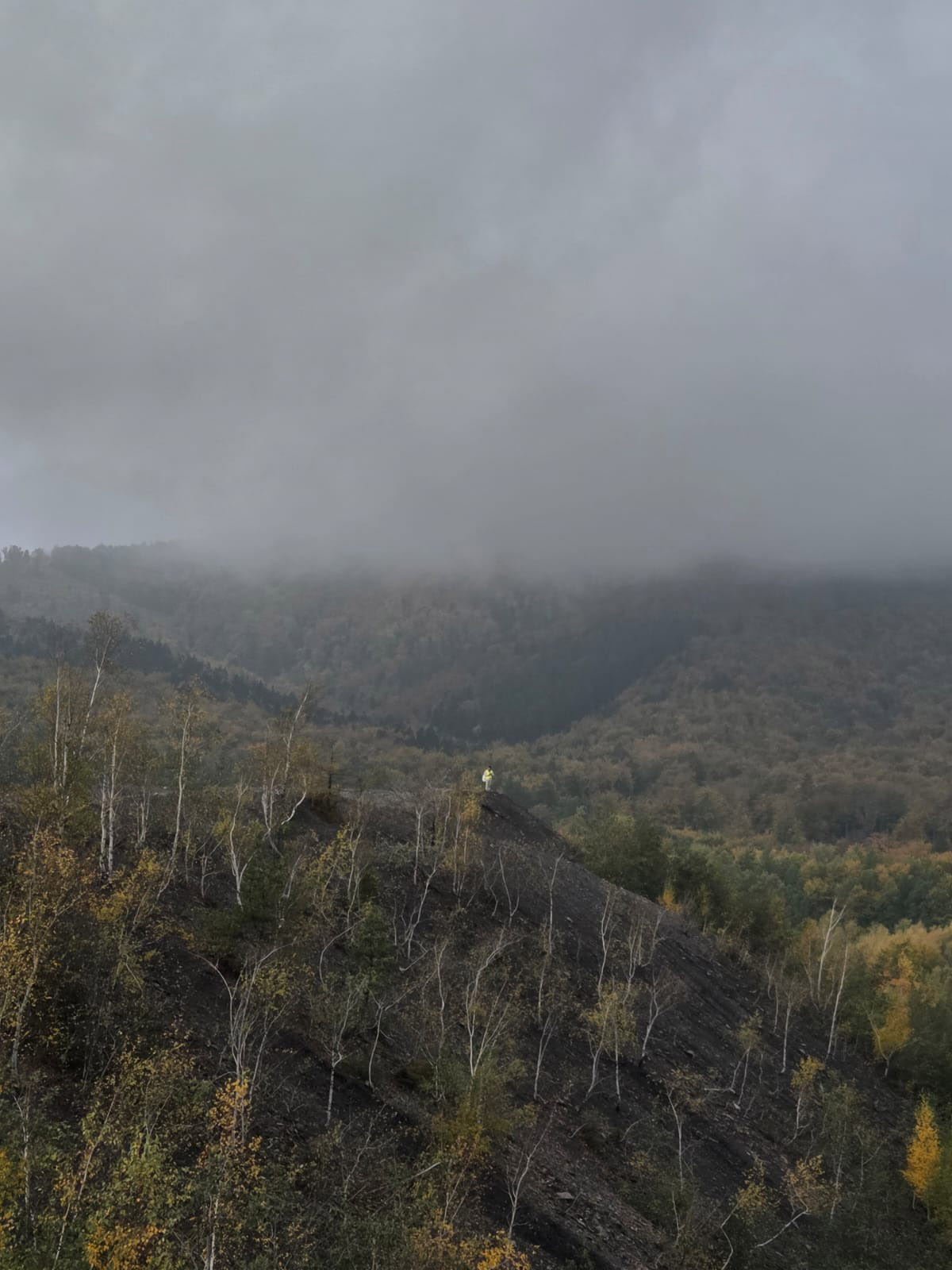
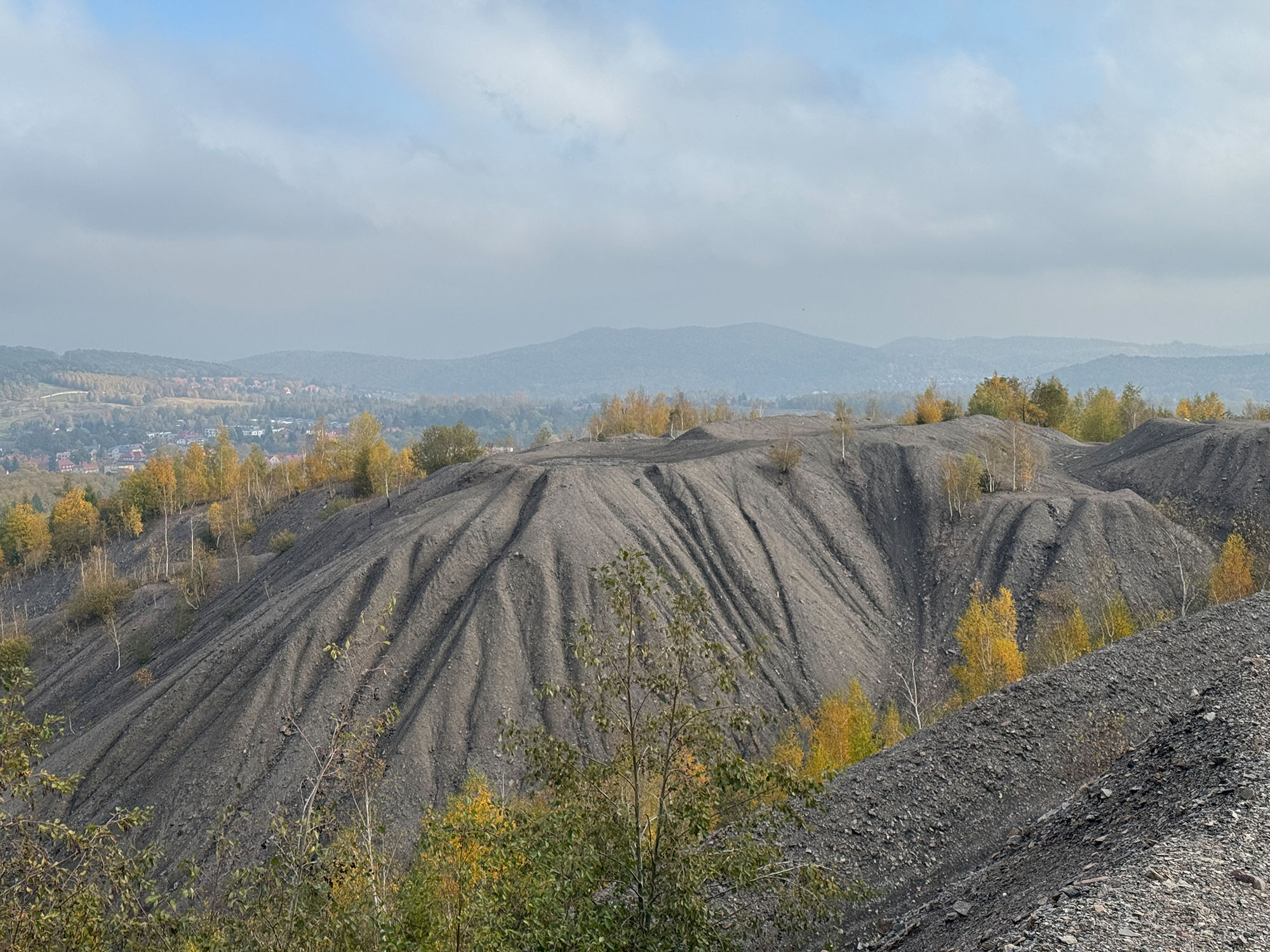
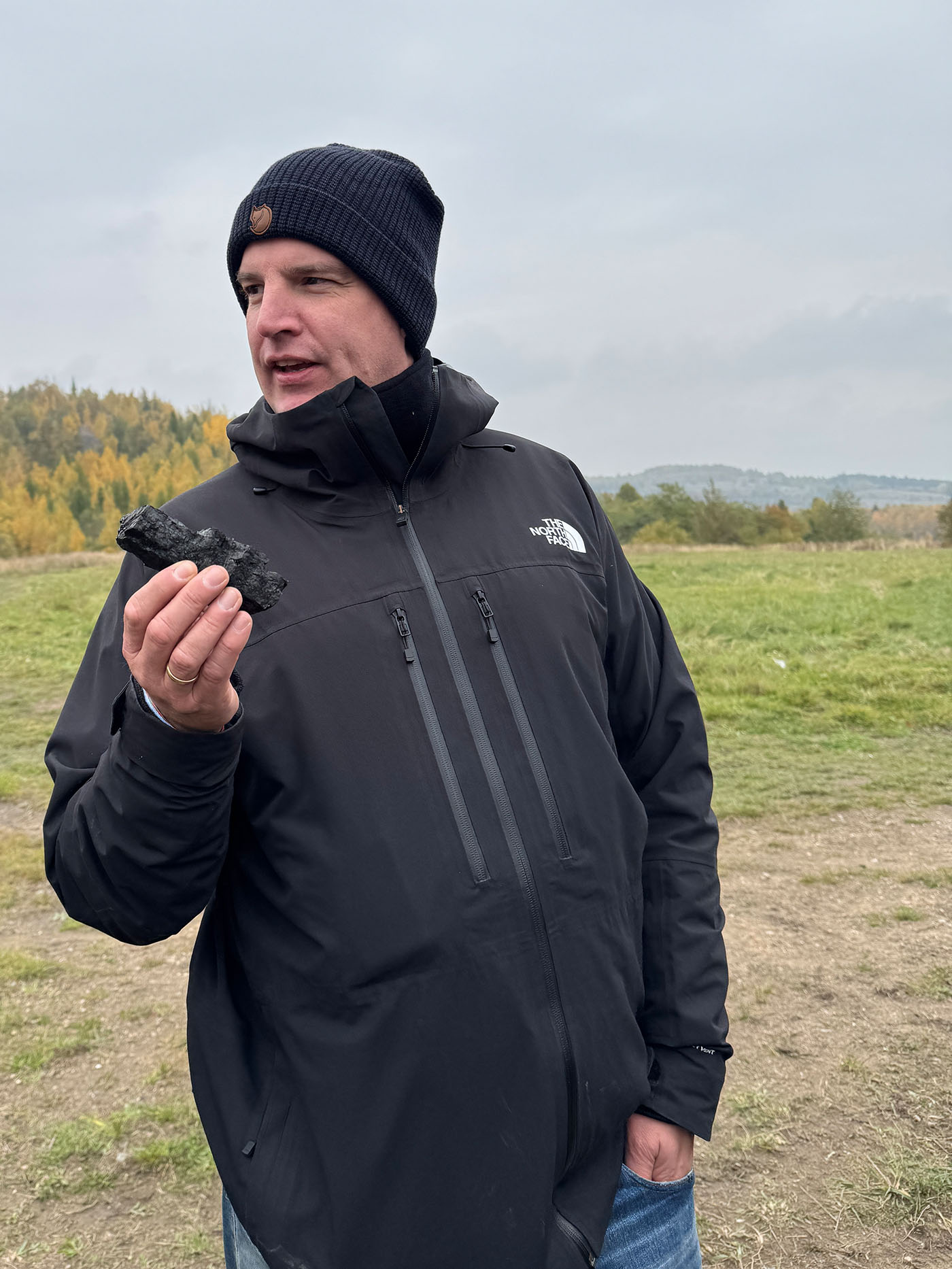
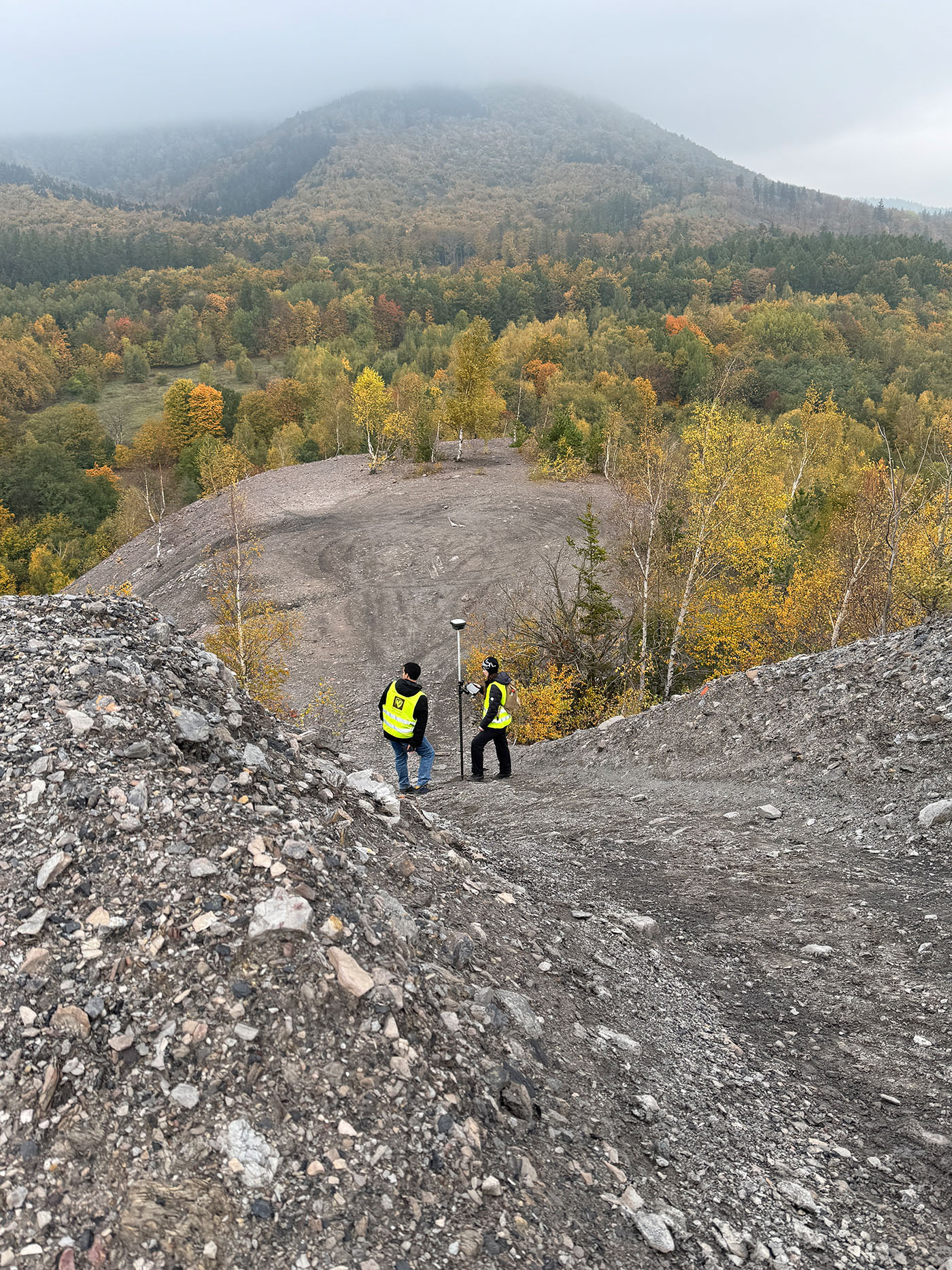
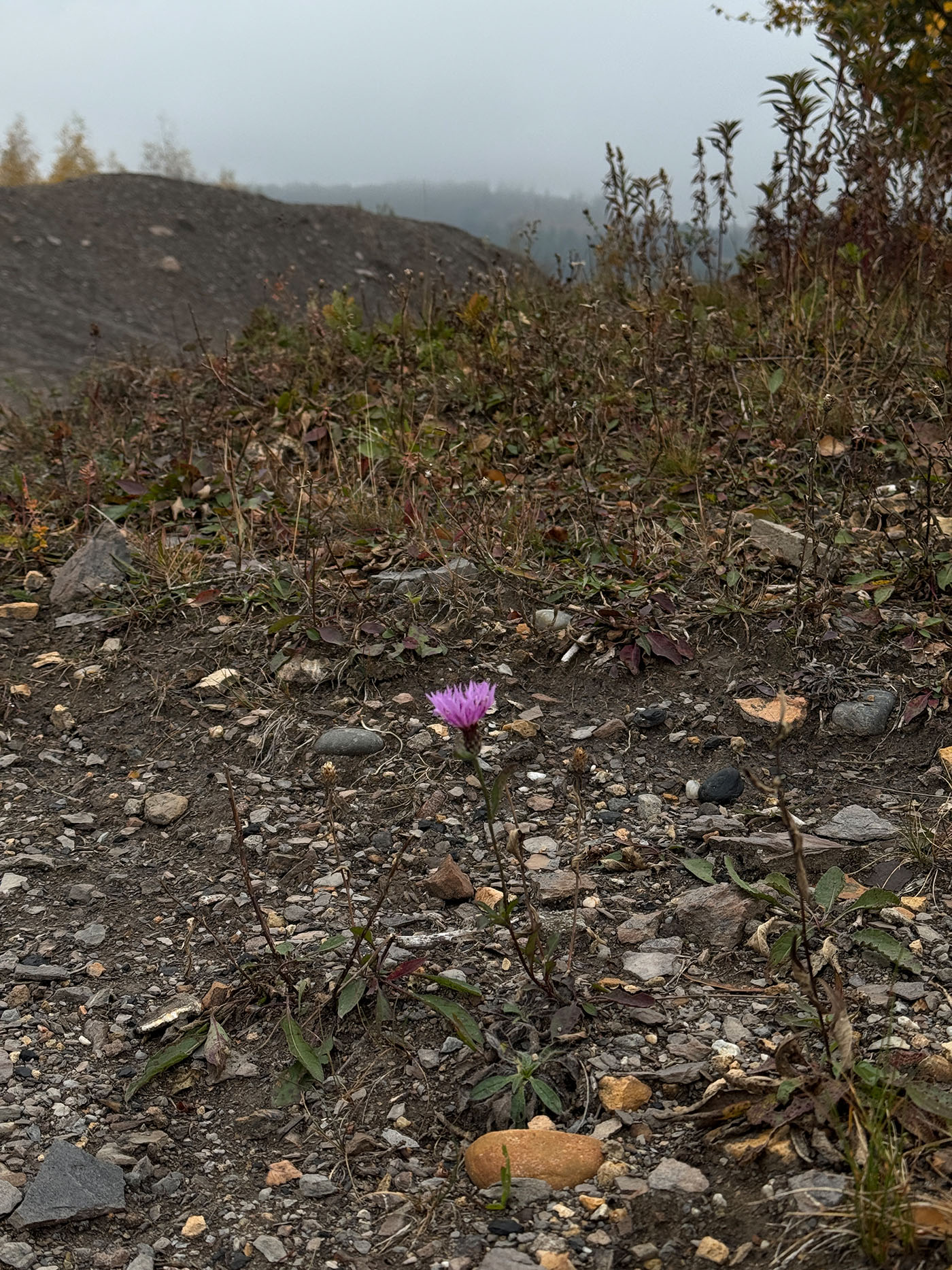
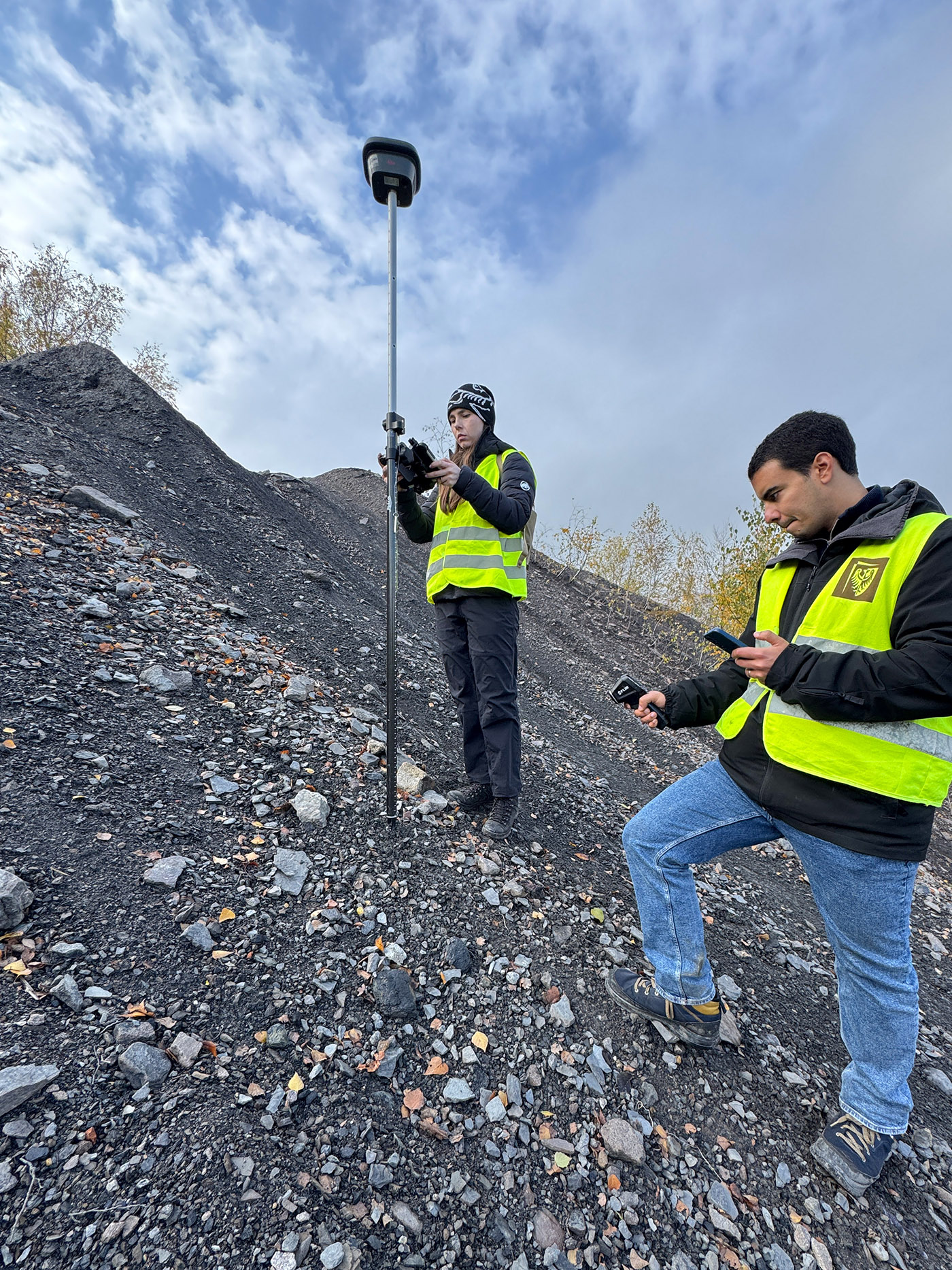
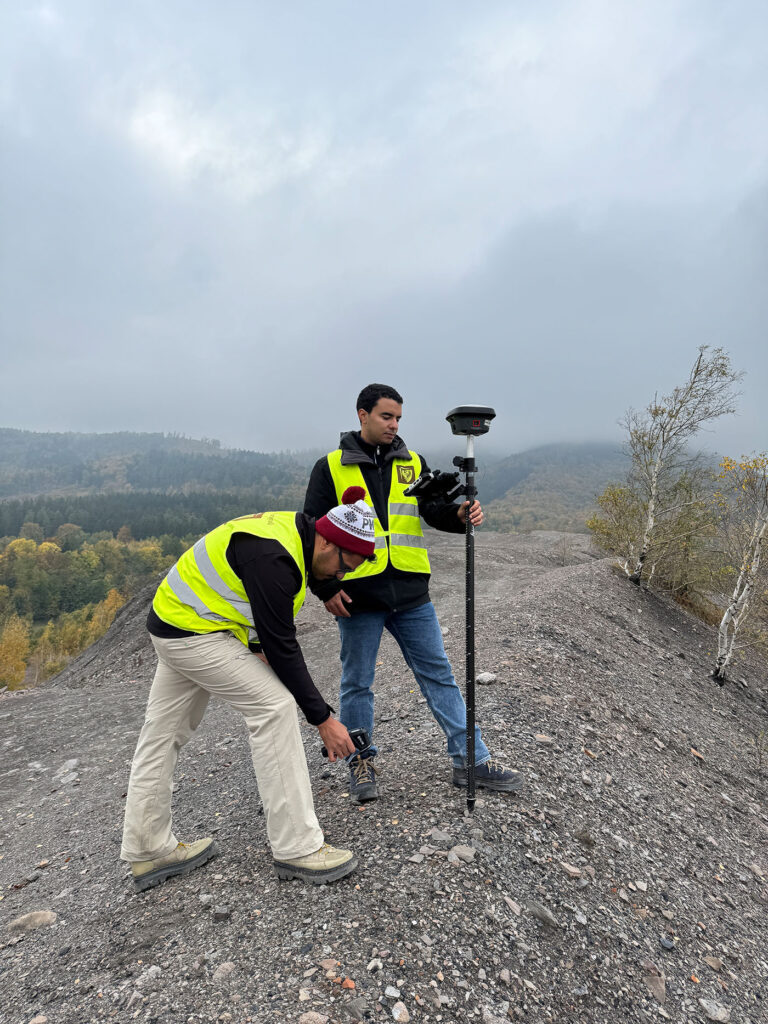
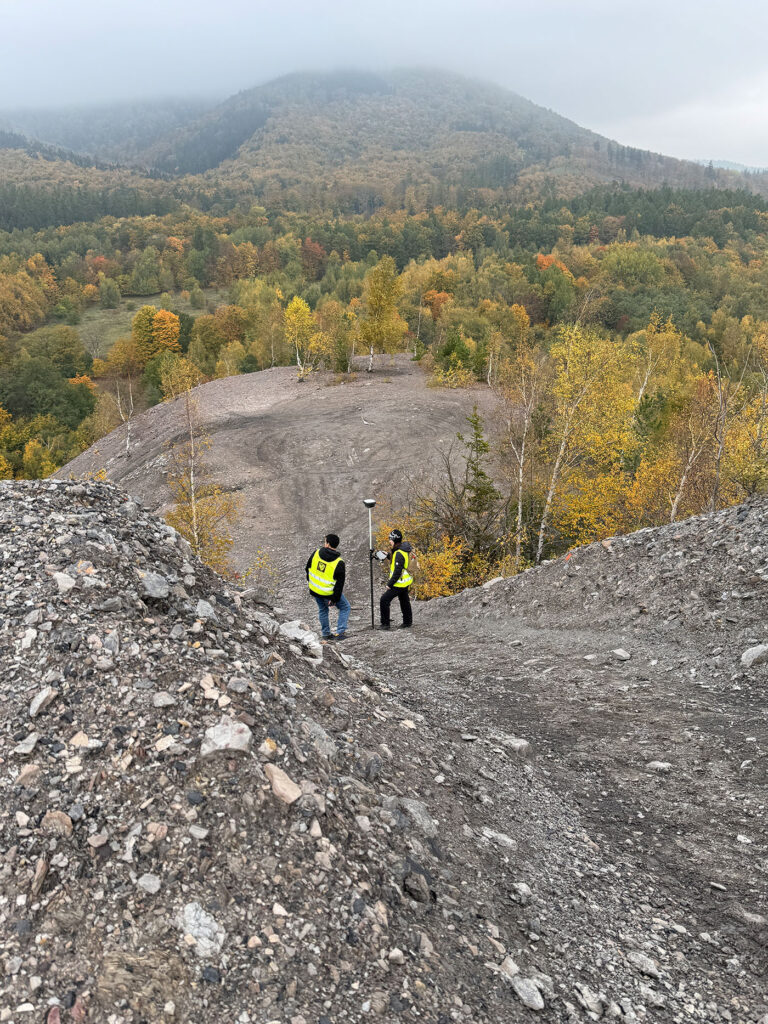
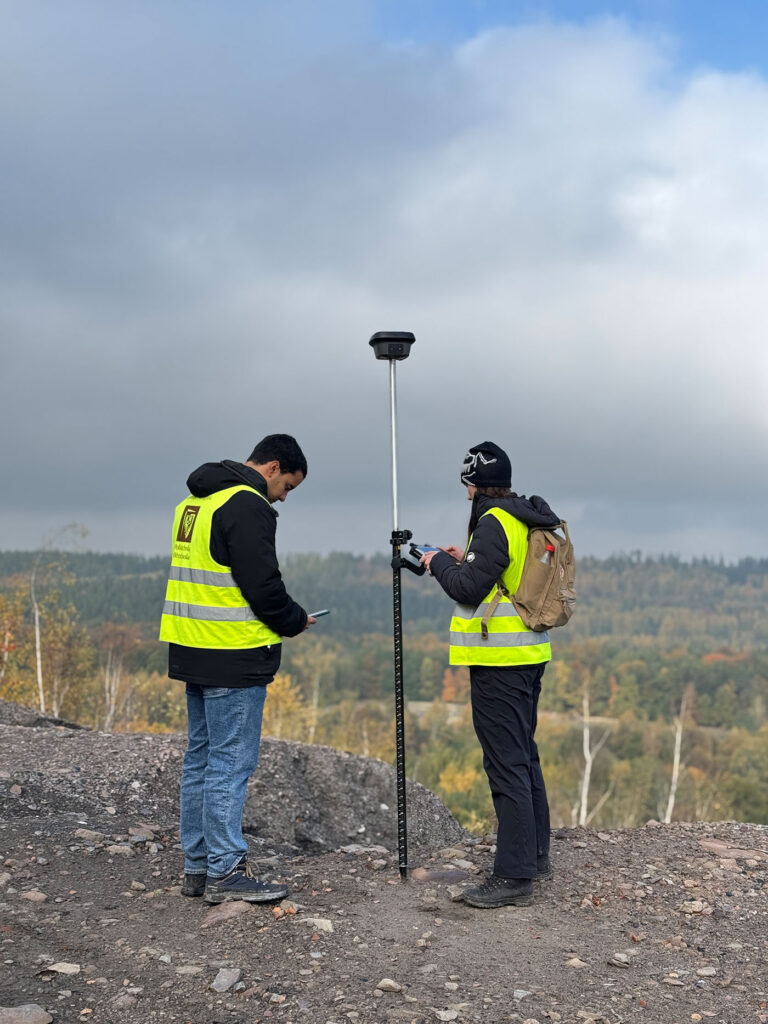
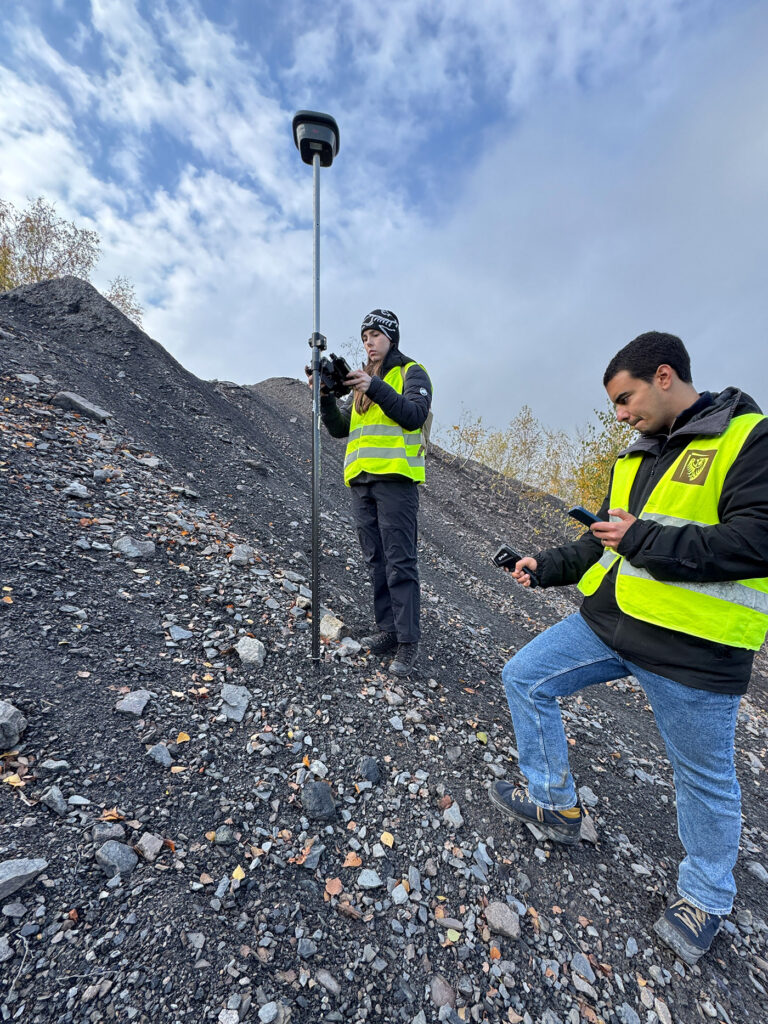
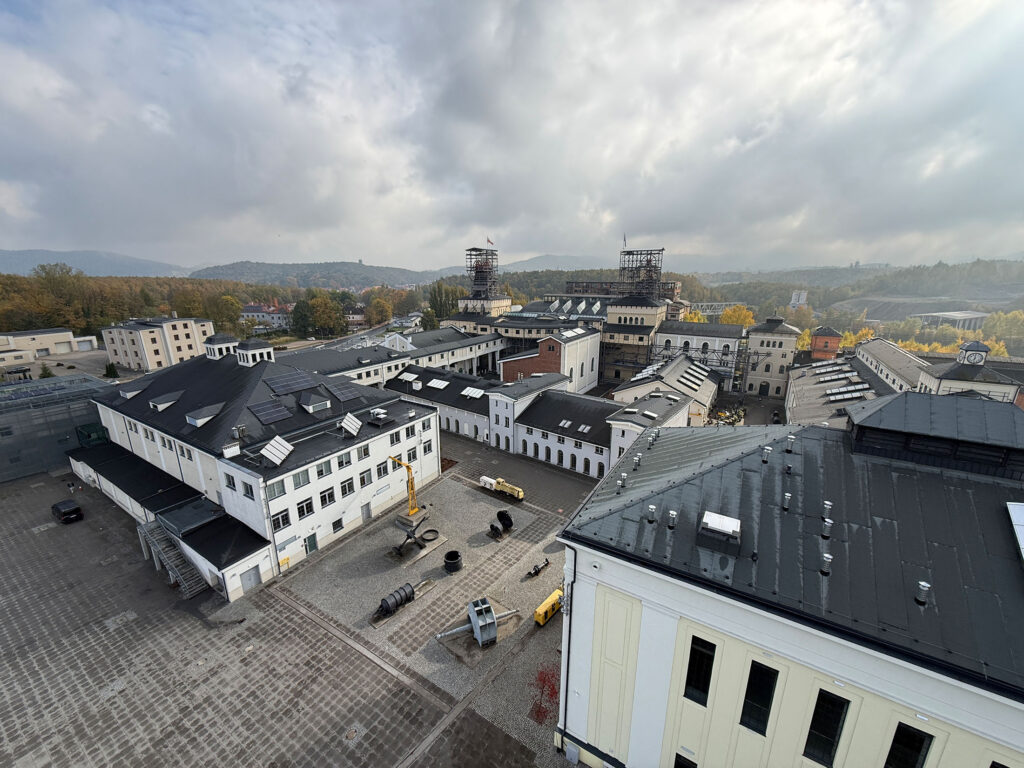
A key focus of the project meeting in Poland was practical fieldwork. Fieldwork began on 20 October at the Wiesław coal-mining spoil heap in Wałbrzych, Lower Silesia. Wałbrzych has a long and eventful history of hard-coal mining and shares many similarities with the Ruhr region. For centuries, mining shaped the region’s economy, communities and landscape, becoming a defining part of its industrial heritage. After the mines closed in the 1990s, former mining sites and spoil heaps remained as reminders of this past. The Wiesław spoil heap, where mining operations ceased around 30 years ago, therefore provided the MITIGATE team with a suitable study site for investigating the development of post-mining landscapes.
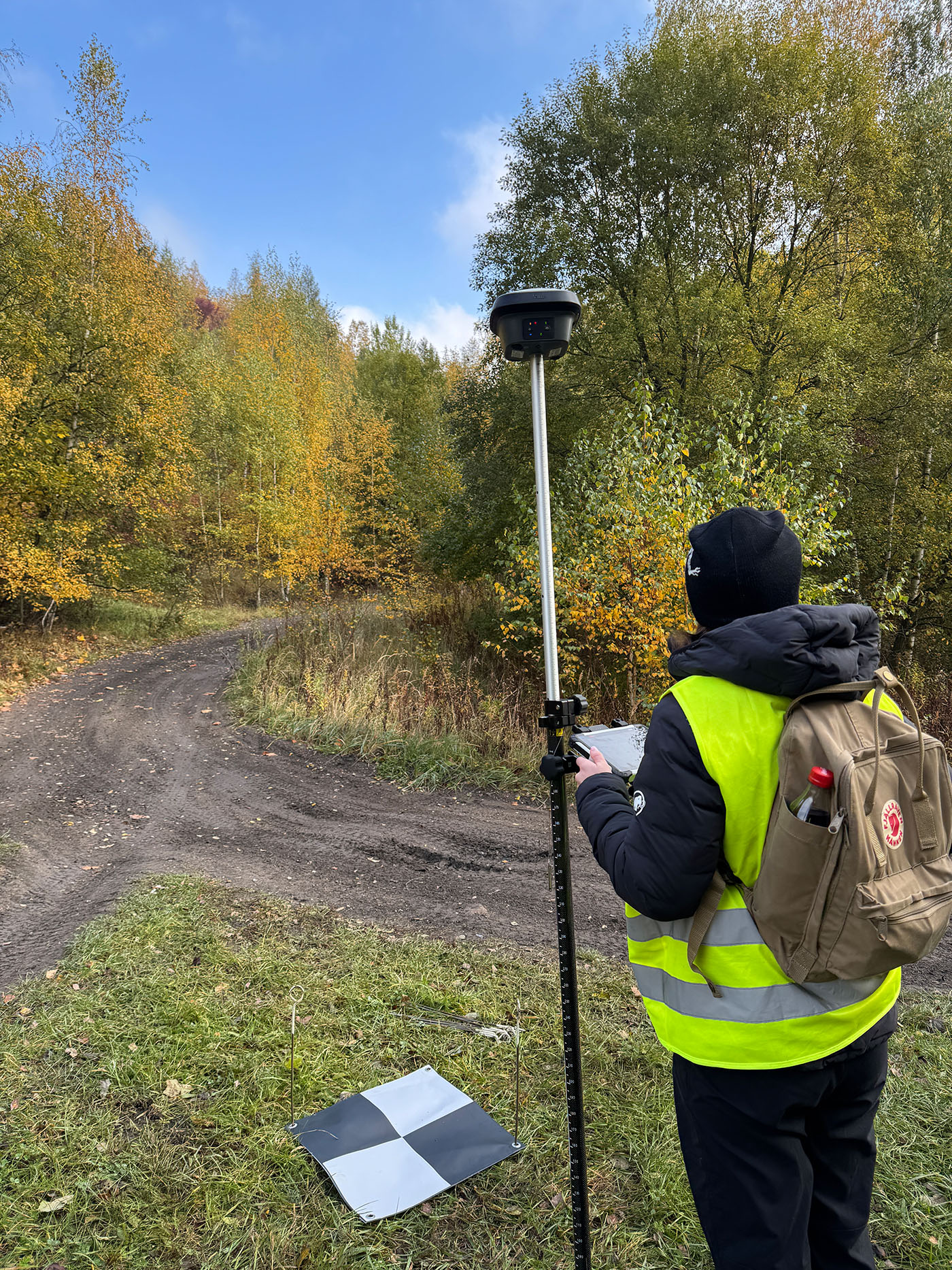
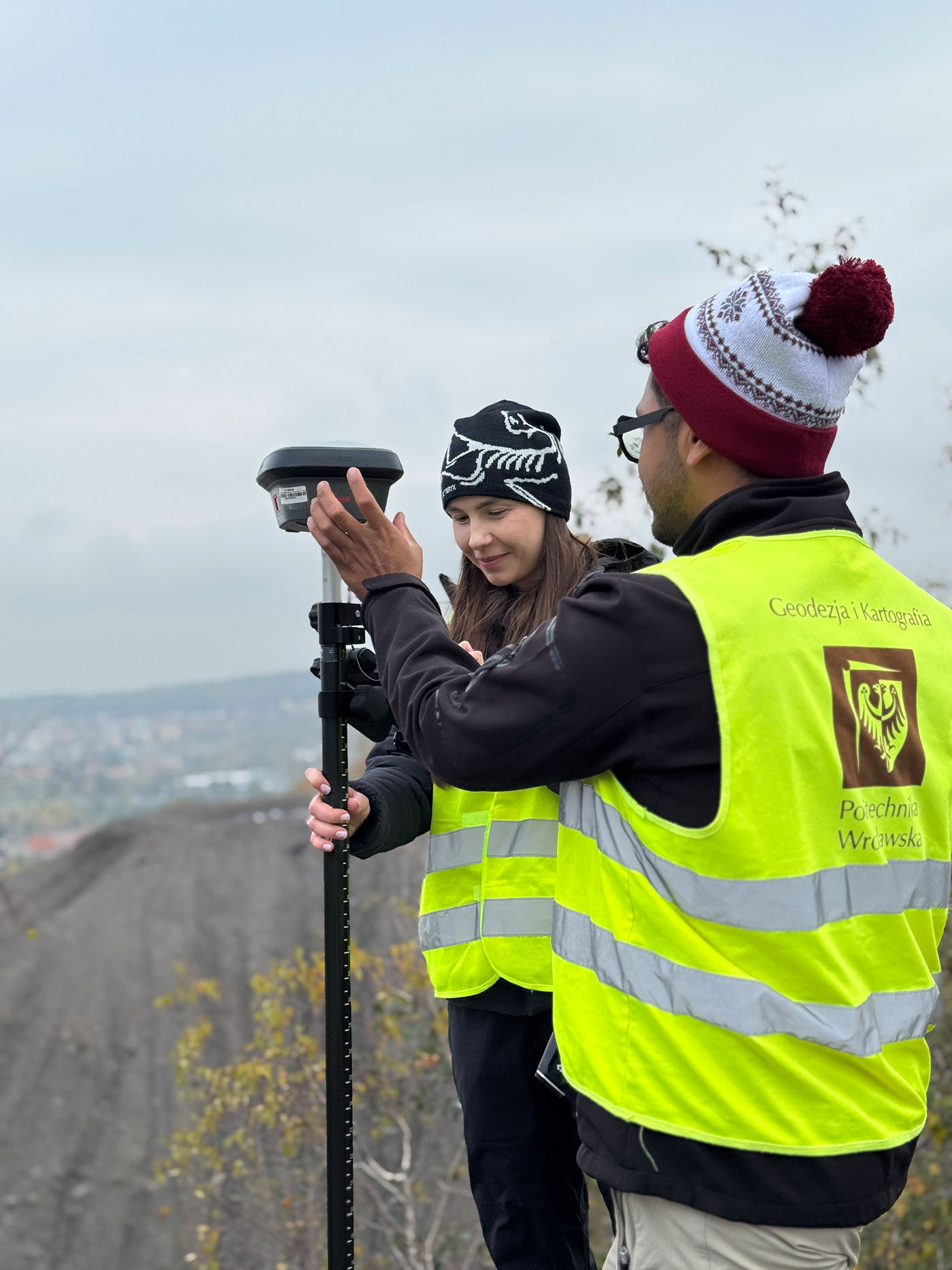
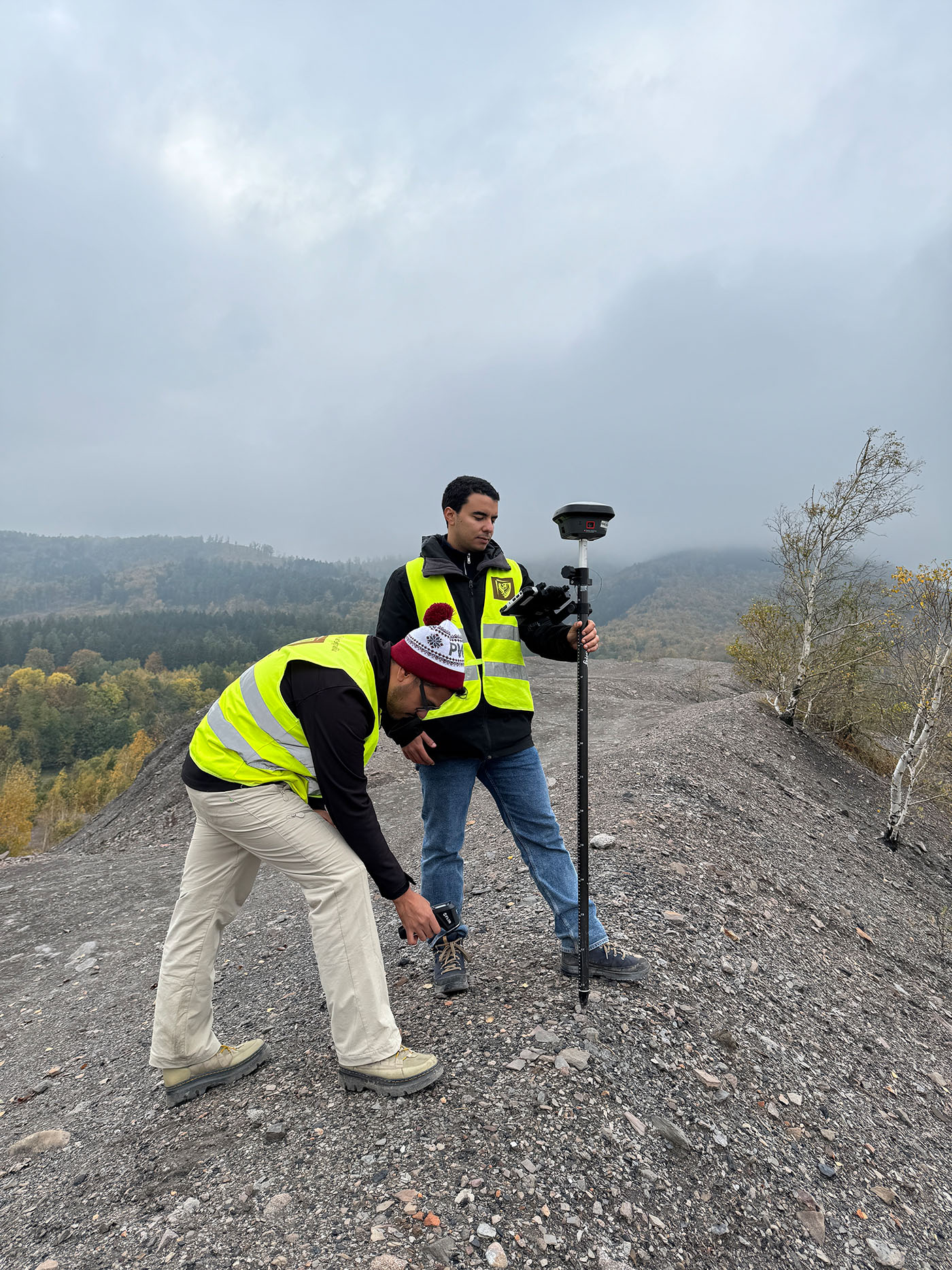
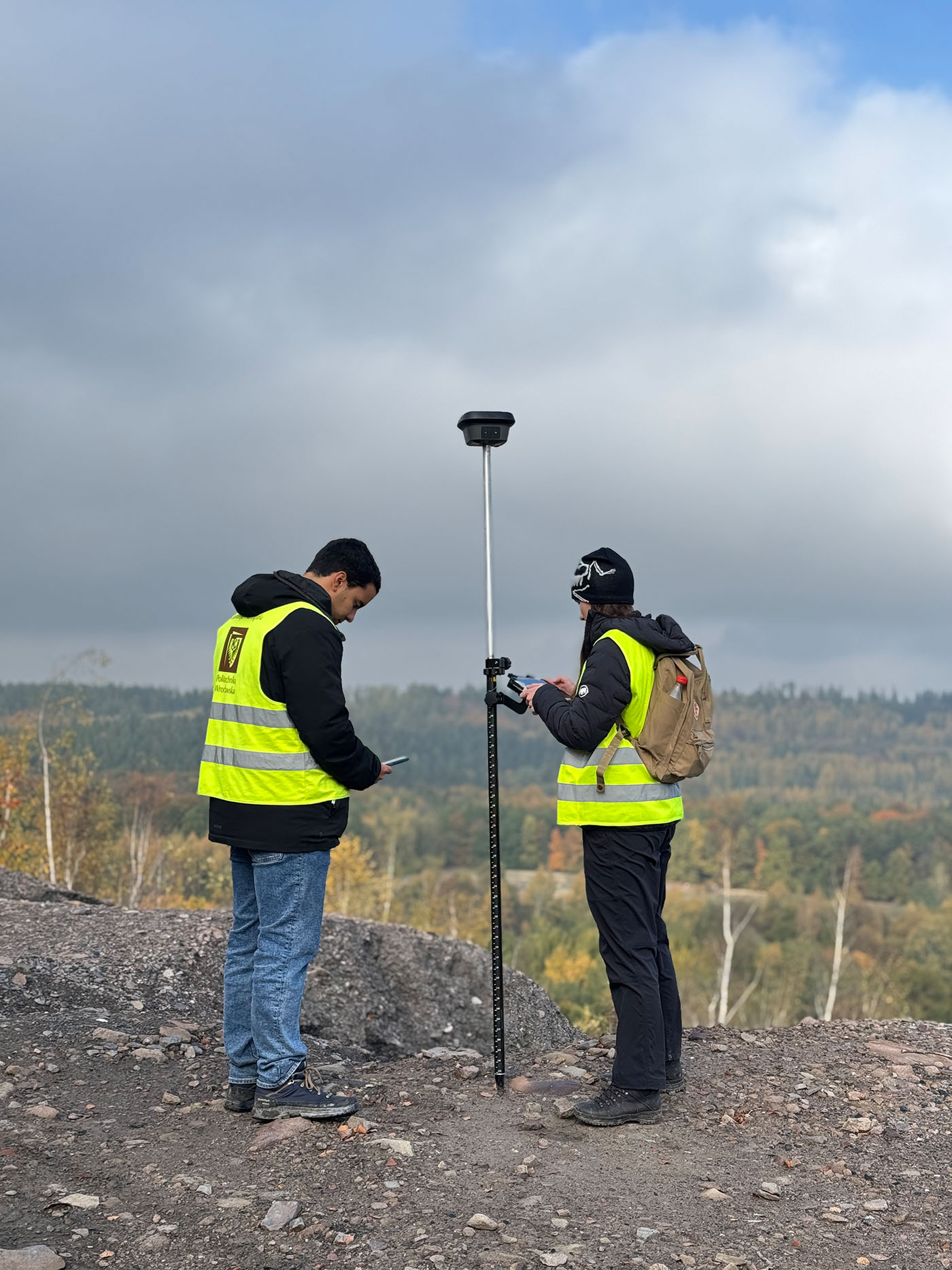
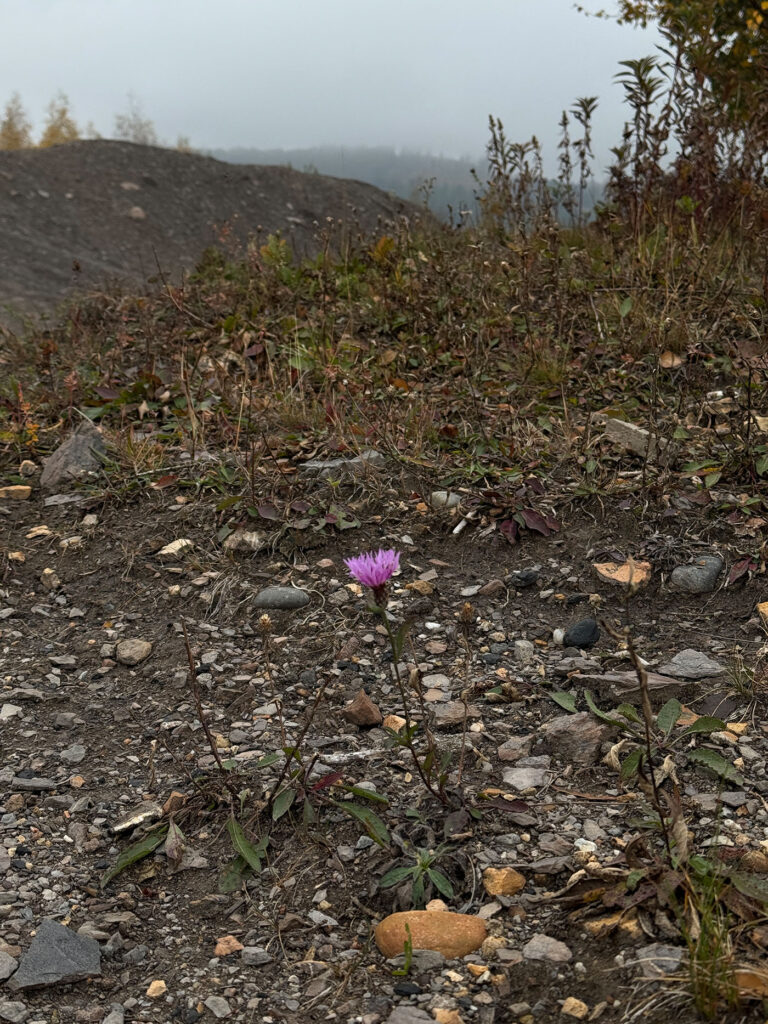
The geomonitoring teams from FZN and WUST combined multispectral, thermal-imaging and LiDAR drone surveys with geological and botanical observations. They also carried out thermal measurements to investigate spatial variations in surface temperature.
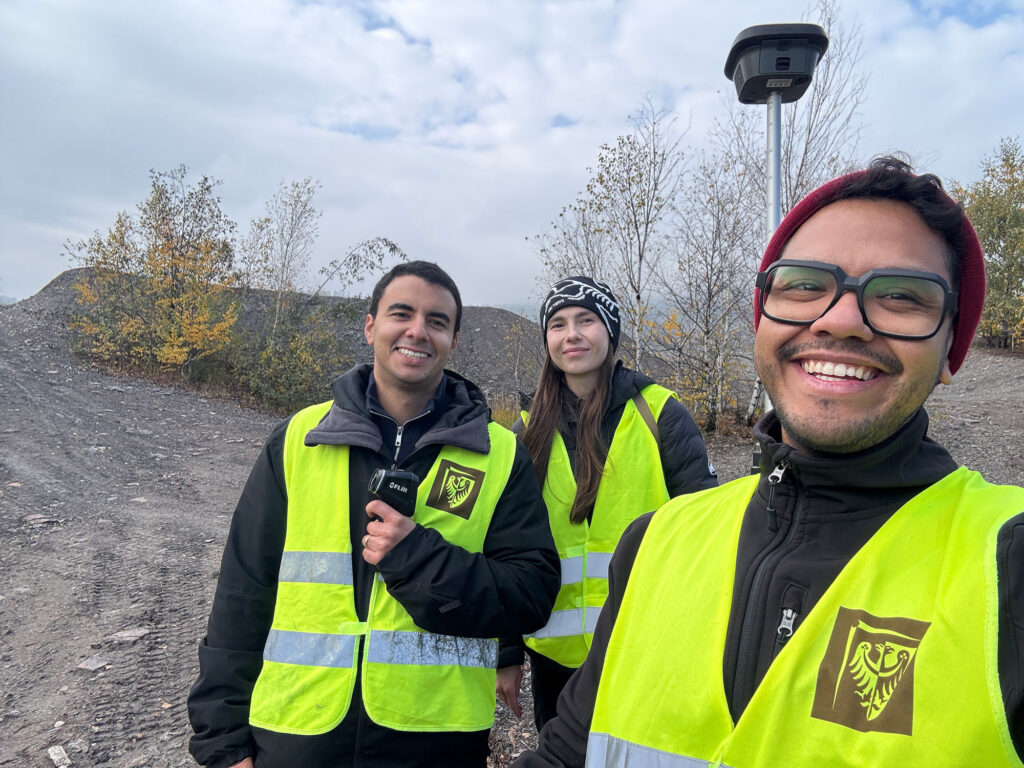
The German-Polish team also surveyed so-called ground control points (GCPs) and used state-of-the-art drone technology to create a comprehensive dataset. This will make it possible to study vegetation, surface characteristics and spatial variations in temperature. Participants included Prof. Jan Błachowski, Kinga Romańczukiewicz, Aleksandra Kaczmarek and Dr. Jarosław Wajs from WUST, as well as the FZN team.
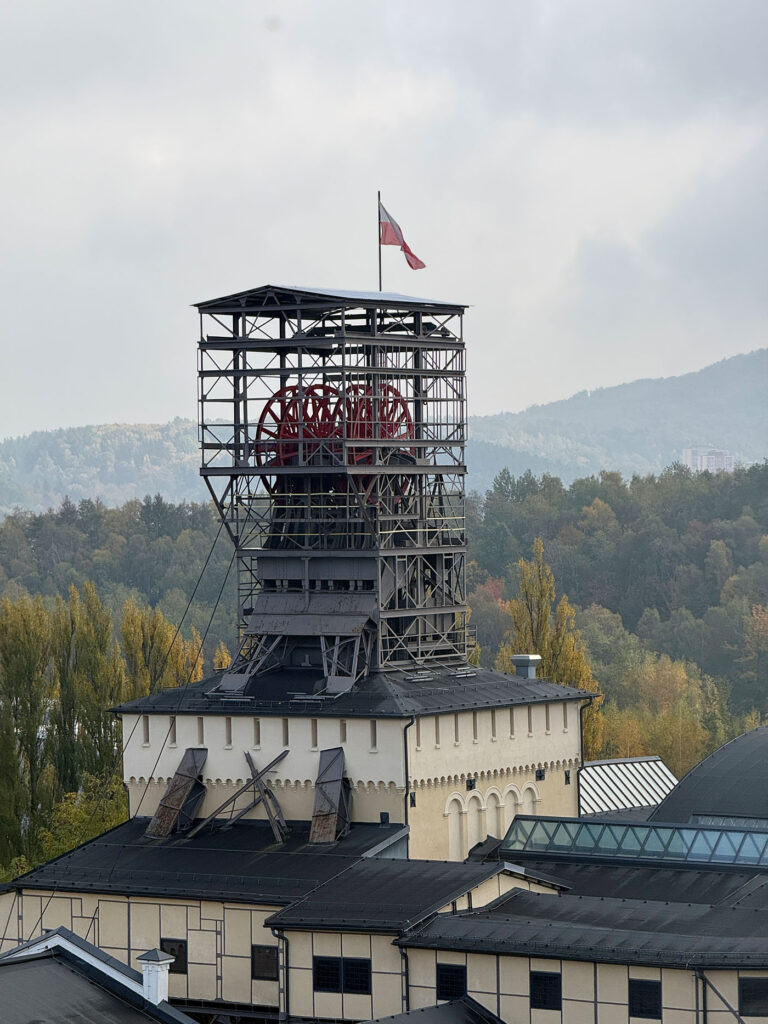
The fieldwork was followed at the Geocentrum by post-processing of the photogrammetric and thermal data, processing of the field measurements and joint interpretation of the results.
Photos: FZN
Talks and poster presentations at the CPSYS conference
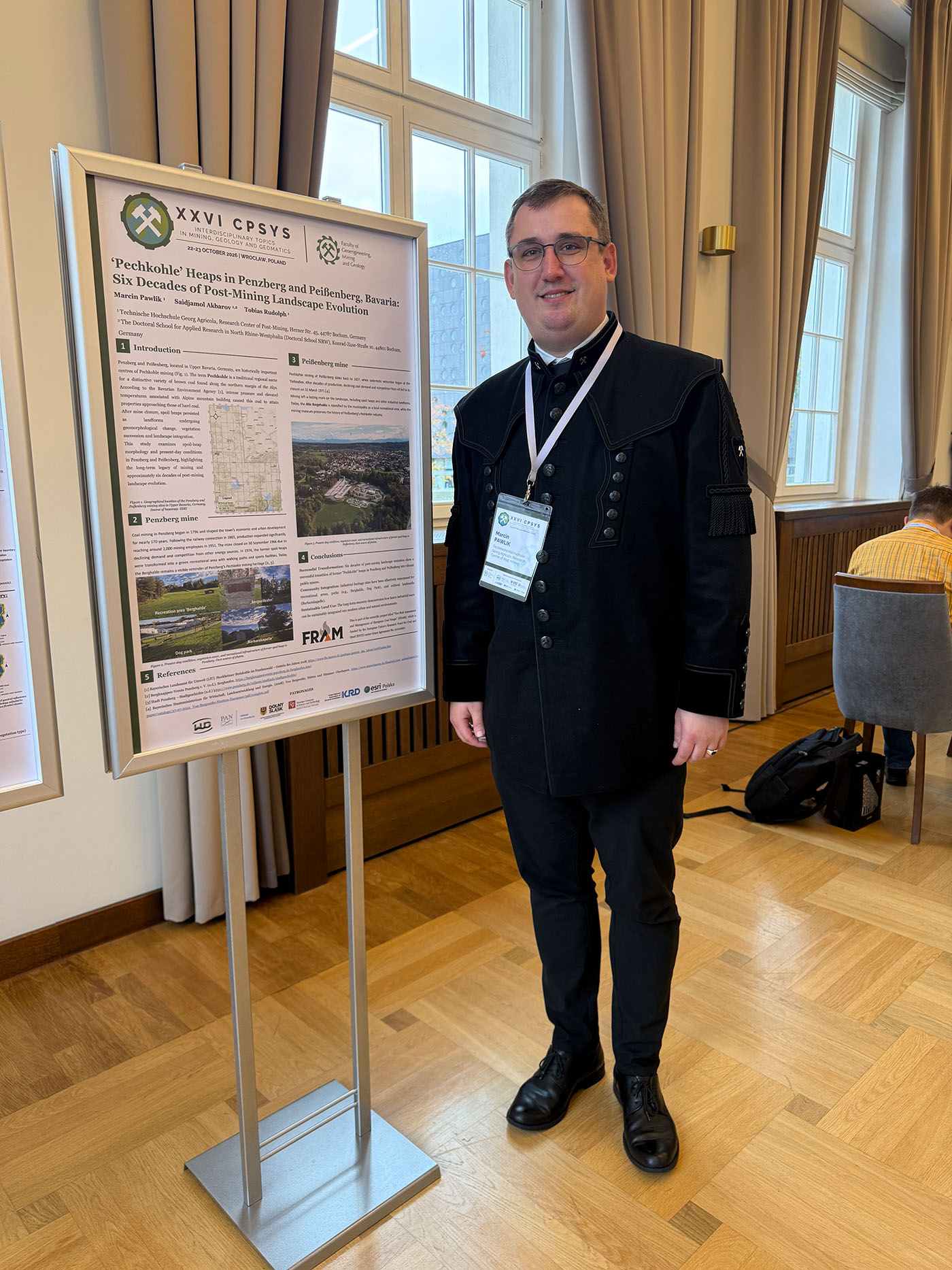
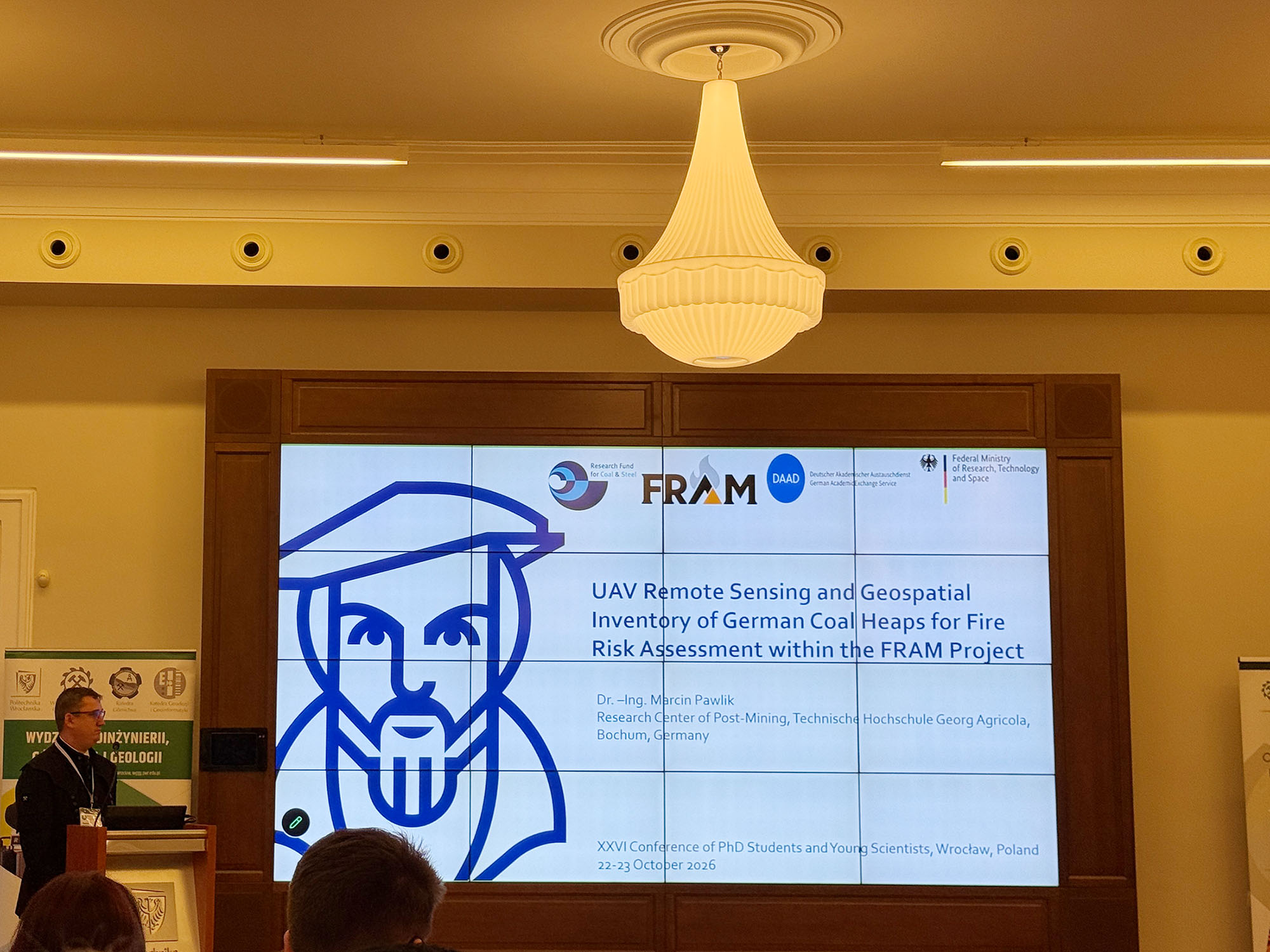
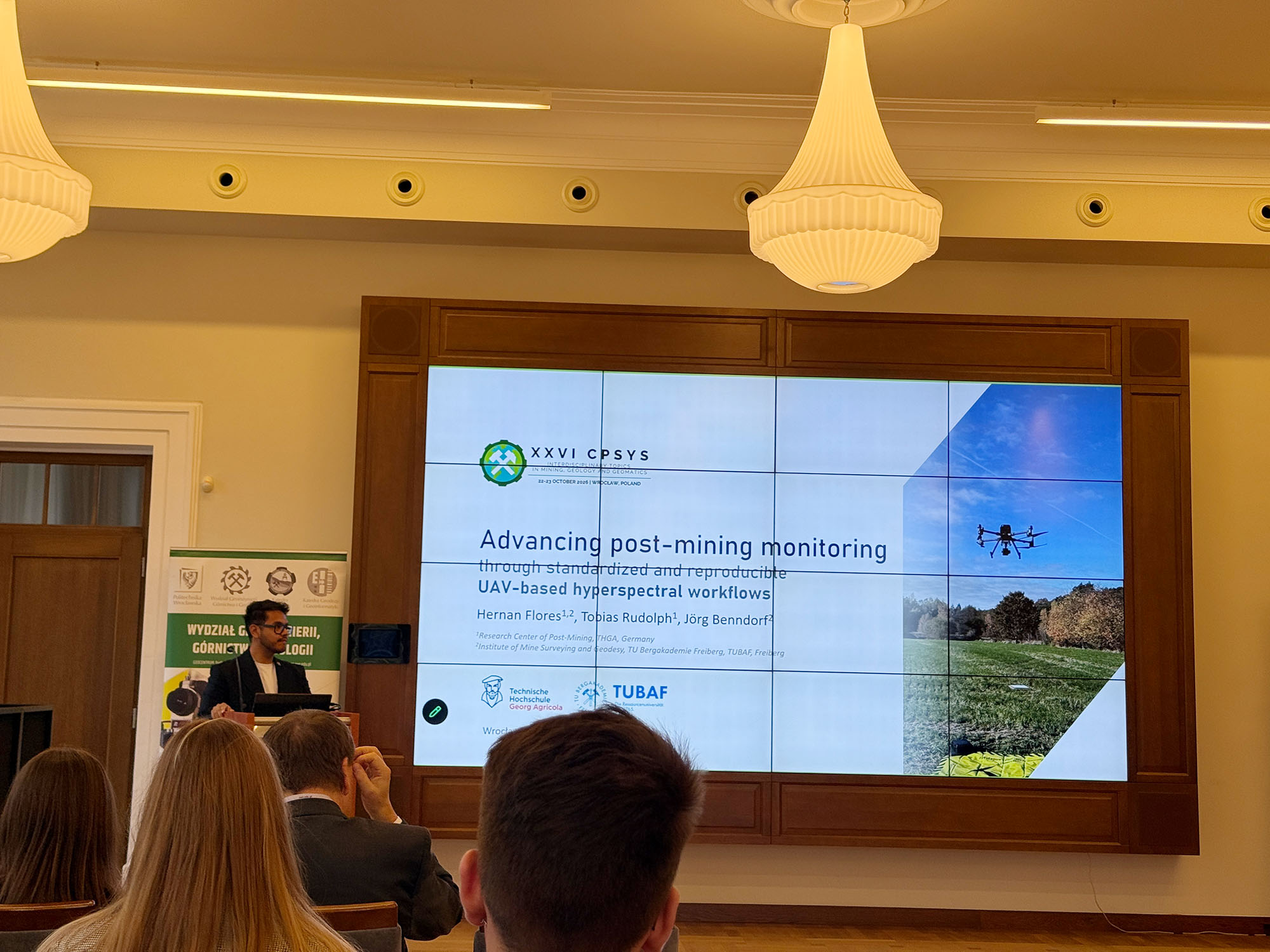
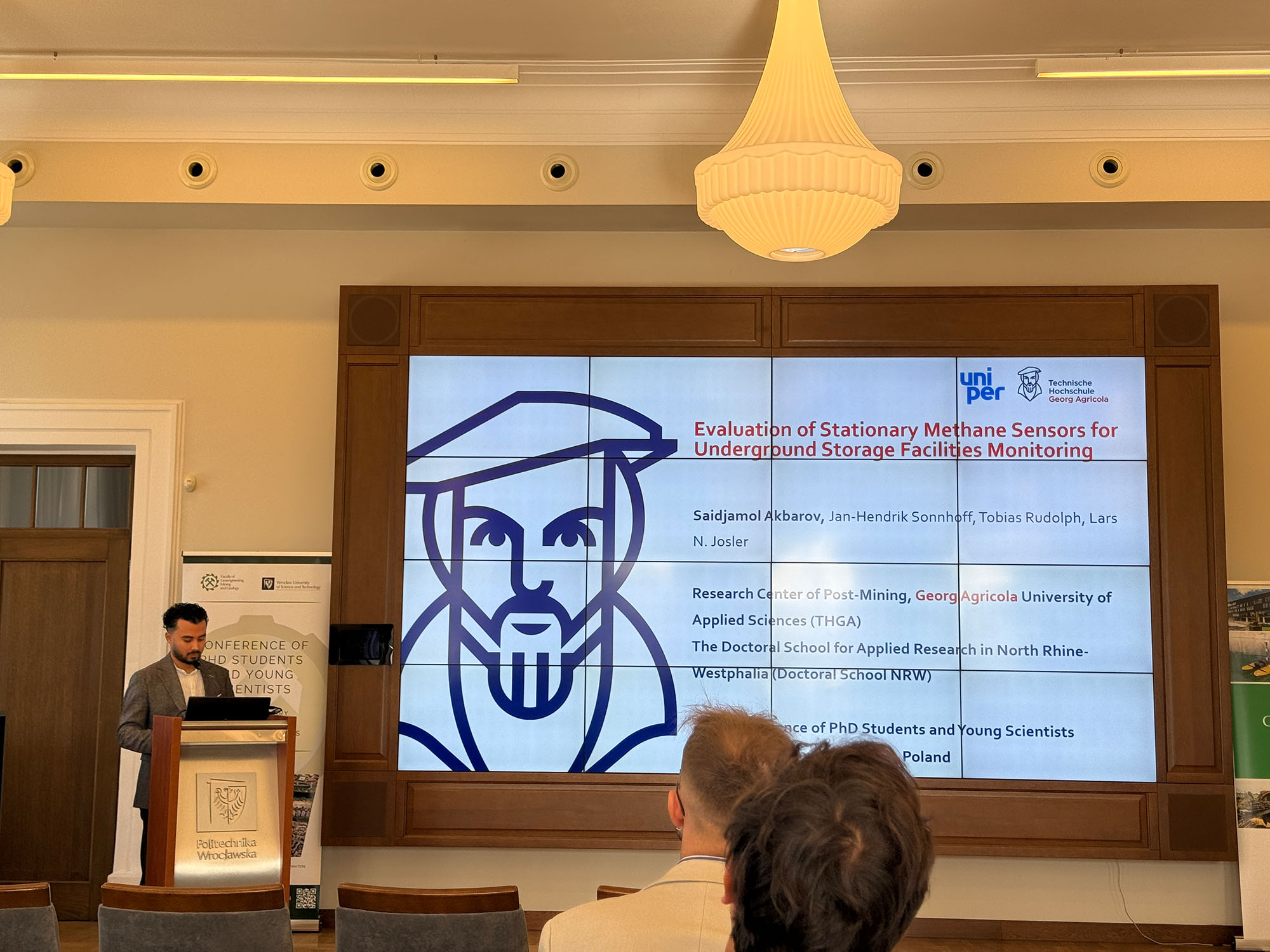
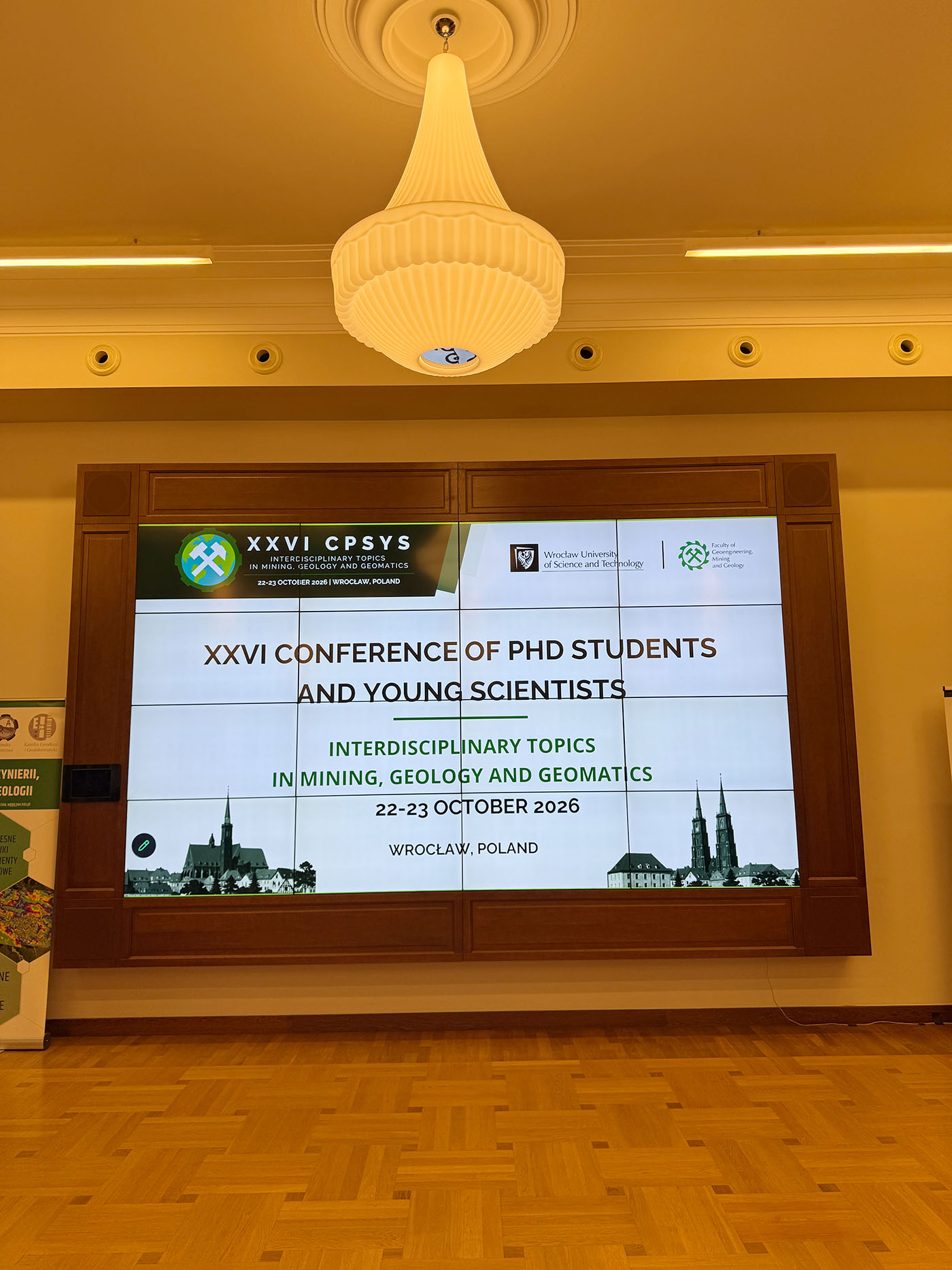
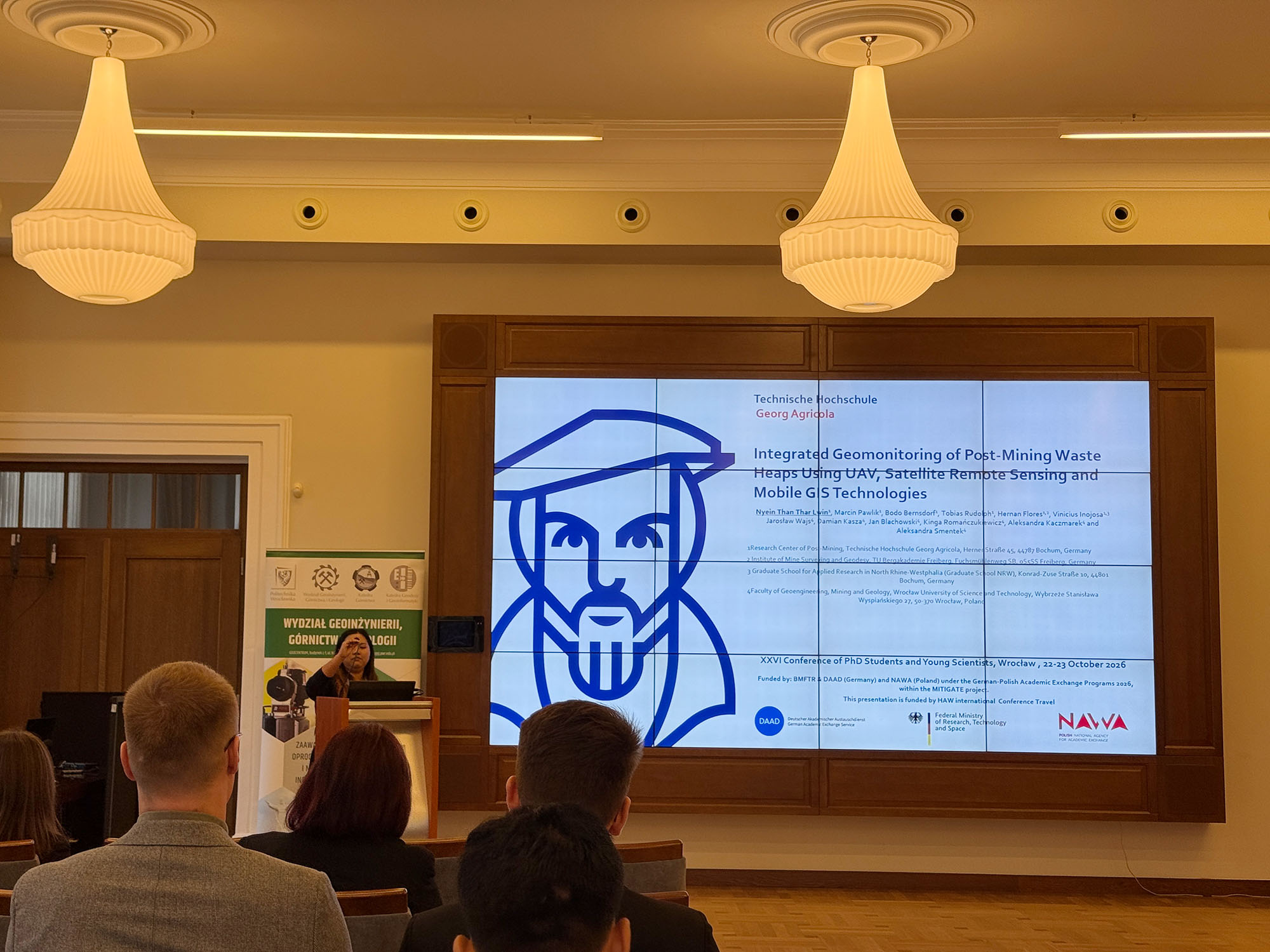
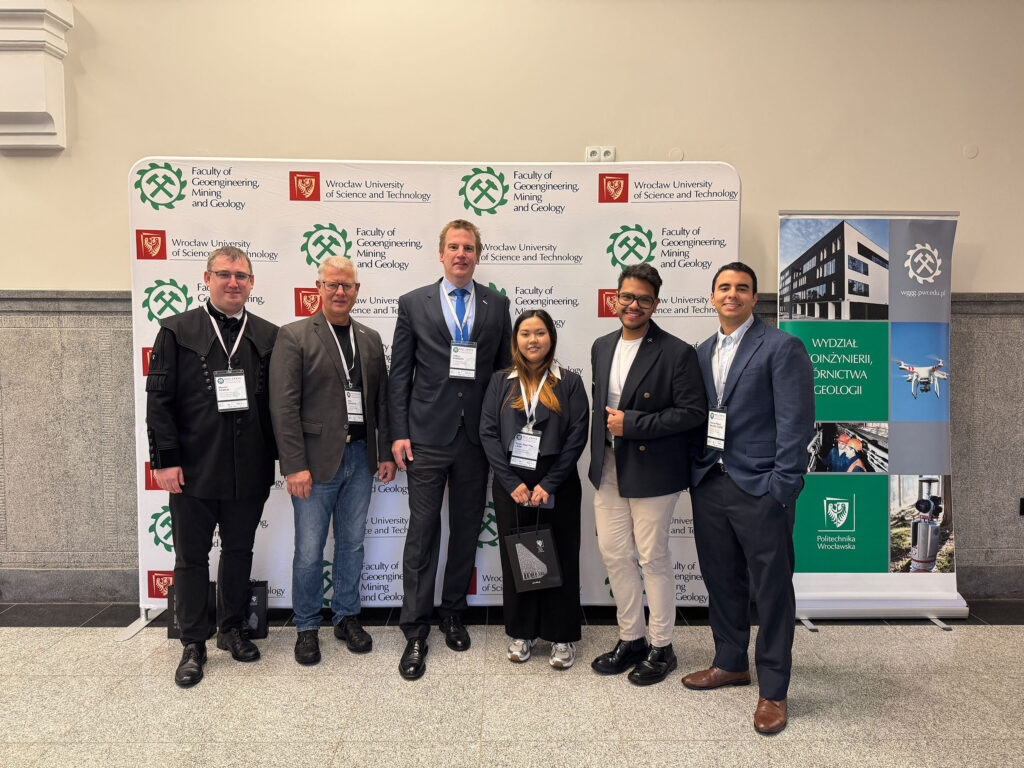
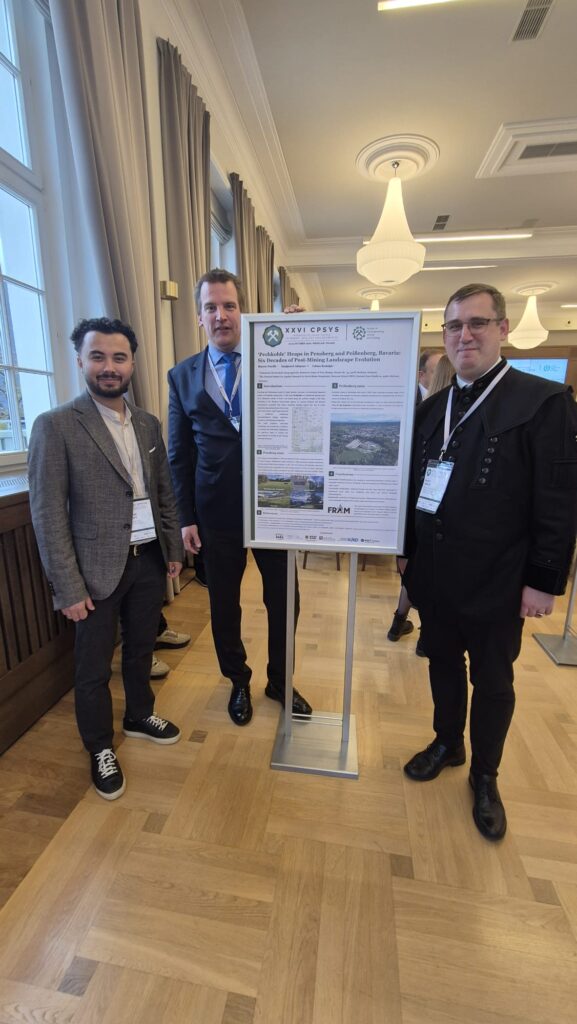
From 22 to 23 October, the FZN team took part in the XXVI Conference of PhD Students and Young Scientists (CPSYS) at Wrocław University of Science and Technology. The interdisciplinary conference covered topics in mining, geology and geomatics, and provided an opportunity to present current research findings and discuss them with other scientists.
Prof. Tobias Rudolph and Dr. Bodo Bernsdorf served on the conference’s scientific committee. Dr.-Ing. Marcin Pawlik and Dr. Bodo Bernsdorf also chaired conference sessions. FZN’s contributions addressed topics including geomonitoring and remote sensing:
- „Evaluation of Stationary Methane Sensors for Underground Storage Facilities Monitoring“ von S. Akbarov, J.-H. Sonnhoff, T. Rudolph und L. N. Josler
- „Advancing Post-Mining Monitoring Through Standardized and Reproducible UAV-Based Hyperspectral Workflows“ von H. Flores, T. Rudolph und J. Benndorf
- „Integrating Interferometric and Polarimetric SAR with Optical Indices Overlap with Spatial Decision Support System“ von V. Inojosa, H. Flores, M. Pawlik, B. Haske und T. Rudolph
- „Integrated Geomonitoring of Post-Mining Waste Heaps Using UAV, Satellite Remote Sensing and Mobile GIS Technologies“ von N. T. T. Lwin und Mitautor:innen
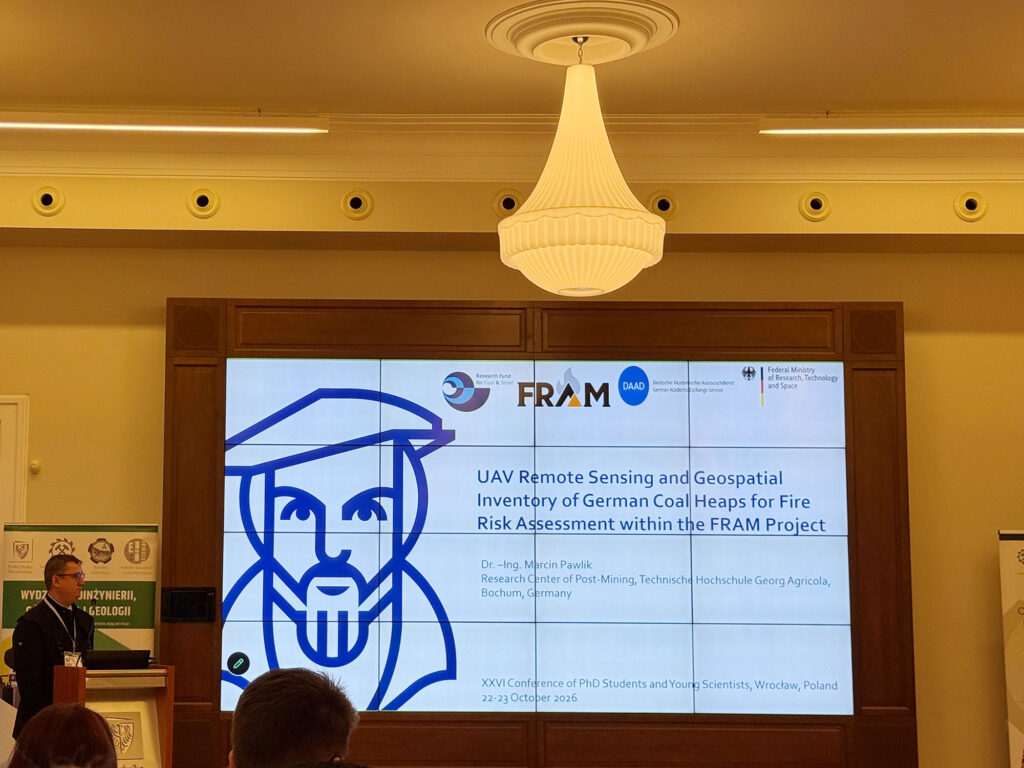
- „UAV Remote Sensing and Geospatial Inventory of German Coal Heaps for Fire Risk Assessment within the FRAM Project“ von M. Pawlik
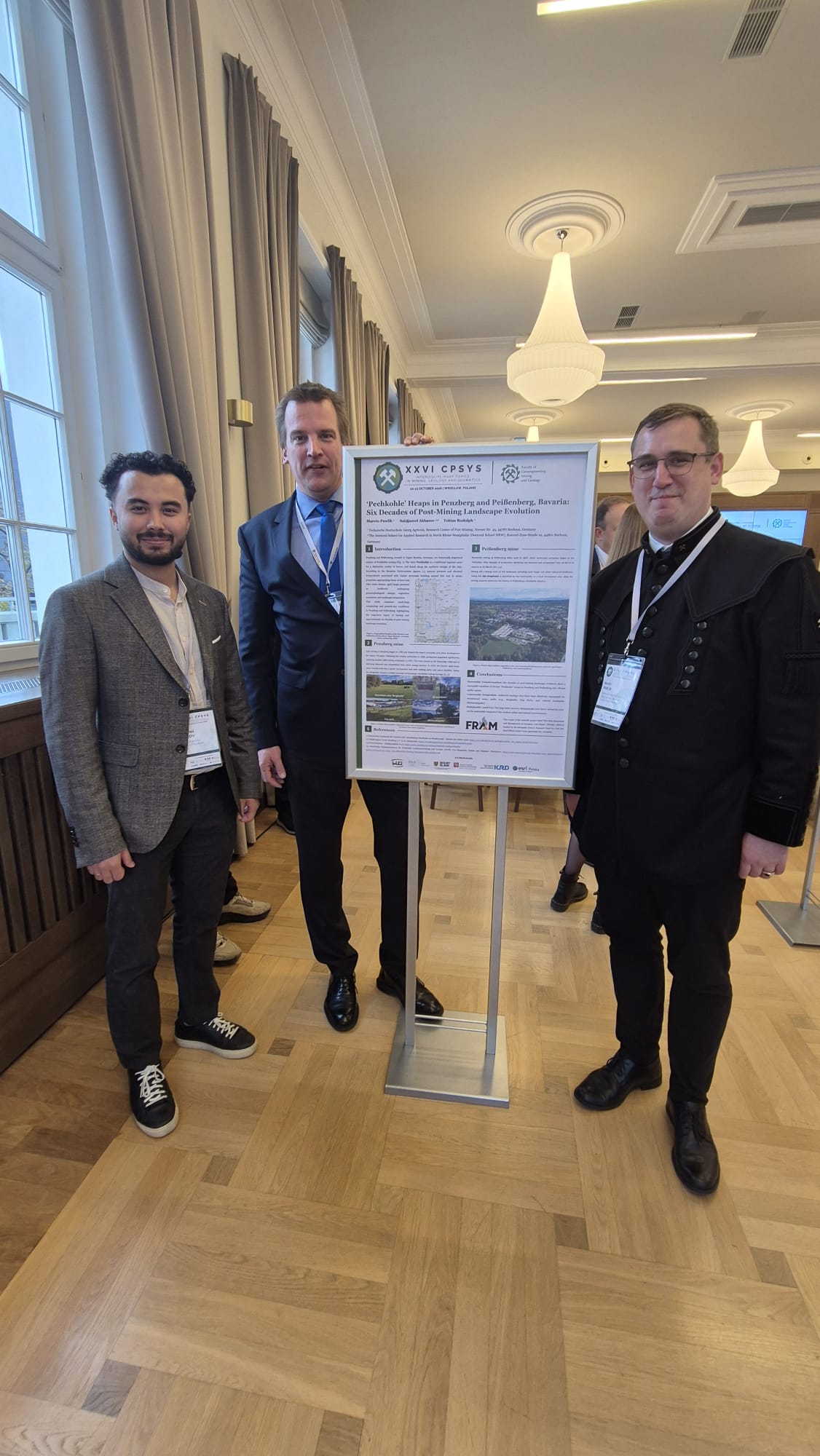
The following posters were also presented:
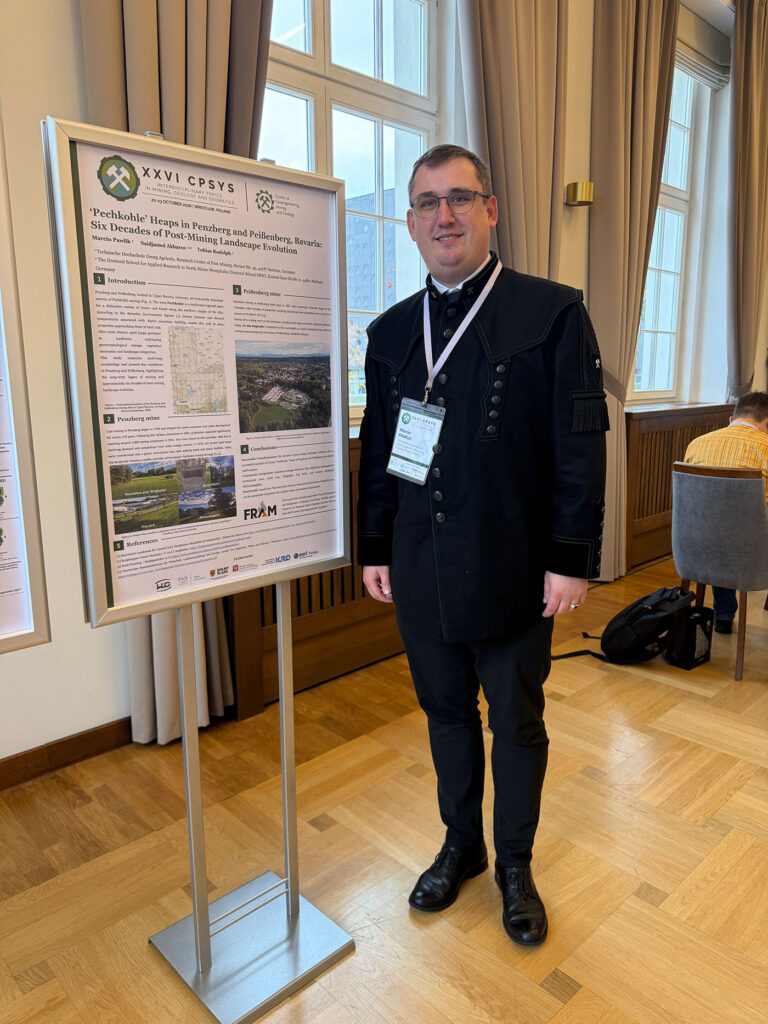
- Pawlik, M.; Akbarov, S.; Rudolph, T. “‘Pechkohle” Heaps in Penzberg and Peißenberg, Bavaria: Six Decades of Post-Mining Landscape Evolution”.
- Romańczukiewicz, K.; Zubíček, V.; Pawlik, M.; Górniak-Zimroz, J.; Błachowski, J. “Post-Mining Spoil Heaps at Different Stages of Reclamation and Ecological Succession: Case Studies from Poland, Germany and Czechia”
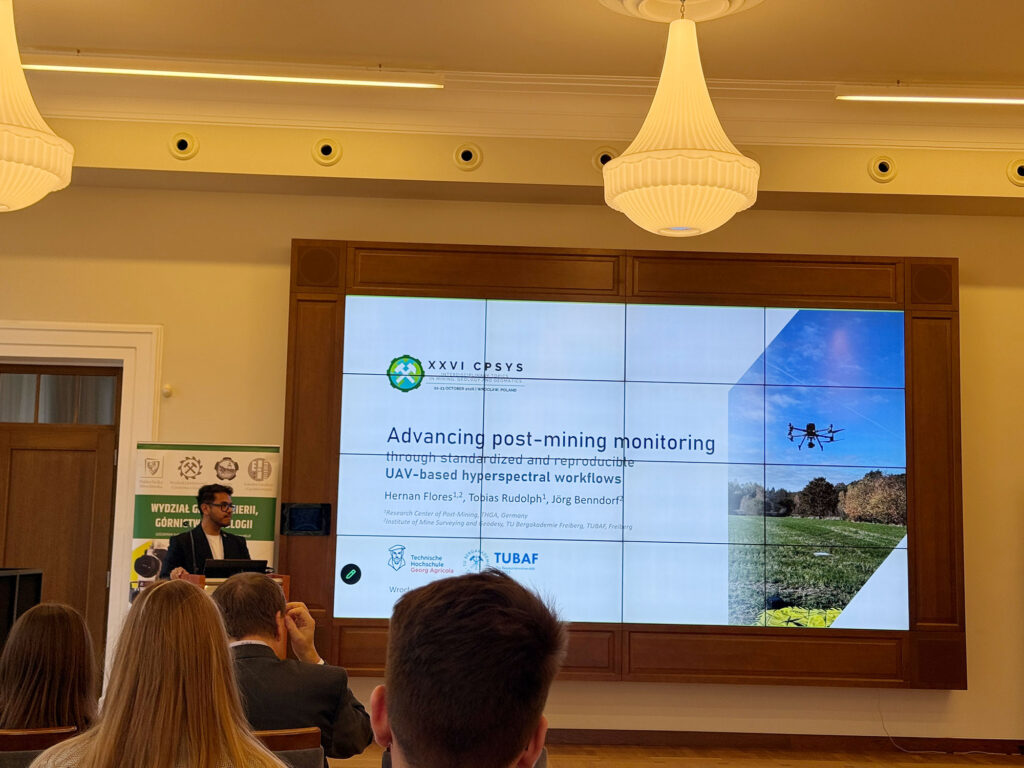
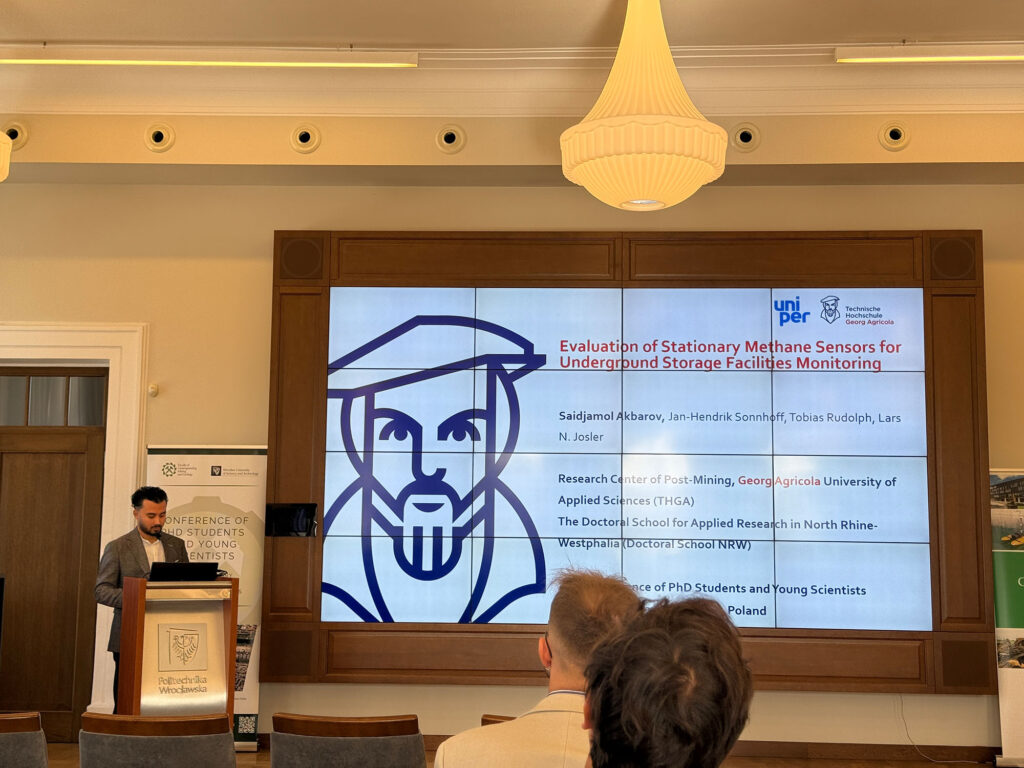
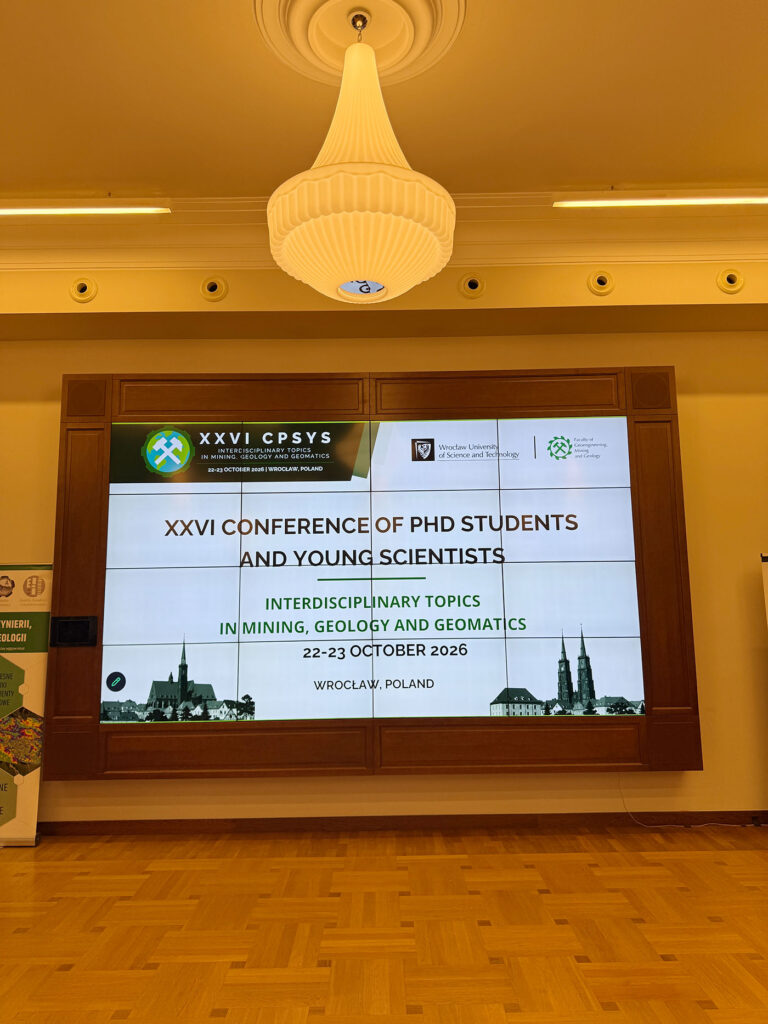
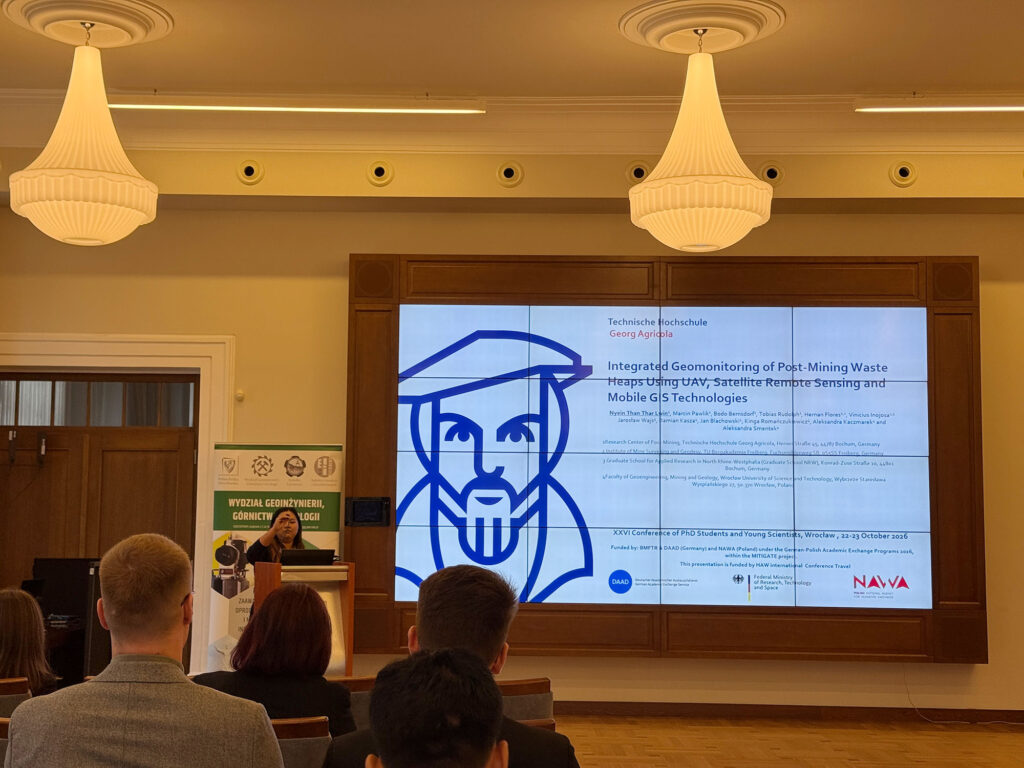
Photos: FZN
Longstanding German-Polish cooperation
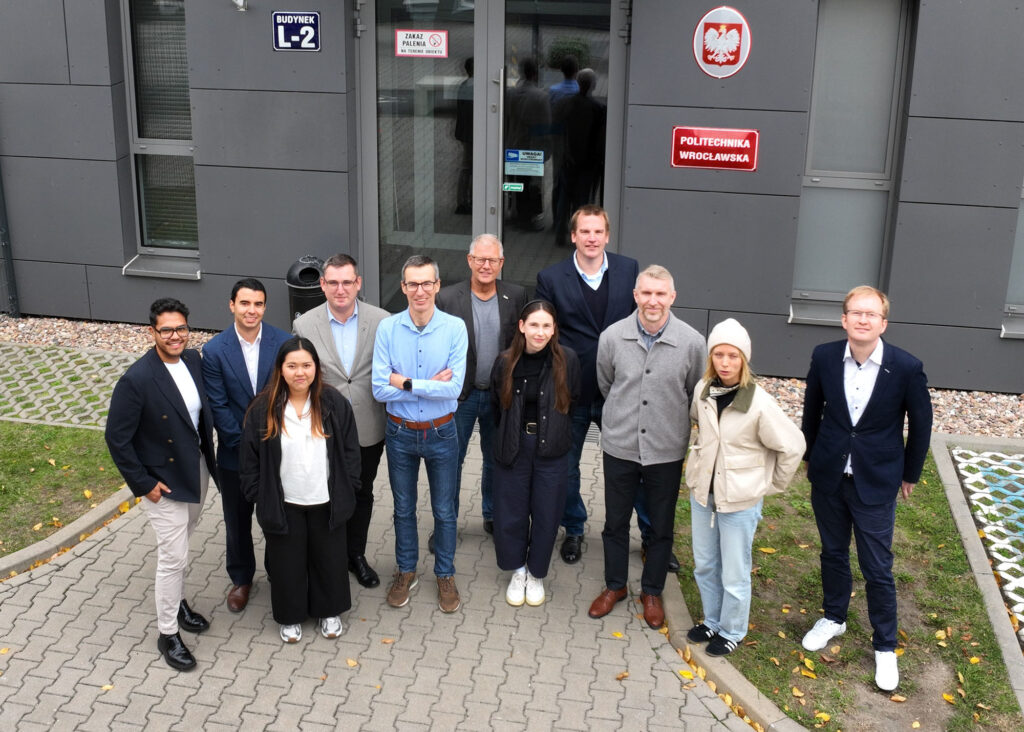 he visit to Wrocław exemplified FZN’s close and well-established relationships with Polish partner institutions. Joint research projects, intensive scientific exchange and regular reciprocal visits have formed the basis of this partnership for many years. FZN’s Polish partners in various research projects include, among others, the Główny Instytut Górnictwa – Państwowy Instytut Badawczy (GIG-PIB), the KOMAG Institute of Mining Technology, the the Strata Mechanics Research Institute of the
Polish Academy of Sciences,Poltegor-Instytut, Politechnika Śląska, Spółka Restrukturyzacji Kopalń S.A. (SRK) and Węglokoks S.A. FZN also works closely with Polish scientists as part of the MITIGATE project, particularly with Wrocław University of Science and Technology. Joint research activities, regular scientific exchange and reciprocal visits strengthen cross-border cooperation and support the development of shared methods for monitoring and assessing geoenvironmental hazards in former mining areas.
Germany and Poland, both strongly shaped by hard-coal mining, face similar post-mining challenges. Sharing knowledge, experience and methods supports joint research and helps to improve understanding of post-mining landscapes, identify geoenvironmental risks at an early stage and develop sustainable approaches to managing former mining sites.
On the German side, the project meeting in Wrocław was funded by the German Academic Exchange Service (DAAD) – with funds provided by the Federal Ministry of Research, Technology and Space (BMFTR). Funding on the Polish side was provided by the Polish National Agency for Academic Exchange (NAWA).The MITIGATE meeting built on the visit by our Polish colleagues in June 2026. Further MITIGATE project meetings are planned in Germany and Poland in 2027.
The MITIGATE project (Monitoring of Geoenvironmental Hazards in the Post-Mining Areas)
The MITIGATE project (Monitoring of Geoenvironmental Hazards in the Post-Mining Areas) is developing an integrated methodology for monitoring geoenvironmental hazards in former mining areas. The methods used include remote sensing, unmanned aerial vehicles (UAVs), multispectral and thermal-imaging sensors, precise GNSS positioning and mobile GIS systems.
FZN projects with Polish partners
- CoalHeritage
- CRMsDataSpace
- European Coal in Transition: A series of high-level events to spread knowledge from recent and ongoing RFCS projects, encourage new players to join the RFCS community, and foster policy dialogue (HIGH-LEVEL)
- Fire Risk Assessment and Management of European Coal Heaps (FRAM)
- HEI4S3-RM
- MEMO: Methane Emission Monitoring of Abandoned Coal Mines
- Monitoring of Geoenvironmental Hazards in the post-mining areas (MITIGATE)
- POTENTIALS
- RAISING: Raising awareness of small local communities in the process of coal mining transition
- SIRIMA – Sinkhole hazard and risk management in post-mining areas
- USAMIN: Use of Abandoned Mines
- WINTER: Web-INTEractive management tool for coal Regions in transition
 EN
 DE